The Counterintuitive Truth About Bricklaying Qualifications: You Don't Need to Study — You Need to Be Assessed
Experienced bricklayers do not need to study for a Cert III. RPL assesses the skills you already use on site. Learn how the process works.
What Most Bricklayers Assume Getting Qualified Means
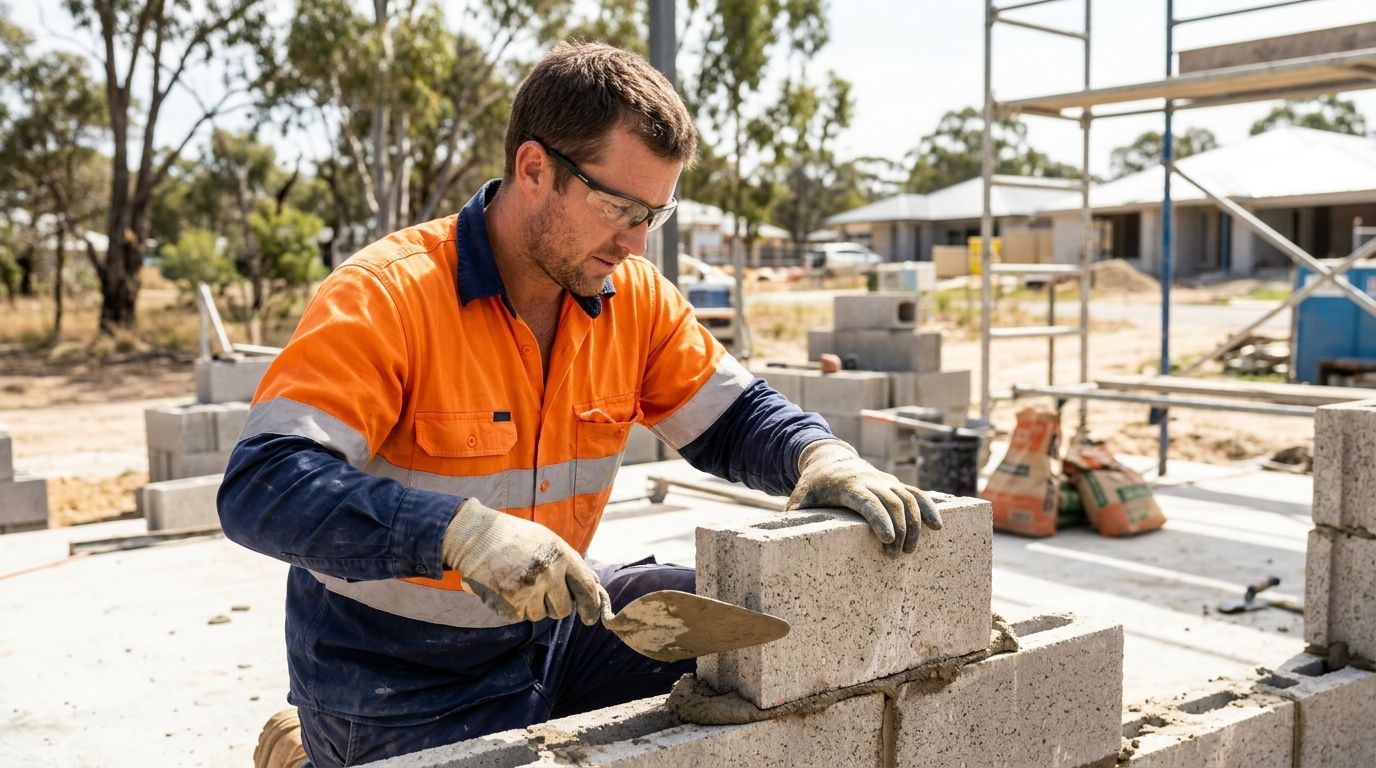
Ask any experienced bricklayer why they do not have their Cert III yet, and you will hear a version of the same answer. Classes. Study. Time off the tools. Money they cannot afford to lose while sitting in a classroom being taught things they already do daily.
It is a reasonable assumption. For most people, getting qualified means going back to school. It suggests textbooks, assessments, and weeks or months away from the job site. If you have a mortgage and a crew depending on you, that is not a realistic option. The qualification simply stays on the to-do list.
But for experienced bricklayers and blocklayers, that assumption is incorrect. The pathway designed for trade professionals with your level of site experience does not require you to study bricklaying. It requires you to prove that you already know how to do the job.
The Reality: What RPL Actually Requires
Recognition of Prior Learning (RPL) is an assessment pathway under the Australian Qualifications Framework (AQF). It was built to recognise skills and knowledge gained through work experience rather than formal education. The AQF explicitly includes supporting the recognition of prior learning and experiences as a core objective.
In practice, instead of studying for your Certificate III in Bricklaying and Blocklaying (CPC33020), you gather evidence of the work you already do. A qualified assessor from a Registered Training Organisation (RTO) then evaluates whether your experience meets the required standards. There are no classrooms, textbooks, or entry-level lessons.
- What most people assume: Enrol in a course, attend classes, complete assignments, and sit assessments over months or years
- What RPL actually requires: Gather evidence of your existing bricklaying experience and have it assessed by a qualified RTO assessor
- What most people assume: Take time off work to study
- What RPL actually requires: Evidence gathering happens on your current job site during normal working hours
- What most people assume: Learn bricklaying from the beginning
- What RPL actually requires: Prove your existing skills so the assessor can confirm what your experience shows
- What most people assume: A long, expensive study program
- What RPL actually requires: A structured assessment process with a timeline based on your evidence readiness
What Evidence a Bricklayer Actually Needs to Gather
The evidence you need for RPL is practical. It is documentation of the work you do daily. Master Builders NSW, which delivers the Certificate III in Bricklaying and Blocklaying via RPL, lists these standard evidence types for the qualification:
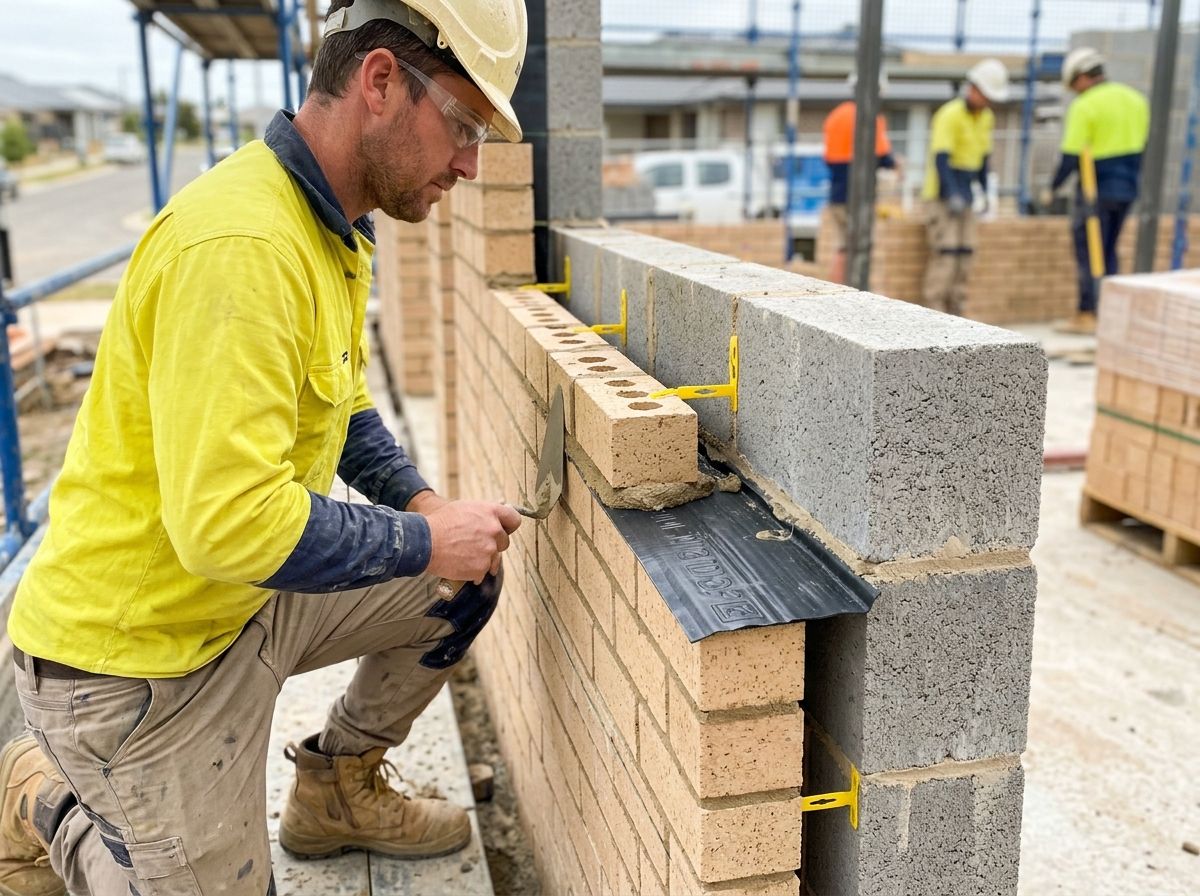
- Video footage of you performing bricklaying and blocklaying tasks on site — showing cavity construction, mortar joints, coursing, and blockwork
- Time-lapse photos of your work — documenting the process of completing a wall or structure from start to finish
- Certificates you already hold — prior training, licences, or industry tickets
- Project management documentation — job sheets, site diaries, work orders, or records of projects you have run or completed
- Third-party reports — statements from supervisors, site managers, or employers confirming your skills
- Work history documentation — employment records, payslips, or references confirming your years of experience in the trade
The evidence must be valid, sufficient, authentic, and current. It must directly relate to the qualification standards, and there must be enough of it to satisfy the assessor. A single document is rarely enough on its own; a combination of different evidence types builds a stronger case.
The evidence you need is already on your job site. The work you do every day serves as your proof.
The Practical Assessment: What Actually Happens
RPL for the Certificate III in Bricklaying and Blocklaying typically includes a practical assessment, sometimes called a trade test. An assessor observes you performing bricklaying tasks in a real or closely simulated workplace environment. This is a core requirement: the bricklaying, blocklaying, and paving industry requires all assessments to be conducted in a realistic work setting.
Assessment methods for this qualification usually include practical demonstrations, worksite observations, written or oral questions, and project tasks. The assessor evaluates whether you can perform the work to the standard described in the unit performance criteria, rather than testing theoretical knowledge in isolation.
For someone who has been laying bricks for years, a practical demonstration of skill is straightforward. You are showing an assessor what you do every day. The assessment is genuine and thorough — which it must be for a nationally recognised qualification — but it is based on practical ability, not memorised theory.
If the assessment identifies any gaps in your skills, gap training is provided at no extra cost. The process is designed to help you secure the qualification, not to catch you out.
Why RPL Exists — It Was Designed for This Scenario
RPL is not a workaround. It is a formal, nationally recognised assessment pathway supported by the Australian qualifications system. The Australian Qualifications Framework includes the recognition of prior learning and experiences as an explicit objective, acknowledging that professional skills are developed through work, not just formal study.
Registered Training Organisations must consider RPL for all prospective students. Under the Standards for RTOs, providers must ensure candidates with existing skills have the opportunity to have them assessed. RPL is a mandatory pathway that every RTO delivering this qualification must offer.
The system was designed to recognise your existing knowledge. An experienced bricklayer who has spent years on the tools developing real skills is exactly who RPL was built for.
The Australian Qualifications Framework sets out the national standards that underpin RPL as a recognised pathway for prior learning and work experience.
Understanding why employers and contractors increasingly require formal qualifications helps explain why getting your Cert III matters — read more about why employers are now requiring formal qualifications.
How This Works Around Your Existing Work Hours
The RPL process for the Certificate III in Bricklaying and Blocklaying does not require you to attend classes or take time off work. Gathering evidence — photographing completed work, collecting job sheets, and obtaining supervisor statements — occurs during your normal working week.
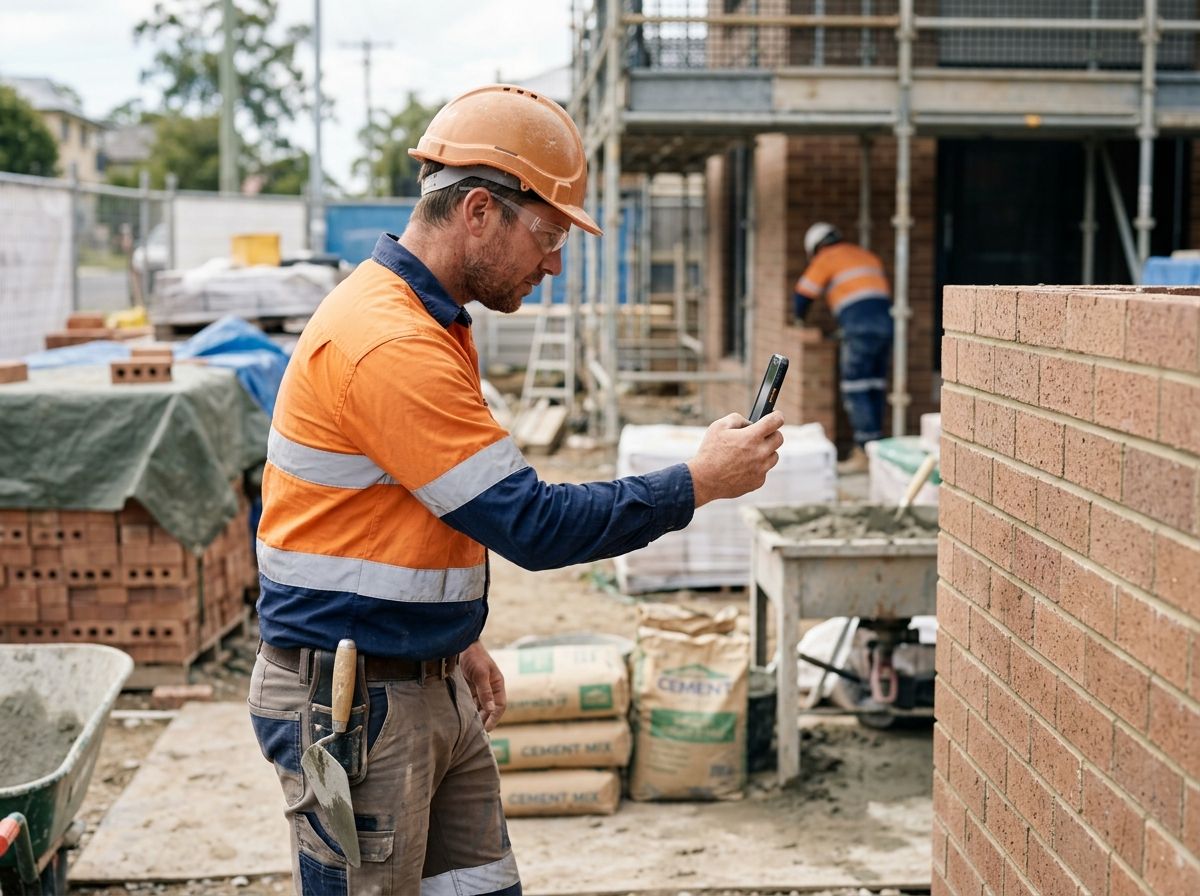
The practical assessment is typically conducted on a job site or in a realistic work environment, meaning it can be arranged around your existing schedule. The timeline from your first enquiry to receiving the qualification depends on how quickly you gather your evidence and the RTO's assessment schedule, rather than a fixed multi-year study period.
The process is structured. You gather your evidence, submit it, complete the practical assessment, and the RTO issues the qualification once your skills are confirmed. For an experienced bricklayer with years of documented site work, gathering evidence is often the simplest part.
The Western Australian Government's RPL fact sheet explains how evidence is assessed for validity, sufficiency, authenticity, and currency — the four principles that guide every RPL assessment in Australia.
Read about what experienced bricklayers say about the RPL process — including what the evidence-gathering stage actually looked like.
Your Cert III in Bricklaying Is Closer Than You Think
You do not need to study bricklaying. You already know how to do the work. You simply need a qualified assessor to confirm it.
For an experienced bricklayer or blocklayer, the Certificate III in Bricklaying and Blocklaying (CPC33020) is not a course to complete. It is formal recognition of what you have already built. The RPL pathway exists to translate years of site experience into the qualification the industry demands.
The first step is finding out whether your experience meets the criteria for RPL. That is the purpose of a Free Skills Review. It provides an honest assessment of where you stand, at no cost and with no obligation to proceed.
Your Cert III in Bricklaying is closer than you think — here's where to start the process.
Ready to Get Recognised?
Start with a free skills review to find out if RPL is right for you.