You've Been a Bricklayer for Years. Now Someone Wants a Certificate. It Makes No Sense — Until It Does.
Been laying brick for years and need a certificate? RPL means your site experience counts as the qualification. Here is how it works.
The Request That Makes No Sense
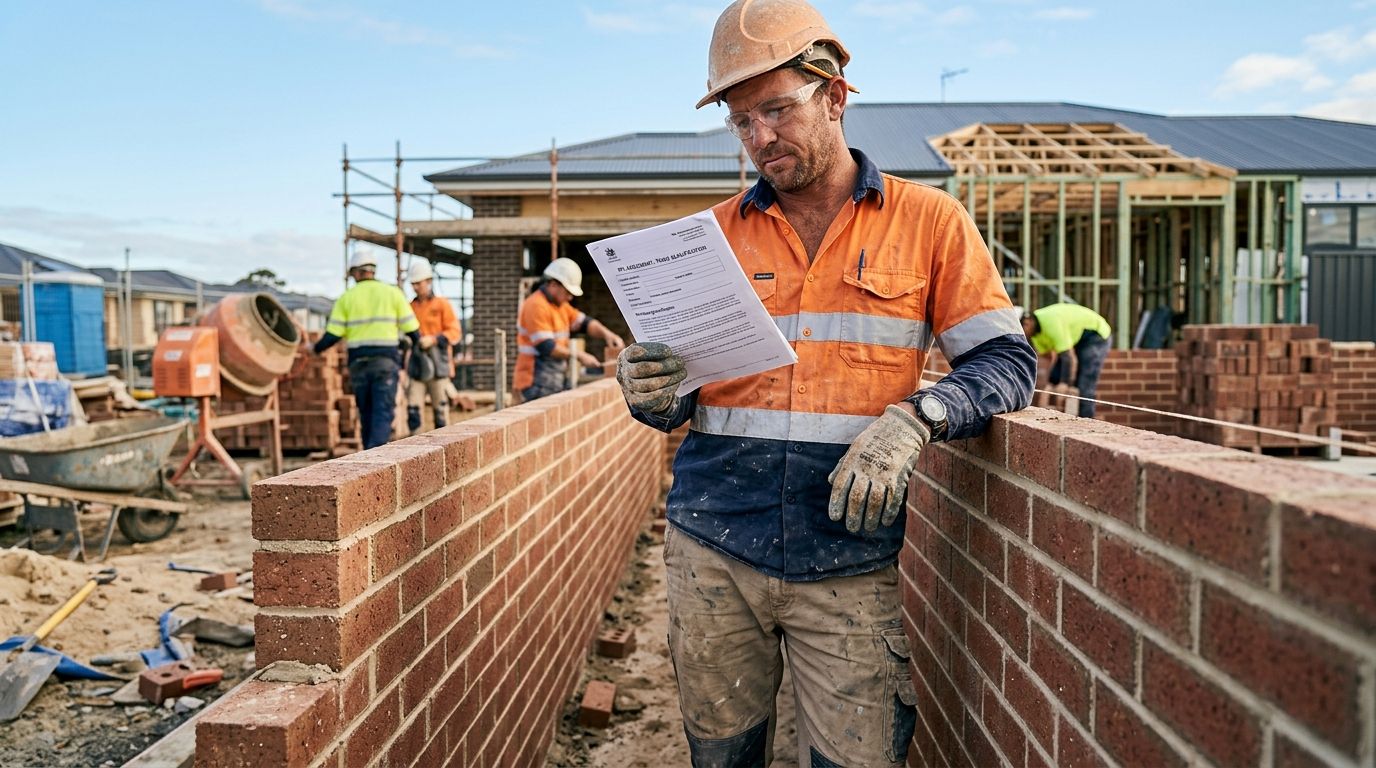
You've been laying brick for years. You know how to read a site. You know your mortar consistency by feel. You've set out corners, run cavity walls, installed flashings, and fixed other people's mistakes without being asked. And now someone is telling you that you need a certificate to keep doing the work you've been doing all along.
It doesn't sit right. It shouldn't. The frustration is legitimate.
This isn't about whether you can do the job. Nobody on site is questioning that. This is about a contract requirement, a compliance deadline, or an employer directive that says the paper needs to exist — and right now, it doesn't. The work is real. The experience is real. But without the formal qualification, the system treats you as if neither of those things counts.
That's the frustration. It's structural, not personal. And you're far from alone in it.
Your Hands Know the Work. The System Wants Paper.
The Certificate III in Bricklaying and Blocklaying (CPC33020) covers 28 units of competency — 20 core units and 8 elective units. Those core units include things like handling and preparing bricklaying materials, using bricklaying tools and equipment, carrying out cavity brick construction, laying masonry walls and corners, installing flashings and damp proof course, and constructing curved walls.
Read that list again. Cavity brick construction. Mortar preparation. Masonry walls and corners. Flashings and DPC. If you've been on the tools for any length of time, you've done all of it — probably before breakfast on a busy day.
The system is not questioning whether you can do these things. It is questioning whether you have a formal document that says you can. That's a different problem — and it has a different solution.
Here's the Reframe: The Cert III Is Not a Training Program
This is the part that changes everything.
The Certificate III in Bricklaying and Blocklaying via Recognition of Prior Learning is not asking you to learn bricklaying. It is asking you to demonstrate that you already know it.
Recognition of Prior Learning — RPL — is a formal process that assesses your existing competency, built through formal, non-formal, and informal learning, to determine whether you meet the requirements of a training package or VET accredited course.
In plain terms: your years on the tools are the curriculum. You don't sit in a classroom. You don't repeat training you've already done through experience. A registered training organisation (RTO) assesses whether your existing competency meets the national standard — and if it does, you receive the qualification.
RPL is a legitimate part of the Australian VET sector. When done well, it recognises skills built from experience and provides a practical framework to ensure people can have their skills formally acknowledged.
The qualification is nationally recognised because the assessment is genuine. That is the point. You are not bypassing the standard — you are being assessed against it, using evidence of what you've already done.
What RPL Actually Looks Like for a Bricklayer
RPL for a trade qualification is not a single test. It's a structured process of gathering and presenting evidence that demonstrates your competency across the units of the qualification. Here's what that typically involves — though requirements vary between RTOs, so always confirm with your provider.
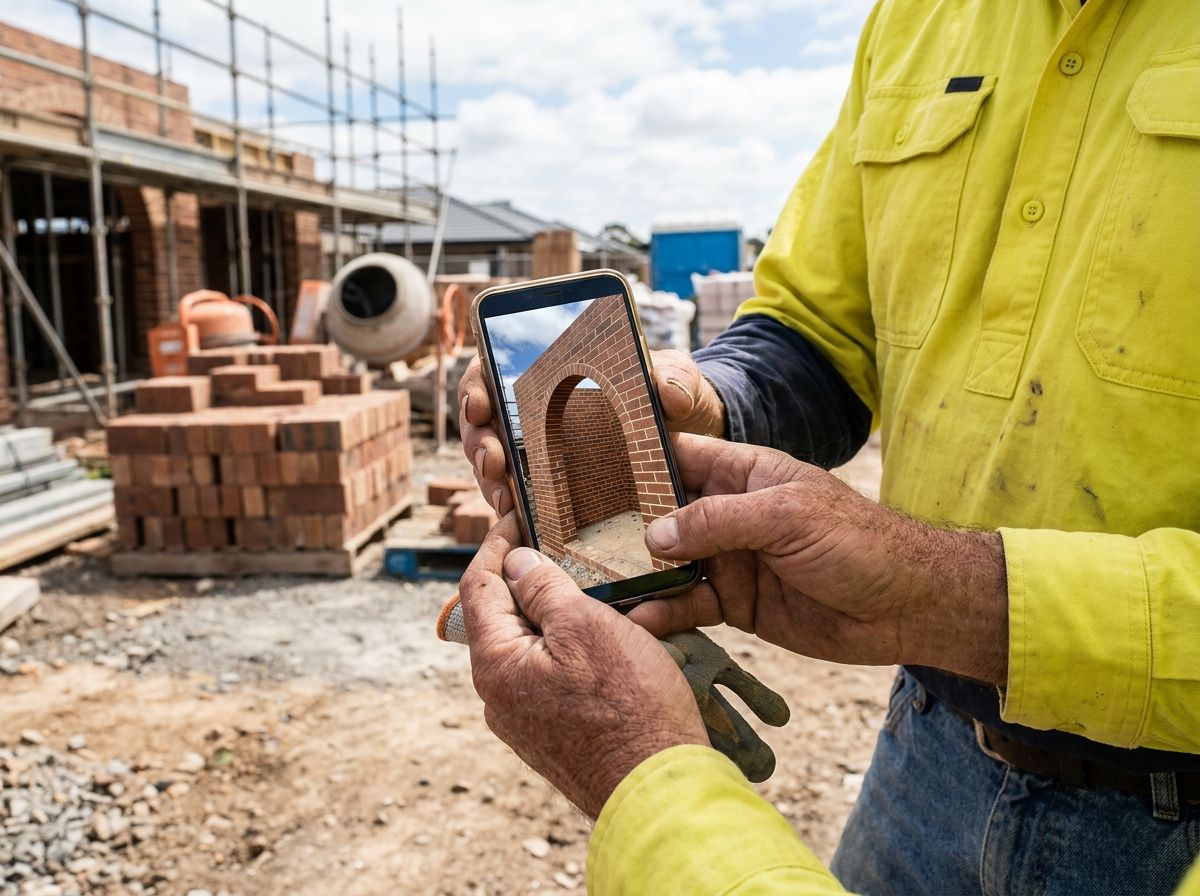
A portfolio of evidence is the foundation. This usually includes site photos showing your work — cavity walls, arches, curved sections, blockwork courses — along with documentation of the projects you've worked on. Photos and work samples are a common starting point.
Employer and supervisor references verify that the experience is real. RTOs typically ask for a list of previous employers with the duration of employment and references who can confirm the scope of your work.
Knowledge questions assess your understanding of the technical and safety requirements behind the tasks — not just whether you can do them, but whether you understand why. These may be written or verbal, depending on the RTO.
A practical demonstration or trade test may also be required. Some RTOs ask candidates to demonstrate specific skills on a worksite or in a controlled setting, using the tools of the trade.
If you hold any previous qualifications or statements of attainment, those can also form part of your evidence.
One important note: if there are units where your evidence is thin, gap training may be required. This is not a failure — it's part of a rigorous, honest assessment process. Reputable providers include gap training at no additional cost.
Master Builders NSW describes their RPL program for trade qualifications as involving knowledge questions, practical projects, and a portfolio of documentary evidence including photos and videos — along with a list of previous employers and references to verify the experience.
How Long Does It Take? (The Honest Answer)
The honest answer is: it depends. It depends on the quality and completeness of your evidence, the RTO you work with, and whether any gap training is needed.
For a well-evidenced candidate with years of site experience, the RPL pathway is typically much faster than completing a traditional study program. As a reference point, Master Builders NSW designs their RPL program for the Certificate III in Carpentry — a comparable trade qualification — to be completed within 12 months, with a recommended commitment of around 10 to 15 hours per week.
Some commercial providers suggest that RPL for Certificate III qualifications can move faster than that for candidates with strong, well-organised evidence — though timelines vary significantly between providers and qualification types.
What matters most is the quality of your evidence, not the speed of the process. A rigorous assessment takes the time it takes — and that rigour is what makes the qualification meaningful.
For context on how RPL timelines compare to traditional study pathways for Certificate III trade qualifications, Churchill Education notes that traditional study typically takes 12 to 24 months — whereas RPL can significantly reduce that timeframe for candidates with relevant experience.
You Already Do the Work. Here's How to Get the Certificate That Proves It.
The frustration at the start of this article was real. Being told you need a certificate for work you've been doing competently for years is genuinely absurd — until you understand that the certificate, via RPL, is simply a formal record of what you already know.
You are not being asked to learn bricklaying. You are being asked to demonstrate it — through evidence of the work you've already done, assessed by a registered training organisation against the national standard.
Recognition shouldn't require starting over. RPL exists precisely so it doesn't have to.
If you're ready to explore whether RPL is the right pathway for your situation, the Certificate III in Bricklaying and Blocklaying qualification page is the logical next step.
Explore the Certificate III in Bricklaying and Blocklaying qualification page to understand what the RPL pathway looks like and what's involved.
The decision is yours. The Free Skills Review is the no-commitment first step — it is free, there is no obligation to proceed, and it tells you honestly whether RPL is the right fit before you commit to anything.
Ready to Get Recognised?
Start with a free skills review to find out if RPL is right for you.