What remedial massage RPL assessors actually look at
RPL assessors for the Diploma of Remedial Massage review more than your client list. Here is what evidence categories actually matter.
By RPL it Australia8 min read
Your assessment is based on what you can demonstrate, not what you know
RPL for the Diploma of Remedial Massage is not a test of knowledge. Assessors do not evaluate whether you understand anatomy or can explain a technique. Instead, they assess whether your documented practice history provides sufficient evidence of competence against the specific units of this qualification.
This distinction changes how you should prepare. Many experienced therapists approach RPL as if they need to prove their skill. The actual task is different: you must prove your skill is documented in a format that can be assessed. Your expertise is real. The question is whether it is visible to the system reviewing your application.
If you have been practising remedial massage for years without the formal Diploma of Remedial Massage (HLT52021), you probably understand the challenges this credential gap creates. Insurance rebates, clinic employment, or professional registration requirements can make the qualification necessary. This article explains what assessors look for once you begin the RPL process, allowing you to prepare with clarity instead of uncertainty.
Client case notes: the evidence category most therapists underestimate
Client case notes are typically the most closely examined evidence category in remedial massage RPL. The reason is straightforward: case notes show your clinical reasoning in real time. They prove that you assessed the client's presentation, created a treatment plan, and tracked clinical outcomes across multiple sessions, rather than simply showing that you applied a technique.
Assessors look for documentation that shows this reasoning process across a range of presentations, rather than simply a high volume of clients. A therapist who has treated five hundred clients but kept minimal notes will have weaker evidence than a therapist who has seen two hundred clients and documented each case thoroughly.
Many experienced therapists discover this too late. They have years of practice, a loyal client base, and genuine clinical skill, only to realise that the notes they kept along the way do not reflect the depth of reasoning that occurred in the treatment room. This is a documentation gap, not a lack of competence. However, it is a gap that affects your RPL assessment.
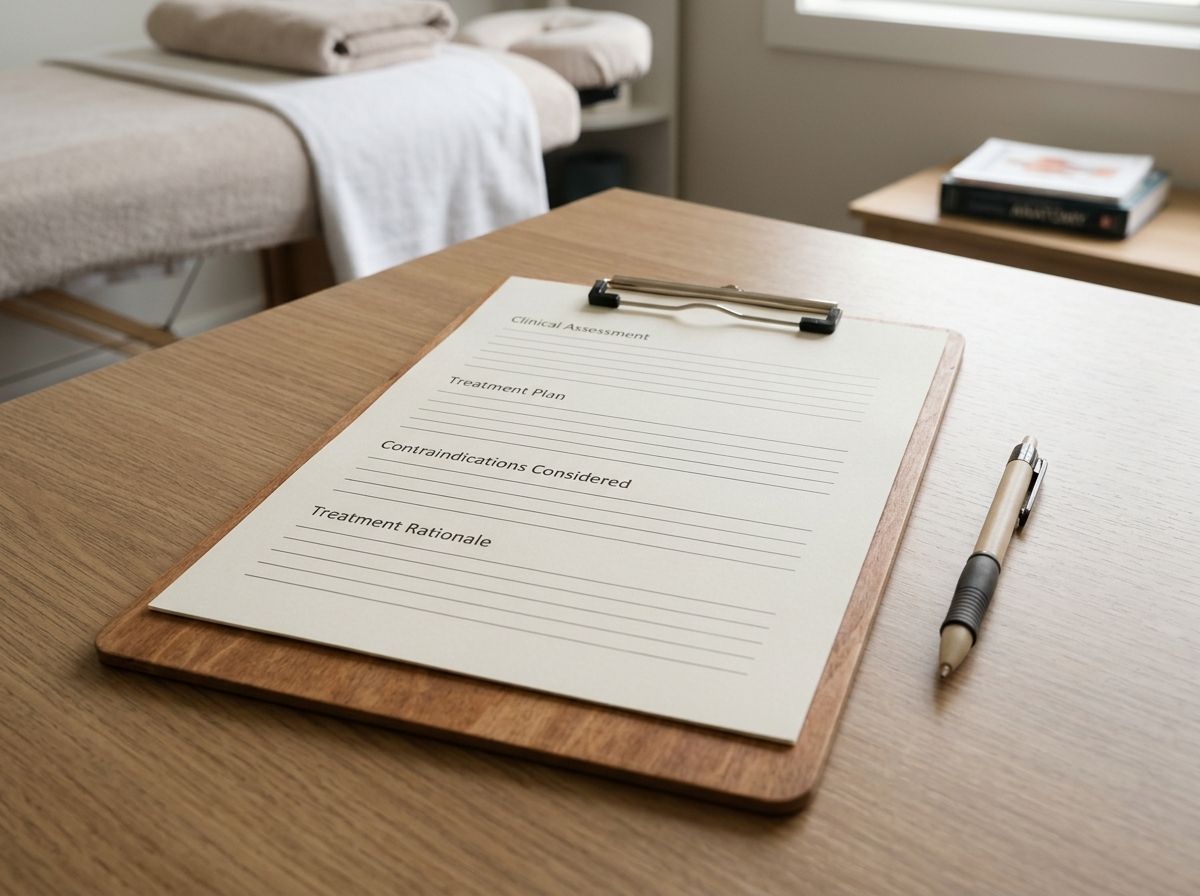
Assessors look for specific key elements in your case notes: the presenting condition, relevant medical history, your clinical assessment findings, the treatment approach, treatment rationale, contraindications considered, and the client's progress over time. Whether you keep paper records or use practice management software, the substance of your documentation matters more than the format. If you use digital systems, confirm with your training provider whether exported files from your software are accepted, as requirements vary.
Referral letters and third-party verification: what counts and what does not
Third-party verification, including letters from supervising practitioners, clinic managers, referring GPs, or medical specialists, acts as indirect evidence that corroborates what you have documented yourself. Assessors use these letters to confirm whether the third party's account of your active practice aligns with the documentation you have submitted in your application.
The quality of these letters matters far more than the quantity. A letter from a GP who has referred patients to you and can speak to the clinical outcomes they observed carries more weight than a generic character reference. Similarly, a letter from a clinic manager describing your scope of practice, the conditions you treat, and your professional conduct is more useful than a brief statement confirming your employment.
Many therapists collect the wrong kind of third-party evidence, such as references focusing on character or work ethic instead of clinical practice. When requesting third-party verification, ask the writer to focus on a specific question: what clinical work have they personally observed, and what does that work show about your professional competency?
If you have operated an independent practice for years without a supervising practitioner, gathering this evidence can feel difficult. In these situations, you should seek letters from long-term referring practitioners, professional association supervisors, or colleagues who have observed your clinical work. The essential requirement is that the letter speaks directly to observed practice, rather than general professional reputation.
Technique demonstrations: when practical assessment is required
Not all RPL pathways for the Diploma of Remedial Massage rely solely on documents. Some RTOs require a practical demonstration component, either in person or via video. This is common for units where hands-on competency cannot be verified through paperwork alone.
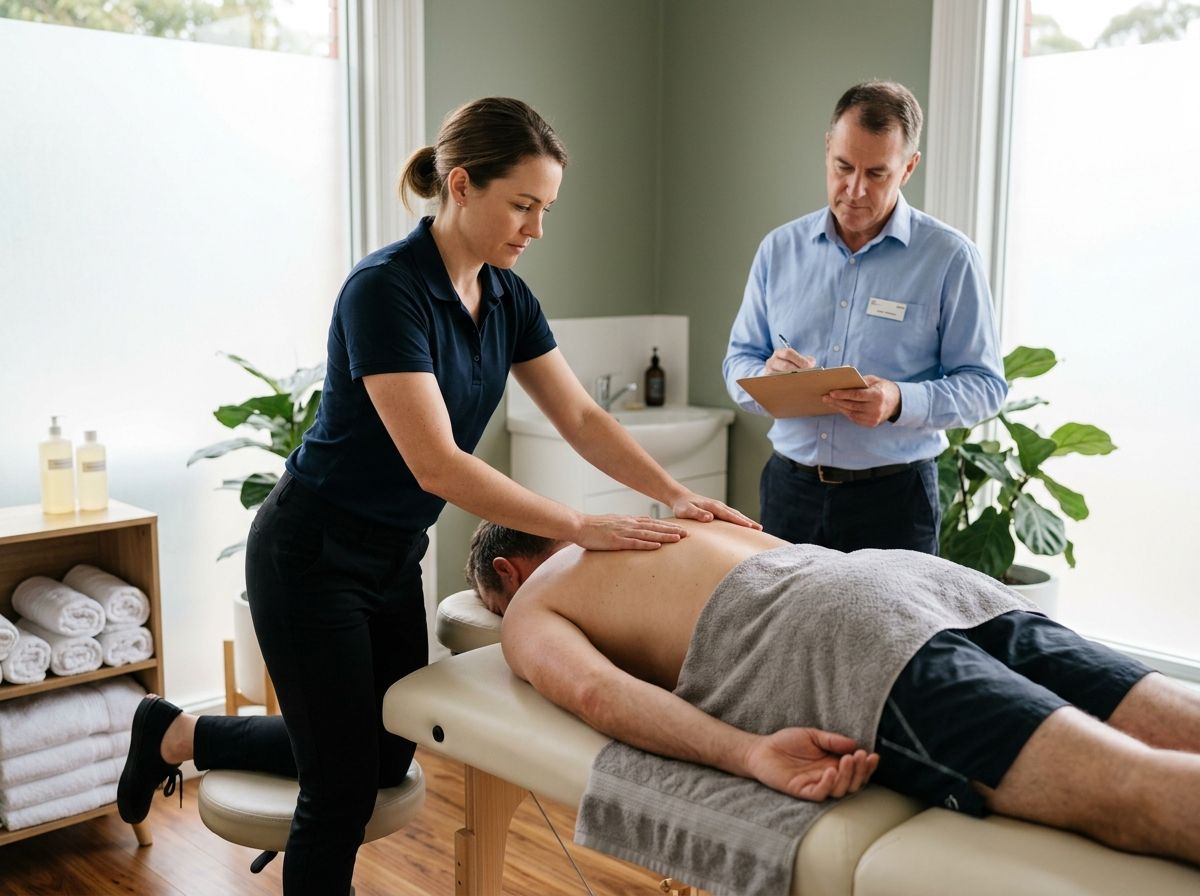
This can surprise therapists who assume RPL only involves submitting paperwork to receive a qualification. While that assumption is common, it is not always correct. For units directly related to client assessment and treatment delivery, an assessor may need to observe your technique in practice rather than relying solely on your written case notes.
Knowing which units trigger a practical assessment helps you prepare instead of being caught off-guard mid-process. Because requirements vary, you should ask your RTO directly when you begin: which units require a practical component, and what does that involve? Some RTOs accept video evidence of your work, while others require an in-person session. If you live in a regional or remote area, ask how the training provider accommodates your location.
A practical assessment is not a test of unfamiliar techniques. It is simply a way to show skills you have been using in your daily practice for years. For most experienced therapists, this is the least challenging part of the process, provided you know it is required beforehand.
Professional development records: the evidence that shows ongoing competency
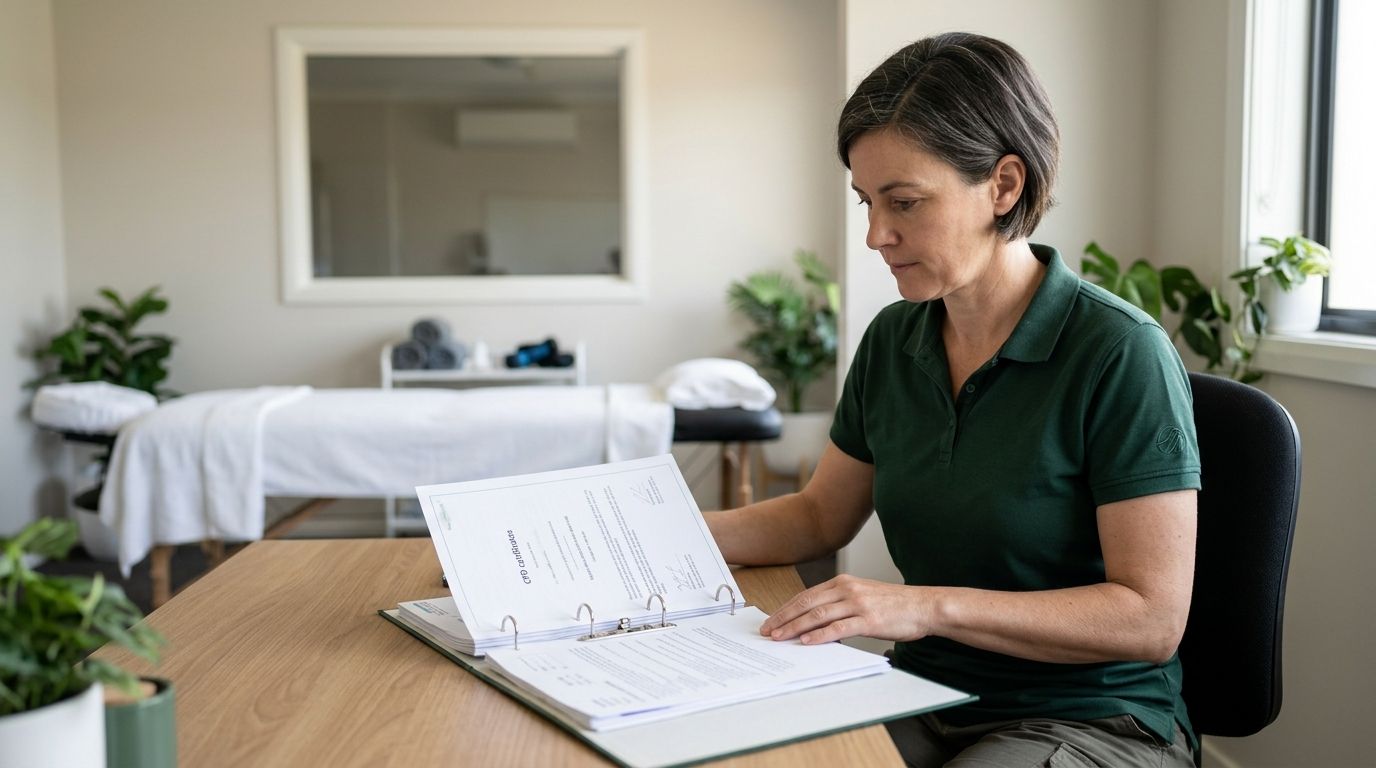
CPD records, such as certificates from workshops, short courses, professional association training, and continuing education, have a specific role in RPL. They show that your practice remains current. Assessors do not just look at past skills; they evaluate whether you currently maintain and develop those skills.
For therapists who have been practising for many years, CPD records address currency: was this competence shown recently, or a decade ago? Evidence must be recent, not just historical. The exact timeframe varies by provider and qualification, but as a general rule, evidence from the past three to five years carries more weight than older records.
If you hold membership with a professional association such as ATMS, AMT, or AAMT, your membership and CPD logs can help prove currency. Whether these are formally accepted, and in what format, varies by RTO. You should confirm these details when you begin. What matters is that your CPD records are organised, dated, and clearly linked to your active practice as a remedial massage therapist.
What assessors actually map your evidence against
Every piece of evidence you submit in an RPL application is mapped against specific units of competency within the Diploma of Remedial Massage (HLT52021). Assessors do not make a general judgement about whether you are a good therapist. They systematically verify whether each unit has sufficient evidence coverage.
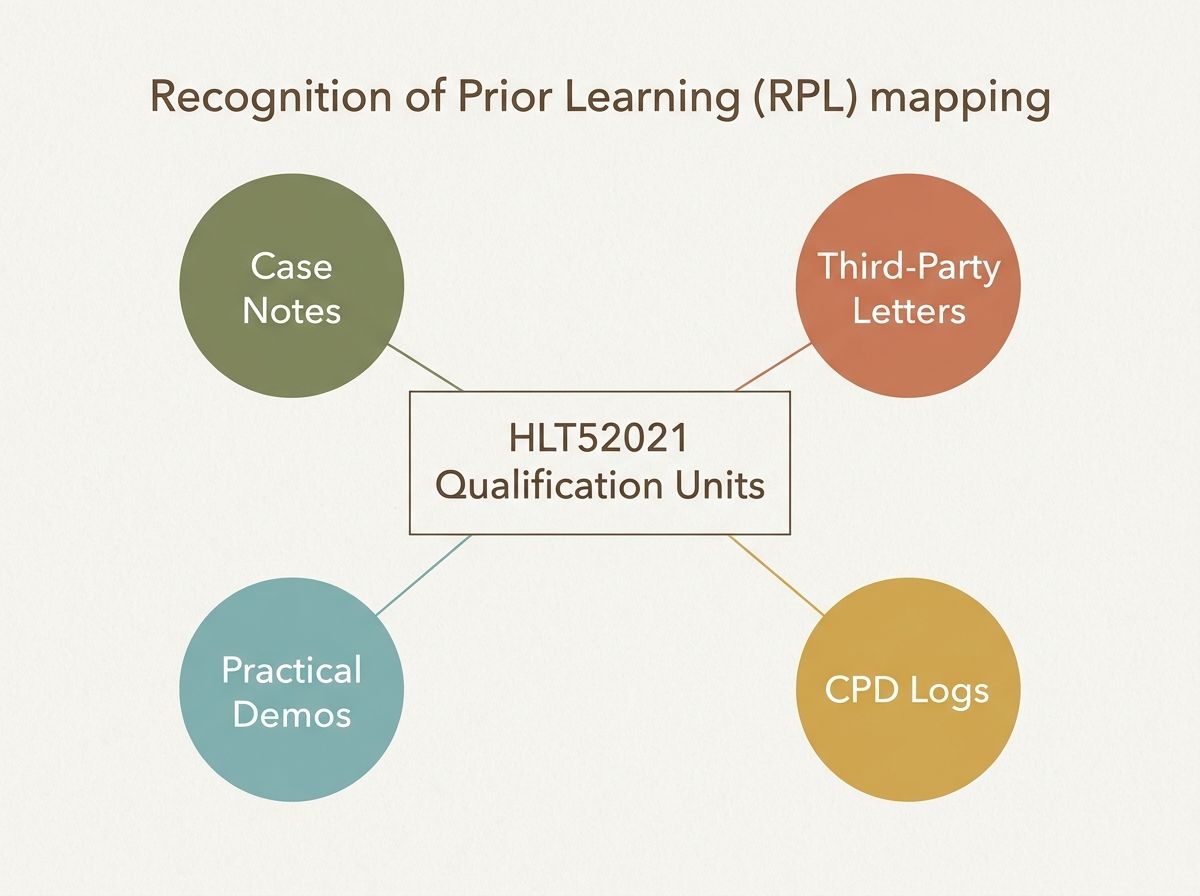
This means that gaps in evidence are unit-specific, not global. A therapist might have strong evidence for treatment delivery units, which form the core of their clinical practice, but weaker evidence for units related to business practice, health promotion, or interprofessional collaboration. Experienced therapists often perform these tasks daily, but they do not always document them in a format an assessor can verify.
Understanding the unit structure of the qualification before you start gathering evidence helps you identify and address gaps early. RPL is conducted unit-by-unit, which is practical for applicants. It means you can gather your evidence systematically, rather than sending everything you have and hoping it meets the requirements.
The gap training question: what happens when evidence is not enough
RPL is not an all-or-nothing process. When evidence is insufficient for specific units, gap training can fill those gaps. For experienced therapists, gap training is highly targeted, focusing only on the units where documentation is weak rather than requiring you to repeat a full course.
Some therapists will have gaps. This does not reflect a lack of clinical competence. It is simply a documentation gap, representing the difference between active skill and what can be verified through written evidence. These are distinct concepts, and confusing them is a common source of unnecessary anxiety about the RPL process.
The structure of gap training, including its format, duration, and delivery mode, depends on the training provider and the specific units you need. Some components can be completed online, while others require practical work. You should confirm these details with your RTO early in the process to understand the full pathway before committing. Gap training is a manageable step to achieve your qualification, not a barrier to recognition.
Before you gather evidence: the first question to ask
The most common mistake experienced therapists make is gathering evidence before checking if their practice history fits the assessment requirements. This often leads to hours spent organizing documentation that turns out to be incorrect or insufficient for the critical units.
A Free Skills Review before you commit provides an honest assessment of where your evidence is strong, where gaps exist, and whether RPL is the right pathway for you. This is a suitability check, not a sales pitch. The decision to proceed is entirely yours, based on a clear understanding of what your evidence can prove.
You have the experience. The main question is whether your documentation is in the format assessors require. A Free Skills Review answers that question at no cost, with no obligation to proceed.
General information only, current at the date shown. Licensing rules change, so check the current requirements with the relevant regulator before you rely on them. RPL it Australia is a student support service, not a Registered Training Organisation; qualifications are assessed and issued by our partner RTOs.