The hidden cost of unlicenced painting work in Australia
Think getting your Certificate III in Painting and Decorating is expensive? The hidden cost of operating unlicenced is far higher.
The assumption most unlicenced painters make
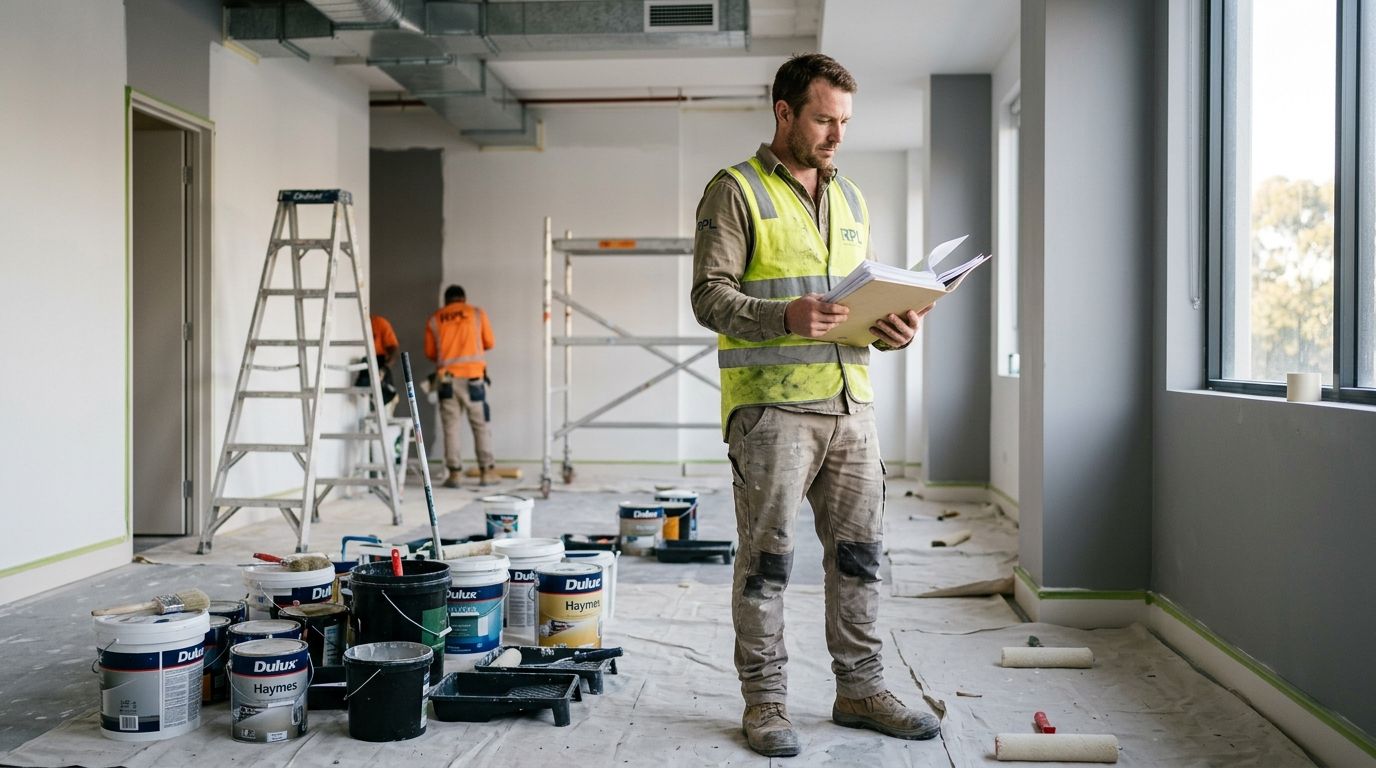
You have the experience. Years of it. You know your way around a brush, a roller, and a spray rig. Somewhere along the line, you did a rough calculation: getting formally qualified costs time and money, so you put it off. The work kept coming. The calculation seemed to hold.
This article is about what that calculation left out. Staying unlicenced is not the cheap option. It only looks like one until the real costs show up. The Certificate III in Painting and Decorating is not an expense. It is a tool to manage risk. And these risks are ones most unlicenced painters have never sat down to quantify.
This article provides general information only. For advice specific to your situation, consult the relevant state licensing authority or a qualified legal professional.
What 'unlicenced' actually means in the painting trade
Licensing requirements for painters vary across Australian states and territories, but the Certificate III in Painting and Decorating (CPC30620) is central to most state licensing pathways. In New South Wales, you need a contractor licence for painting work valued at more than $5,000 in labour and materials including GST. The qualification is a direct pathway to that licence.
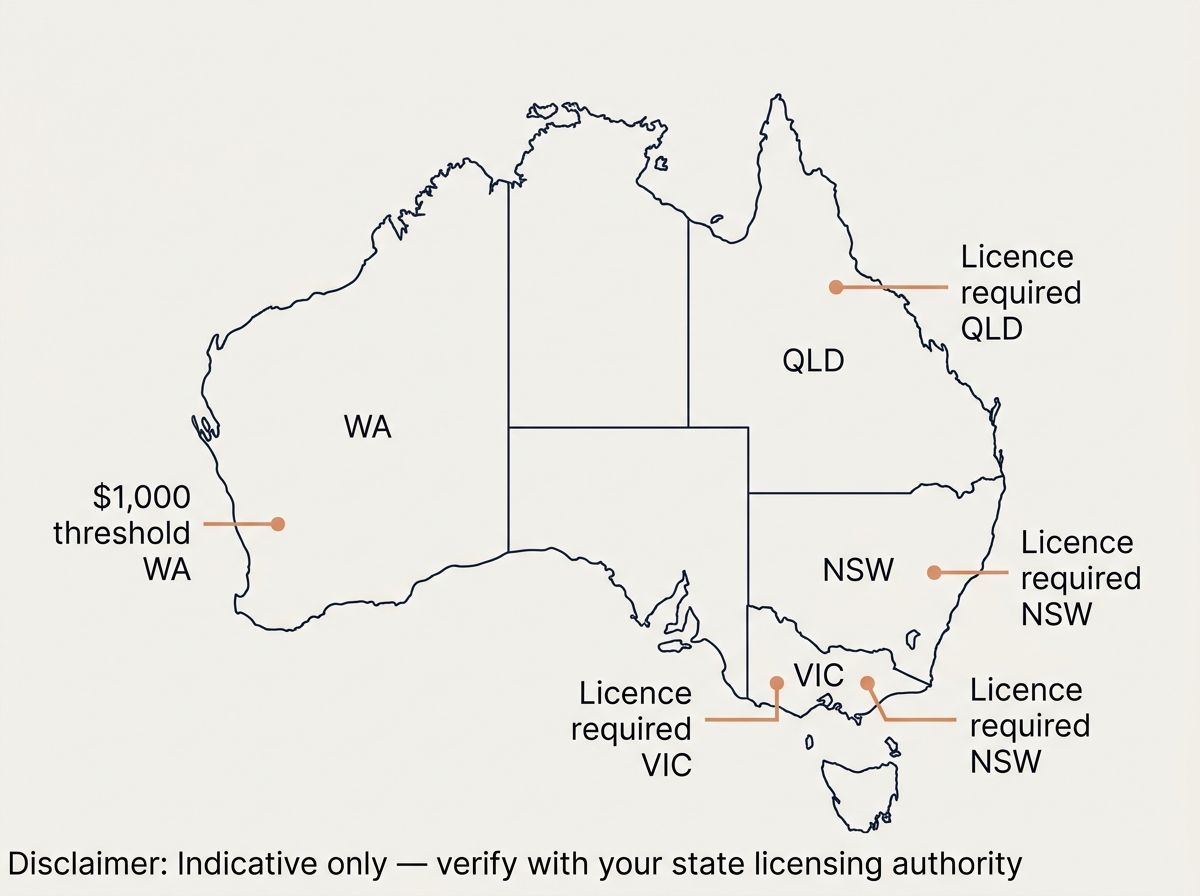
In Western Australia, only registered painting contractors can legally carry out paid painting work valued at $1,000 or more. This threshold is lower than many painters assume, and the consequences of crossing it without registration are real.
The NSW Government's guidance on painting work explains when a contractor licence is required and details the penalties for performing work without one.
Requirements differ by state and territory. Some require a formal licence, while others require the qualification as a prerequisite for that licence, and thresholds vary. Across all jurisdictions, operating above those thresholds without the required registration or licence creates specific, clear legal exposure. If you are unsure of the requirements in your state, the relevant licensing authority—the QBCC in Queensland, NSW Fair Trading, the VBA in Victoria, or DMIRS in Western Australia—is the authoritative source.
Hidden cost #1: Your insurance may not cover you
This is the issue most unlicenced painters have not checked. Most tradespeople carry public liability insurance and assume it covers them for their daily work. However, insurance coverage for tradespeople is often tied directly to licensing conditions.
In many Australian states, licensing rules require public liability insurance to hold or renew a licence. The relationship runs both ways: the licence requires the insurance, and the insurance often assumes the holder is licensed. A specialist insurance broker's analysis of compulsory insurance requirements in Australia notes that many public liability policies require the policyholder to ensure any subcontractors they use hold the same level of cover. This condition assumes a licensed, compliant supply chain.
Whether a standard Australian public liability policy contains a clause that explicitly voids coverage when work is performed without the required licence is a specific question you need to verify in your policy documents and with your broker. The evidence does not support a blanket statement that all policies contain such a clause. But it does show this: if you are operating unlicenced, you should read your policy carefully before assuming you are covered. The risk is real enough to warrant checking.
The Insurance Council of Australia, citing APRA data, reports that Australian public liability claims costs increased by 30% from an average of $720 million per year over 2009–2013 to an average of $940 million per year over 2014–2021, driven by higher claimant demands and rising legal and medical costs. Average public liability insurance premiums have risen by 40% since 2015. The market is hardening. Insurers are scrutinising policy conditions more carefully. You should not assume your cover is solid without checking.
Hidden cost #2: Personal legal liability you cannot transfer
When an unlicenced painter causes damage or injury on a job, the legal position becomes complicated. In NSW, you can be fined $22,000 as an individual or $110,000 as a company under the Home Building Act 1989 for doing unlicenced work. In WA, a court recently fined an unregistered painter $3,500 and ordered more than $500 in costs after he pleaded guilty to two offences under the Building Services (Registration) Act 2011 for painting jobs valued at $2,200 and $6,550.
The WA Government's Building Commissioner published this enforcement outcome as a reminder of registration requirements. This is a real case, not a hypothetical scenario.
Beyond the fines, the liability picture is complex. If you are operating unlicenced and a client suffers loss or injury, your ability to defend a claim, or to enforce payment for work already done, is compromised because you were not legally authorised to perform the work. The fines are only the visible cost. Civil liability, legal fees, and potential rectification orders are the costs that follow.
APRA data shows that for construction trades, public liability insurance premiums have risen significantly while risk counts have fallen. This means fewer contractors are insured, and the ones who are are paying more. Operating unlicenced and uninsured, or unlicenced with insurance that may not respond, places the full weight of any claim directly on you.
For a closer look at what happens when a site inspector asks for your painting ticket and you do not have one, this article covers the immediate consequences in detail.
Hidden cost #3: The income ceiling you have already hit
Commercial painting contracts, such as government buildings, strata complexes, tier-one construction projects, and body corporate work, typically require proof of formal qualification and licensing as a condition of tender. An unlicenced painter is excluded from these markets regardless of skill level. This is a present reality, not a future risk.
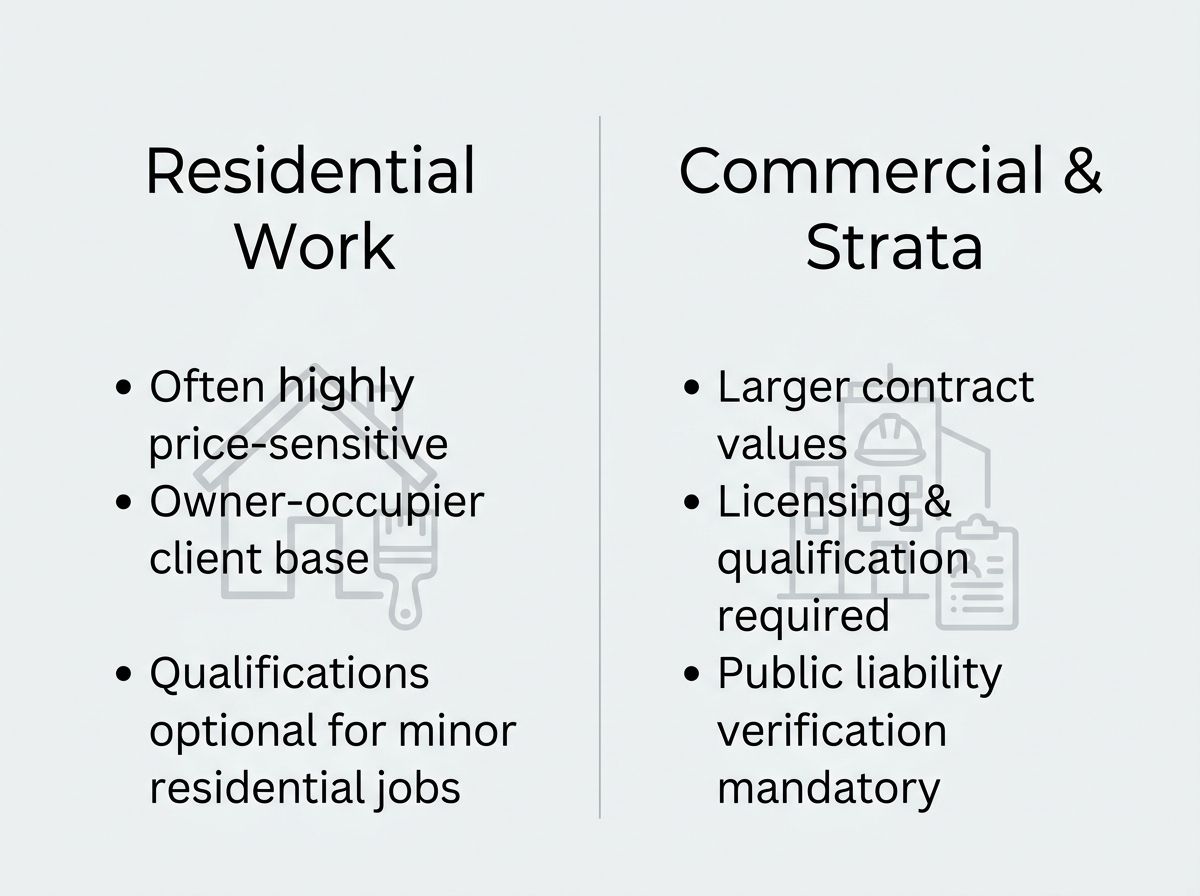
In some Australian states, licensed contractors who engage unlicensed subcontractors to perform building work face specific offences. Queensland and Victoria already have these provisions, and South Australia has proposed introducing a similar offence. This means that even if an unlicenced painter finds a principal contractor willing to hire them, that contractor takes on legal risk by doing so, and many will refuse.
State licensing regimes restrict unlicensed operators to smaller jobs, while licensed contractors can access projects worth hundreds of thousands or millions of dollars. Unlicensed operators also cannot legally advertise building services, enter contracts above certain values, or apply for building permits and approvals. The income ceiling is structural, not circumstantial.
Hidden cost #4: The compounding risk of every job you take
Every job an unlicenced painter takes adds to their cumulative exposure. This risk is not static; it compounds. The QBCC states it has a zero-tolerance policy on unlicenced contracting in Queensland, and that some breaches can result in courts imposing a period of imprisonment. Following a legislative update on escalating penalties, the QBCC has indicated it will likely prosecute second or subsequent unlicenced contracting offences.
QBCC audits are risk-based. Licensees and those operating without licences can be selected based on factors like past non-compliance and new information suggesting they may not be meeting their obligations. Prior unlicenced conduct can keep a contractor on the regulator's radar.
In NSW, Fair Trading can conduct investigations and take disciplinary or other regulatory action whether or not a complaint has been made—for example, where an investigator has identified a breach. The enforcement posture is proactive, not just reactive.
The longer you operate unlicenced, the larger the potential liability pool. Each job is another instance of exposure. The ledger does not reset. The longer you wait to get qualified, the more expensive the decision to remain unlicenced becomes, both in future risk and in accumulated past exposure.
The calculation most unlicenced painters have not done
Set the costs side by side. On one side, you have insurance that may not respond when you need it, personal legal liability for fines and civil claims, structural exclusion from commercial markets, and compounding enforcement exposure with every job you take. On the other is the investment in obtaining the Certificate III in Painting and Decorating through Recognition of Prior Learning.
For an experienced painter, RPL is not a course. It is an evidence-based assessment of skills you have already demonstrated on the job. You are not learning what you already know. You are presenting what you already do—your past projects, your documented experience, and your demonstrated competency—to a qualified assessor from a registered training organisation. The process is rigorous because the qualification is genuine. That is what makes it nationally recognised.
The Certificate III in Painting and Decorating is not an expense. It is a risk management tool that pays for itself through the costs it eliminates. Your work deserves to be recognised. We believe in recognition, not repetition.
And if you have been losing work to compliance requirements and missing paperwork, this article on the compliance trap that costs experienced painters real money is worth reading.
What happens next: Finding out whether RPL is right for you
The Free Skills Review is the starting point. It is free and carries no commitment. It provides honest guidance about whether your experience qualifies you for RPL assessment, including if RPL is not the right pathway for your situation.
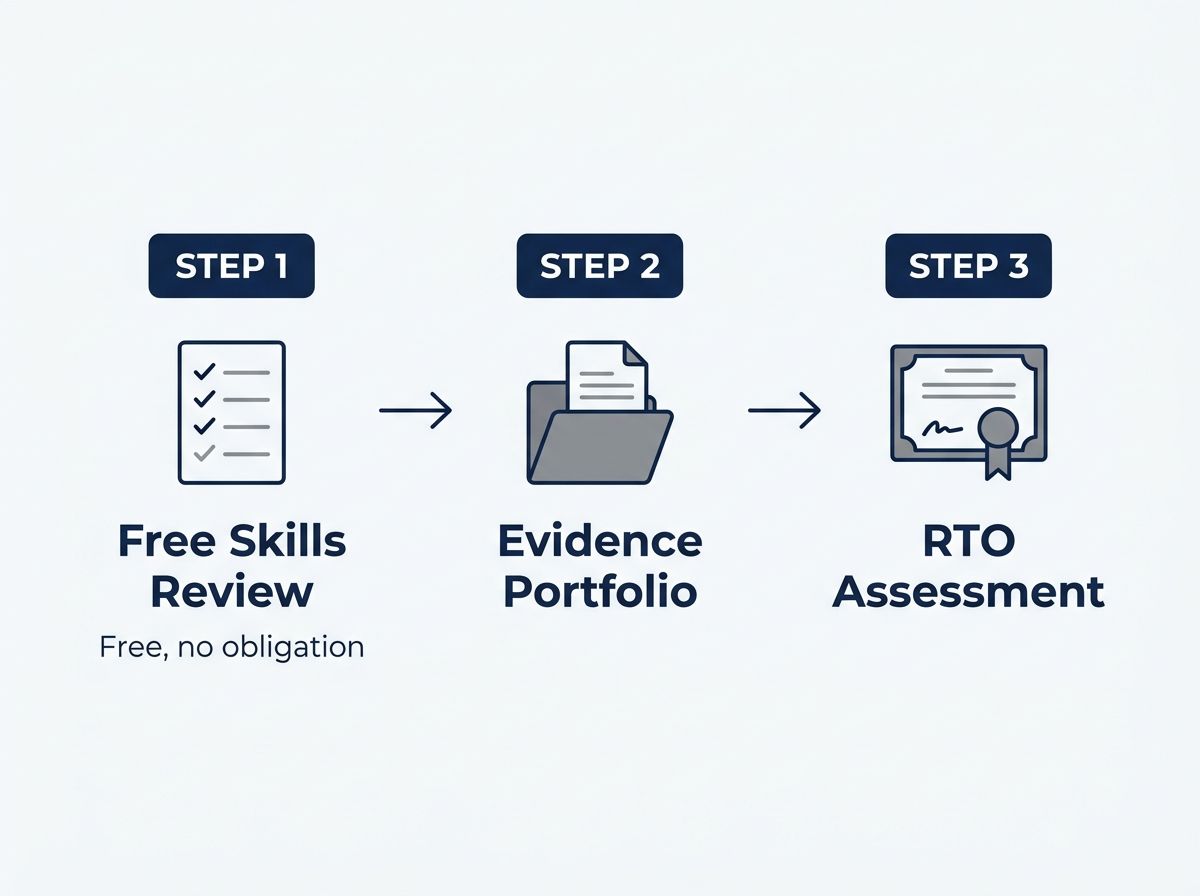
We will guide you through what your experience looks like against the national standard. If RPL is right for you, we will show you the pathway. If it is not, we will tell you that too. We would rather guide you to the right pathway than enrol you in the wrong one.
The assessment itself is conducted by a qualified assessor from a registered training organisation, and the qualification is issued by that RTO. RPL it helps you through the process—guiding you to document your experience as evidence, navigate the assessment, and understand what to expect at every step.
Ready to Get Recognised?
Start with a free skills review to find out if RPL is right for you.