Stop re-learning what you already do every day: The FNS50222 is a description of your work, not a course
If you run payroll, lodge BAS, and reconcile accounts, the FNS50222 Diploma of Accounting may describe your work. Learn how RPL assesses your experience.

The assumption that costs accounting professionals years
You have the experience. You close the books at month-end. You run payroll. You reconcile the bank accounts and prepare the BAS. You have been doing this reliably, accurately, and professionally for years.
Yet when the FNS50222 Diploma of Accounting comes up, the assumption is almost universal: you need to enrol in a course. You need to sit through lectures on topics you already apply every day. You need to write theoretical essays on payroll when you literally run the company's payroll.
That assumption is wrong. It is the single biggest reason experienced accounting professionals delay or abandon the idea of formalising their qualifications.
The FNS50222 is not a course designed to teach you accounting. It is a nationally recognised framework that describes the competencies of an experienced accounting practitioner. If your daily work already demonstrates those competencies, the question is not whether you can learn the material. The question is whether your existing work constitutes evidence.
That is a different question with a different answer.
What the FNS50222 actually assesses and why it matches your job description
The FNS50222 Diploma of Accounting is a qualification on the Australian Qualifications Framework. It is structured around units of competency, with each unit describing a specific skill or task that a qualified accounting professional performs.
The qualification does not teach payroll processing; it assesses whether you can process payroll. It does not teach BAS lodgement; it assesses whether you can prepare and lodge a business activity statement correctly. It does not teach financial reporting; it assesses whether you can prepare financial reports that meet regulatory and organisational requirements.
The units that make up the FNS50222 cover areas including preparing financial reports, managing accounts payable and receivable, processing payroll, completing business activity statements, providing financial and business performance information, and applying relevant financial legislation and compliance requirements.
Read that list again. For many accounting officers, bookkeepers, payroll officers, and finance administrators working in Australian businesses, that list is not a curriculum. It is your job description.
The qualification was written to describe the work. If you do the work, the qualification describes you.
The old model: Formal education means learning new things
The common assumption in vocational education is straightforward: you earn a qualification by attending classes, absorbing new knowledge, and demonstrating you have learned it. You start without the skill, you study, you are assessed, and you graduate with the skill.
That model makes sense for entry-level workers. It makes far less sense when the qualification describes work you have been performing for years.
Consider what the old model asks of an experienced accounting professional. You have been preparing management reports for six years. The FNS50222 includes a unit on preparing financial and business performance information. Under the old model, you would sit in a classroom to learn how to prepare financial and business performance information, which is the exact task you have been doing every month for six years.
You would write assignments about it, face assessment on theoretical scenarios, and spend months re-learning what you already do every day.
This is not a gap in your knowledge. It is a gap in the system's ability to recognise what you already know.
Recognition of Prior Learning exists because this gap is real. RPL does not ask you to learn what you already know; it asks you to demonstrate that you can already do it.
The new model: Your daily work is already evidence
RPL for the FNS50222 is an evidence-based assessment. It asks a different question from traditional study: not 'can you learn this?' but 'can you demonstrate you already do this?'
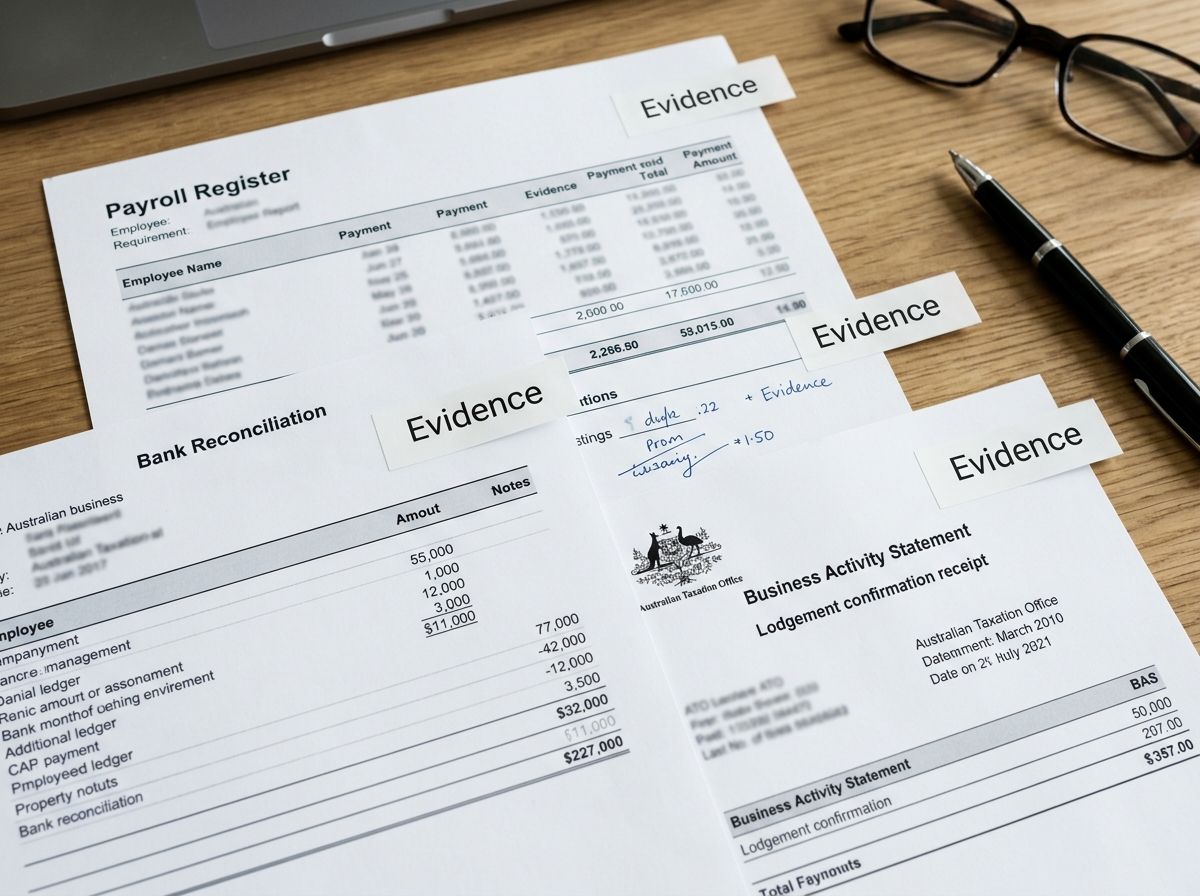
The evidence is not theoretical. It does not consist of essays or multiple-choice tests, but rather the documentation of work you have already completed.
Your payslips are evidence. Your BAS lodgement confirmations are evidence. Your bank reconciliation workpapers are evidence. Your financial reports, accounts payable records, and payroll registers are the materials an RPL assessor reviews to determine whether your existing competency meets the standard described by each unit of the FNS50222.
Experience is evidence. That is not a slogan; it is the core principle of how RPL assessment works within the Australian VET system.
An RPL assessor working through the FNS50222 is not looking for proof that you attended a class. They are looking for proof that you can do the work. If your daily role generates that proof, as it does for many experienced accounting professionals, then the assessment is about presenting that evidence in a structured way, not about acquiring new skills.
This does not mean RPL is automatic or guaranteed. It means the question worth asking is whether your existing work constitutes sufficient evidence, and that question deserves an honest answer before you commit to months of study.
Who this actually applies to: Roles that commonly map to the FNS50222
RPL for the FNS50222 is not suitable for everyone, and honest guidance matters. The assessment is rigorous. An RTO assessor will review your evidence against each unit of competency, and if gaps are identified, gap training may be required before the qualification can be issued.
With that said, certain roles and experience profiles are commonly well-positioned for FNS50222 RPL assessment. These include:
- Accounts officers and accounts administrators who manage accounts payable, accounts receivable, and general ledger entries as core responsibilities
- Bookkeepers who maintain financial records, prepare BAS returns, and produce financial reports for small to medium businesses
- Payroll officers who process payroll, manage superannuation obligations, and maintain payroll compliance records
- Finance administrators who support financial reporting, budgeting, and compliance functions within larger organisations
- Assistant accountants working under a CPA or CA who perform substantive accounting tasks as part of their daily role
Roles less likely to hold sufficient evidence for FNS50222 RPL include data entry positions, junior administrative roles with limited financial scope, or roles where accounting tasks are incidental rather than central to the position.
The honest question is not 'do I work in finance?' but 'does my daily work generate evidence across the range of competencies the FNS50222 assesses?' If you are unsure, a suitability review is designed to answer this.
It is also worth noting that gap training may be required for some units even where a candidate has strong overall experience. Where gaps are identified through the assessment process, gap training is typically provided as part of the RPL pathway, and your assessor will advise you on what this involves.
What the assessment process looks like for the FNS50222
RPL assessment for the FNS50222 is conducted by a qualified assessor from a registered training organisation. RPL it guides and supports candidates through the process, but the assessment itself, and the decision about competency, is made by the RTO's assessor. The qualification is issued by the RTO, not by RPL it.
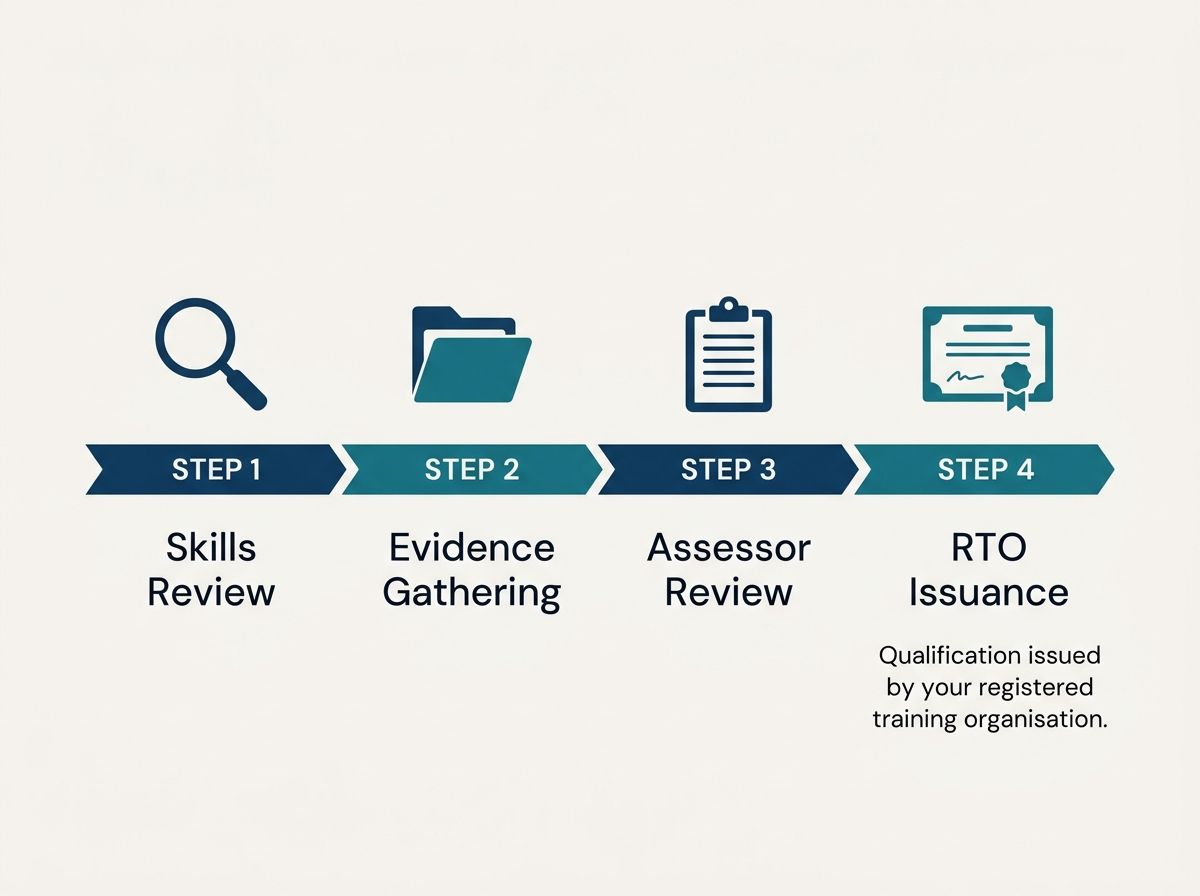
The process involves several stages, starting with a skills review. This is an honest evaluation of whether your experience and evidence are likely to meet the standard, designed to give you a clear picture before you commit to anything.
If the skills review indicates you are a suitable candidate, the next stage is evidence gathering. This involves compiling the workplace documentation that supports your competency claims, such as payroll records, BAS lodgement confirmations, reconciliation workpapers, financial reports, and employer statements that verify your role.
The assessor then reviews your evidence against each unit of the FNS50222. They may conduct an interview or ask clarifying questions about specific aspects of your work. Where gaps are identified, targeted gap training is provided to address those specific units.
The timeframe for FNS50222 RPL assessment varies depending on your experience, the completeness of your evidence, and whether gap training is required. It is not an overnight process, but a genuine assessment of competency. For candidates with strong, well-documented experience, it is typically more efficient than completing the full qualification through traditional study.
You can expect guided support throughout the process. Compiling and presenting evidence is straightforward when you have the right guidance, which is exactly what RPL it is here to provide.
The question to ask before you enrol in a course
Before you commit to months of study for the FNS50222 Diploma of Accounting, ask yourself one question: does your current work already demonstrate the competencies being assessed?
If you run payroll, lodge BAS returns, reconcile accounts, and prepare financial reports daily, the answer may be yes. It is not guaranteed, but it is possible, and that possibility is worth checking before you invest time and money in re-learning what you already do.
A Free Skills Review is the honest starting point. It is not a commitment to proceed, but an assessment of where you stand: what your experience covers, where gaps might exist, and whether RPL is a realistic pathway for you.
The decision is yours, but it is best made with accurate information about what your experience is actually worth.
Ready to Get Recognised?
Start with a free skills review to find out if RPL is right for you.