You've Closed Books for Years Without a CPA Pathway: Here's Where RPL Fits In
Blocked from CPA entry or senior accounting roles? Learn how RPL converts your financial reporting and BAS experience into a formal qualification.
By RPL it Australia8 min read
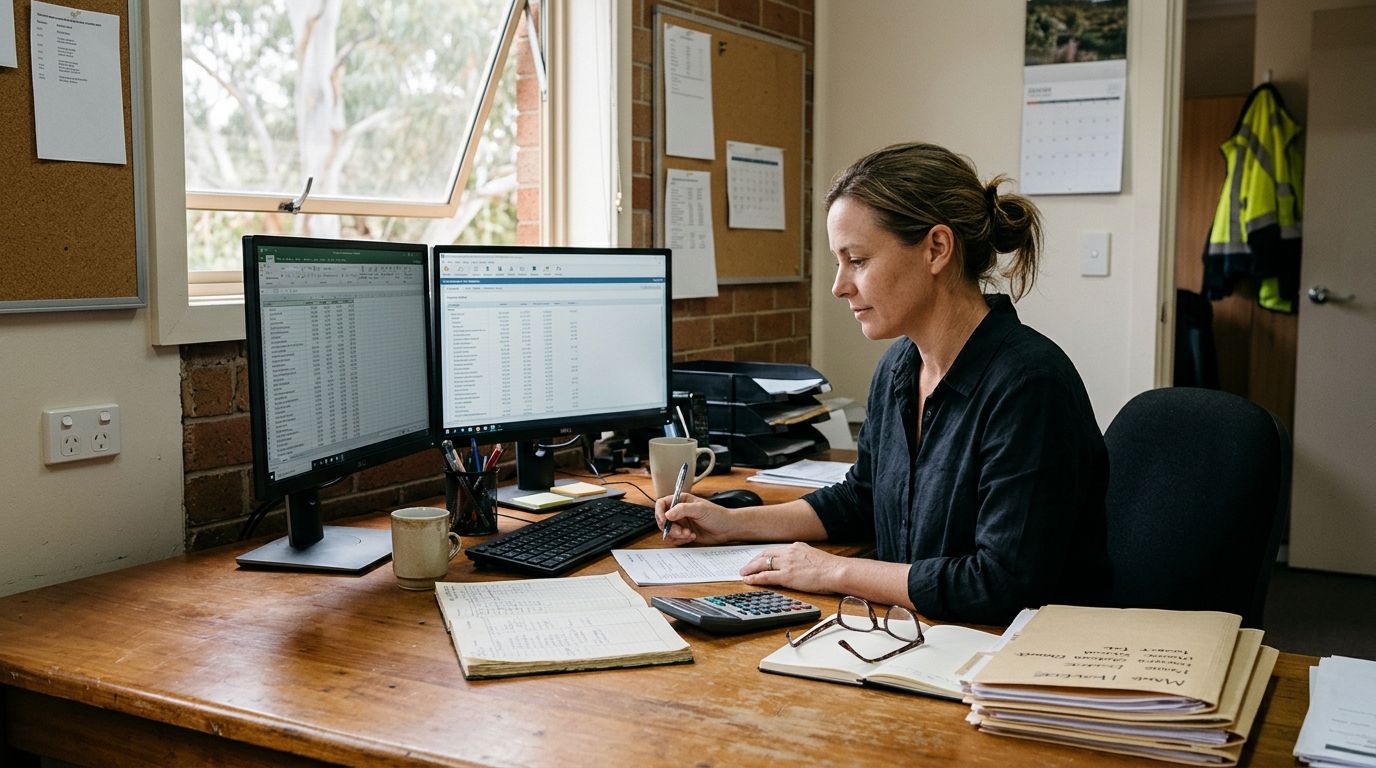
There's a name for what you're experiencing: the ledger ceiling
The Ledger Ceiling is the gap between demonstrated accounting capability and the formal credential required to access professional body membership pathways and senior accounting roles in Australia. It is not a skills gap. It is a credential gap. And those are two different problems with two different solutions.
You have the experience. You've closed month-end, prepared BAS, produced management reports, and kept the numbers honest for years, possibly for more than a decade. You know what you're doing. The people you work with know what you're doing. But the system that gates senior titles and professional membership doesn't see any of it, because it looks for a qualification code, not a track record.
That is the ledger ceiling. It is invisible until you hit it. And when you do, it doesn't feel like a skills problem because it isn't one. It feels like an injustice, because in a very specific sense, it is.
What the ledger ceiling looks like in practice
The frustration is not abstract. It shows up in clear, recognisable moments. If any of these sound familiar, you have encountered the ledger ceiling:
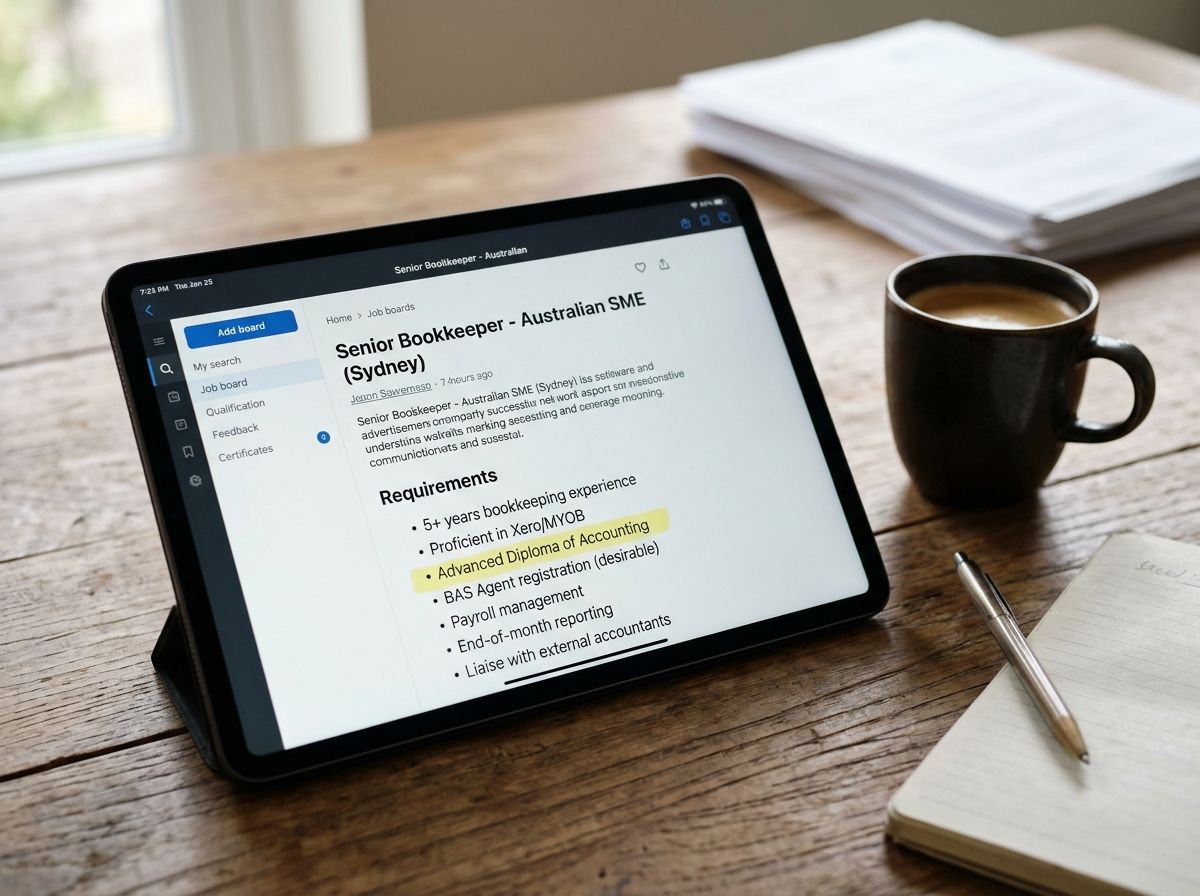
- You applied for a Senior Bookkeeper or Accounts Manager role. The job description listed 'Advanced Diploma of Accounting or equivalent' as a minimum. You didn't apply, or you applied and heard nothing.
- You were passed over for a promotion in favour of someone with less practical experience but a formal qualification. The feedback was polite, but the reason was clear.
- You looked into CPA Australia or the Institute of Public Accountants and found that membership pathways require a specific qualification level. Your years of work were not listed as an alternative.
- You've been the most capable person in the accounts team for years, but the title, and the salary that goes with it, belongs to someone with the paper you do not have.
- You've considered going back to study, then looked at the time and cost involved and wondered why you would repeat work you already do.
These are not edge cases. They are the everyday reality of experienced accounting professionals whose capability exists in a form that formal systems do not recognise.
Why the gap exists, and why it has nothing to do with your ability
Australia's vocational education and training system, and the professional bodies that sit above it, require competency to be formally assessed and documented. That assessment must happen through a registered training organisation, measured against nationally recognised qualification standards. It does not matter how capable you are. Until that assessment occurs, the system has no record of your competency.
This is not a judgment on your ability. The system is not questioning what you can do. It needs your ability presented in a specific form: assessed evidence, mapped to qualification units, and verified by an assessor. You have the experience. What you do not yet have is the documentation of that experience in the format the system requires.
Experience is evidence. That is the foundational principle behind Recognition of Prior Learning. The gap is not between what you know and what the qualification requires. The gap is between what you have done and what has been formally assessed. Those are different problems, and the second has a direct solution.
What the Advanced Diploma of Accounting covers, and what you have already done
The Advanced Diploma of Accounting is a nationally recognised qualification at the upper level of the Australian vocational education framework. It covers the kind of accounting work that goes beyond data entry and basic bookkeeping, including financial reporting, management accounting, budgeting, tax compliance, and the analysis that supports business decisions.
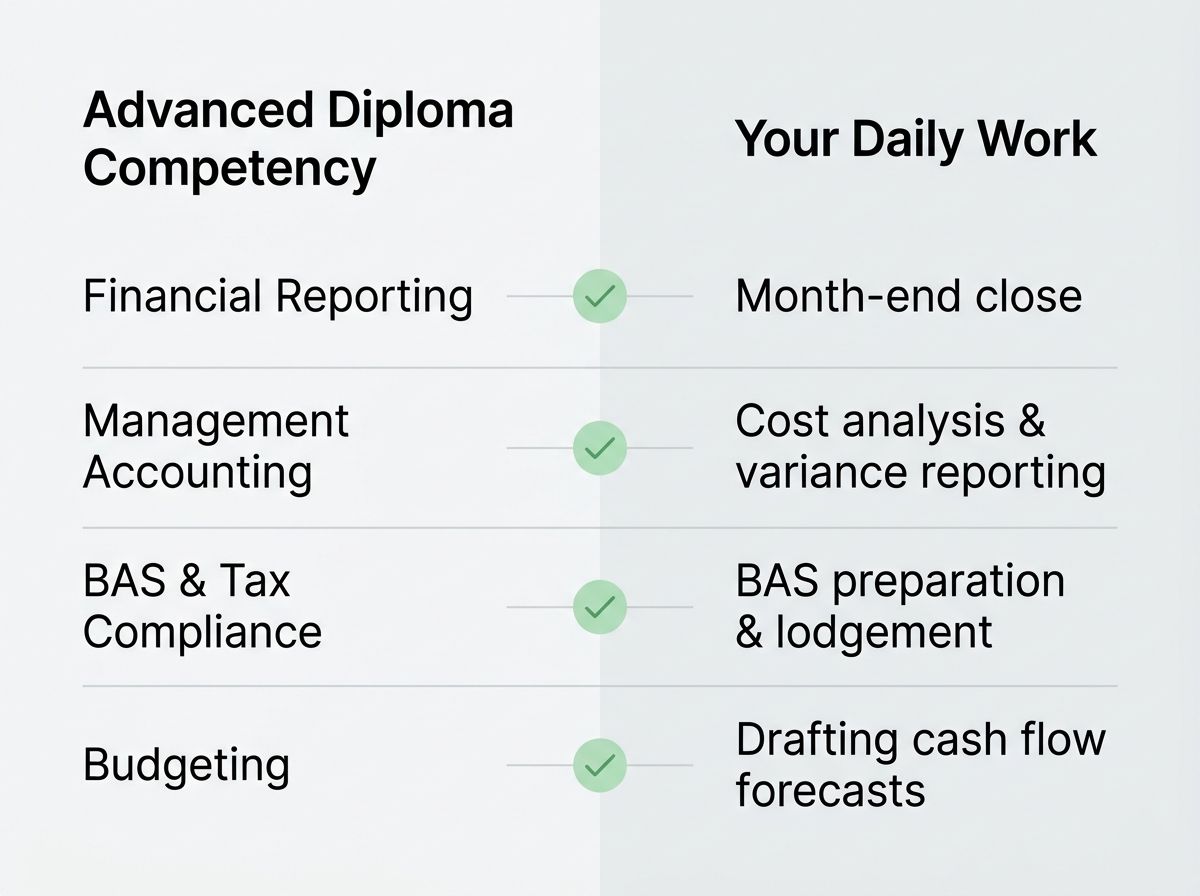
For experienced bookkeepers and accounts staff, the competency areas of this qualification are not abstract. They are the daily work. Consider what the qualification addresses alongside what experienced accounting professionals do every week:
- Financial reporting: preparing profit and loss statements, balance sheets, and cash flow reports for management or external stakeholders.
- Management accounting: producing budget variance reports, cost analyses, and financial summaries that inform business decisions.
- BAS and tax compliance: preparing and lodging Business Activity Statements, managing GST, and ensuring compliance with ATO requirements.
- Reconciliations: bank reconciliations, accounts payable and receivable reconciliations, and end-of-period close processes.
- Budgeting and forecasting: working with management to prepare annual budgets and track performance against financial targets.
If you have been doing this work for years, the competency areas of the Advanced Diploma of Accounting are not new territory. They are Tuesday morning. The qualification describes what you already do. The question is whether that work has been formally assessed, and if not, whether it can be.
Note: The specific unit codes and names for the Advanced Diploma of Accounting are listed on the national training register. If you want to see exactly how your work maps to the qualification units, the information page for this qualification is a clear starting point.
You can explore the qualification structure and RPL pathway on the Advanced Diploma of Accounting page.
How RPL converts your accounting experience into a formal qualification
Recognition of Prior Learning (RPL) is a formal assessment pathway within Australia's vocational education system. It allows a qualified assessor from a registered training organisation to evaluate your existing knowledge and skills against the units of a qualification. If your experience meets the standard, the qualification is awarded. The qualification is nationally recognised because the assessment is genuine.
RPL is a rigorous process that requires you to demonstrate competency rather than simply claim it; it is not a shortcut. The difference between RPL and traditional study is not the standard being assessed, but the starting point. Traditional study assumes you do not yet have the competency and builds it from scratch. RPL assumes you may already have it and assesses whether that is the case.
For accounting professionals, the evidence used in an RPL assessment typically draws on the work you have already produced: financial reports, reconciliation records, BAS lodgement history, employer references, and documentation of your daily responsibilities. The assessor's job is to evaluate whether that work demonstrates the competencies the qualification requires. If it does, the qualification follows. If there are gaps, those can often be resolved through targeted gap training, which is provided as part of the process.
Timeframes vary depending on the RTO delivering the assessment and the completeness of your evidence. What does not change is the standard: the qualification you receive through RPL is the same nationally recognised credential as one earned through traditional study.
Why this matters beyond the title: the doors the qualification opens
The Advanced Diploma of Accounting is more than a credential for your resume; it provides access to opportunities that otherwise remain closed.
Professional accounting bodies in Australia, including CPA Australia and the Institute of Public Accountants, have membership and program entry pathways that reference formal accounting qualifications at the Advanced Diploma level or equivalent. Without a qualification at that level, those pathways are not accessible, regardless of how many years of accounting work you have behind you. The qualification is a primary entry requirement. Without it, the door does not open.
Beyond professional body membership, the Advanced Diploma of Accounting is the qualification that appears in job advertisements for senior accounting roles, such as Senior Bookkeeper, Accounts Manager, and Financial Controller (junior level). These roles exist at a level above what most employers will consider without the formal credential, even when your practical experience meets or exceeds the requirements.
Important caveat: the specific entry requirements of CPA Australia, the Institute of Public Accountants, and individual employers vary and change over time. Before making decisions based on professional body membership pathways, verify the current requirements directly with the relevant body. What we can say with confidence is that the Advanced Diploma of Accounting is a nationally recognised qualification that sits at the level these pathways reference, and that RPL is a legitimate, assessed pathway to that qualification.
Is RPL the right pathway for you? What suitability looks like
RPL is not suitable for everyone. The answer to whether you are eligible depends on the depth and breadth of your accounting experience, focusing on the type of work you have been doing rather than just the number of years.
Strong RPL candidates for the Advanced Diploma of Accounting typically share specific characteristics. If the following points describe your experience, your work is likely to be assessable:
- You have been working in an accounting or bookkeeping role for several years, with hands-on responsibility for financial reporting, reconciliations, and compliance tasks rather than simple data entry.
- You have prepared or contributed to BAS lodgements, financial statements, or management reports, performing work that required judgement rather than just administrative execution.
- You can document your work through payslips, employment records, work samples, or an employer willing to provide a statutory declaration or reference confirming your responsibilities.
- Your experience spans more than one area of accounting, such as both compliance work (BAS, tax) and management reporting, rather than a single narrow function.
- You have worked in a role where you were trusted to make accounting decisions instead of only following instructions.
Where gaps are more likely: if your experience has been primarily in one area, such as accounts payable processing without exposure to financial reporting or management accounting, there may be competency areas that require gap training. This is not a barrier to RPL; it is a normal part of the process. Gap training addresses specific units where your evidence is thin, without requiring you to repeat the work you have already demonstrated.
The fastest way to know whether your specific experience is assessable is a free, no-obligation skills review. It is not an enrolment and it is not a commitment. It is an honest assessment of where your experience sits relative to the qualification and what, if anything, would need to be addressed.
The next step: a free skills review with no commitment required
Your accounting experience is real. The work you have done, including reconciliations, reports, BAS lodgements, and month-end closes, is the substance of what the Advanced Diploma of Accounting assesses. The question is whether that experience, in your specific case, meets the standard.
A free skills review is the honest first step. It tells you whether your experience is likely to be assessable, what evidence you would need to gather, and whether there are any gaps worth knowing about before you commit to anything. There is no enrolment, no obligation, and no pressure. Just clarity.
Recognition should not require starting over. If your experience already meets the standard, the pathway exists to have that formally recognised. The decision is yours.
General information only, current at the date shown. Licensing rules change, so check the current requirements with the relevant regulator before you rely on them. RPL it Australia is a student support service, not a Registered Training Organisation; qualifications are assessed and issued by our partner RTOs.