Start My Skills Review
Accepting applications

Diploma of Building and Construction (Building)

This qualification reflects the role of building professionals who apply knowledge of structural principles, risk and financial management, estimating, preparing and administering building and construction contracts, selecting contractors, overseeing the work and its quality and managing construction work in building projects including residential and commercial with the following limitations: Residential construction limited to National Construction Code Class 1 and 10 buildings to a maximum of 3 storeys.Commercial construction limited to National Construction Code Class 2 to 9 buildings, Type C and B construction.

Qualification overview
CPC50220
LevelAQF 5Diploma
Units2724 core, 3 elective
PackageCPCConstruction, Plumbing and Services Training Package
Timeframe
Typically 4 to 6 weeksAfter evidence is submitted to the RTO. Individual timelines vary.
Fees
Personalised quote before you commitRefund and withdrawal policy
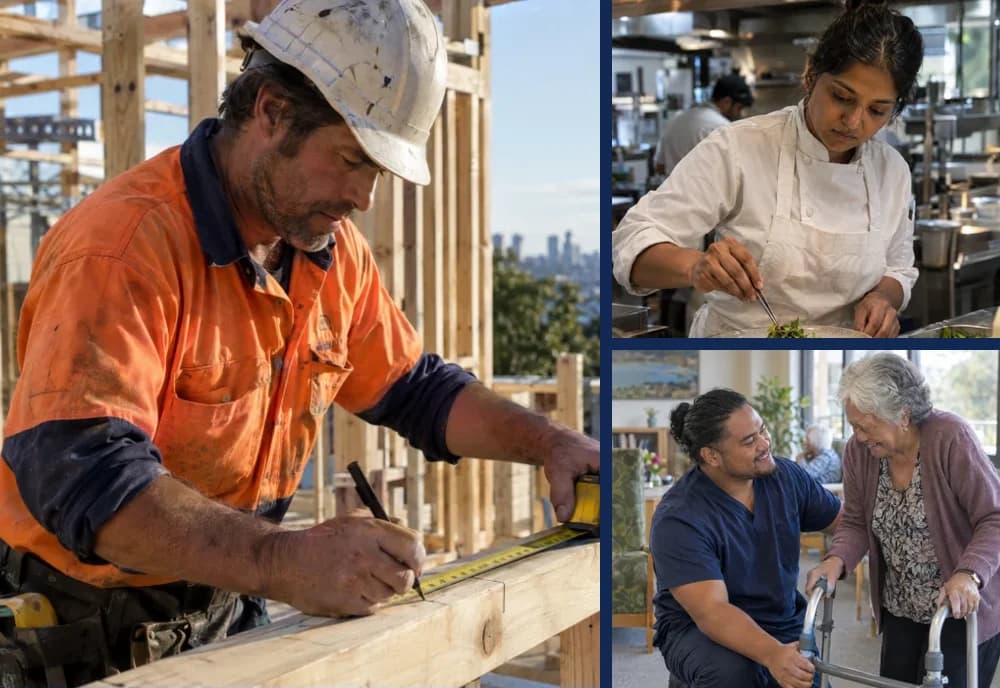
A carpenter marking timber framing on a building site, a chef plating a dish in a commercial kitchen, and an aged care worker helping a resident with her walking frame
Recognition of Prior Learning

What is an RPL qualification?

Recognition of Prior Learning assesses skills you already have against a nationally recognised qualification. Demonstrate competency, and you receive the same nationally recognised qualification, issued by a registered training organisation (RTO), as someone who completed the full course.

Who is eligible for RPL?

  • You have years of experience in your field
  • You learned the work on the job, through mentoring or on your own
  • You need the qualification for licensing, promotion or migration
  • You hold overseas qualifications you want recognised in Australia

About this qualification

Diploma of Building and Construction (Building) (CPC50220) through RPL

CPC50220 Diploma of Building and Construction (Building) is the management level qualification behind many builder pathways. It goes beyond site supervision into contracts, tenders, estimating, costing systems, contractor management, environmental practice and business finances. Searches include diploma of building and construction and CPC50220 assessment tools. It suits builders and foremen who already run projects and contracts. RPL it Australia helps you organise your project records, and a partner RTO assesses them. A builder's licence is a separate decision made by the state regulator.

What the qualification covers

This qualification reflects the role of building professionals who apply knowledge of structural principles, risk and financial management, estimating, preparing and administering building and construction contracts, selecting contractors, overseeing the work and its quality and managing construction work in building projects including residential and commercial with the following limitations: Residential construction limited to National Construction Code Class 1 and 10 buildings to a maximum of 3 storeys.Commercial construction limited to National Construction Code Class 2 to 9 buildings, Type C and B construction.

Occupational titles may include: BuilderGeneral ForepersonBuilding Inspector

The construction industry strongly affirms that training and assessment leading to recognition of skills must be undertaken in a real or very closely simulated workplace environment. To achieve this qualification, the candidate must have access to a live building and construction workplace to meet the requirements detailed in the Assessment Requirements of core unit CPCCBC4008 Supervise communication and administration processes for building and construction projects. Completion of the general construction induction training program specified by the model Code of Practice for Construction Work is required for any person who is to carry out construction work. Achievement of unit CPCWHS1001 Prepare to work safely in the construction industry meets this requirement. Builder licensing varies across States and Territories and requirements additional to the attainment of this qualification may be required.
Who it suits

  • Builders who coordinate residential and commercial projects from contract administration to final quality checks
  • General foremen who plan on-site work and supervise trade contractors
  • Building inspectors who assess work against building codes for structural and legal compliance
  • Project builders who prepare tenders, estimates and labour and material schedules

Evidence you could gather

  • Executed contracts and tender documents. Executed construction contracts, tender documentation and evaluations that show you select and administer contracts on real projects.
  • Estimates, cost monitoring and schedules. Project estimates, labour and material schedules and cost monitoring reports showing how you control budgets on complex projects.
  • Site diaries and subcontractor management. Site diaries, project schedules and records of how you selected, managed and coordinated trade contractors.
  • Technical, legal and environmental reports. Building sketches, site survey and set-out records, WHS risk plans, environmental management records and professional building reports.

Licensing

This qualification is a primary requirement for builder licensing in many Australian jurisdictions. Please note that state authorities often require additional years of experience and financial capacity evidence alongside this qualification.

  • NSW: NSW Fair Trading
  • VIC: Victorian Building Authority (VBA)
  • QLD: Queensland Building and Construction Commission (QBCC)
  • WA: Department of Mines, Industry Regulation and Safety
  • SA: Consumer and Business Services (CBS)
  • TAS: Consumer, Building and Occupational Services (CBOS)
  • NT: Building Practitioners Board
  • ACT: Access Canberra

Licensing decisions are made by the regulator, not by RPL it Australia or the RTO.

After the qualification

This qualification is linked to roles such as Builder, General Foreperson and Building Inspector. Our data says it is a primary requirement for builder licensing in many Australian jurisdictions, but state authorities often require additional years of experience and financial capacity evidence. A builder's licence is decided by the state regulator, not by the qualification alone, so confirm your requirements with them. The RTO assesses your evidence, and RPL it Australia cannot guarantee an outcome.

Units of competency (37)

Core units

  • BSBOPS504 Manage business risk
  • BSBWHS513 Lead WHS risk management
  • CPCCBC4001 Apply building codes and standards to the construction process for Class 1 and 10 buildings
  • CPCCBC4003 Select, prepare and administer a construction contract
  • CPCCBC4004 Identify and produce estimated costs for building and construction projects
  • CPCCBC4005 Produce labour and material schedules for ordering
  • CPCCBC4008 Supervise site communication and administration processes for building and construction projects
  • CPCCBC4009 Apply legal requirements to building and construction projects
  • CPCCBC4010 Apply structural principles to residential and commercial constructions
  • CPCCBC4012 Read and interpret plans and specifications
  • CPCCBC4013 Prepare and evaluate tender documentation
  • CPCCBC4014 Prepare simple building sketches and drawings
  • CPCCBC4018 Apply site surveys and set-out procedures to building and construction projects
  • CPCCBC4053 Apply building codes and standards to the construction process for Class 2 to 9 Type C buildings
  • CPCCBC5001 Apply building codes and standards to the construction process for Type B construction
  • CPCCBC5002 Monitor costing systems on complex building and construction projects
  • CPCCBC5003 Supervise the planning of on-site building and construction work
  • CPCCBC5005 Select and manage building and construction contractors
  • CPCCBC5007 Administer the legal obligations of a building and construction contractor
  • CPCCBC5010 Manage construction work
  • CPCCBC5011 Manage environmental management practices and processes in building and construction
  • CPCCBC5013 Manage professional technical and legal reports on building and construction projects
  • CPCCBC5018 Apply structural principles to the construction of buildings up to three storeys
  • CPCCBC5019 Manage building and construction business finances

Elective units

  • BSBPMG532 Manage project quality
  • BSBPMG538 Manage project stakeholder engagement
  • CPCCBC4052 Lead and manage teams in the building and construction industry
  • CPCCBC5004 Supervise and apply quality standards to the selection of building and construction materials
  • CPCCBC5006 Apply site surveys and set-out procedures to building projects up to three storeys
  • CPCCBC5009 Identify services layout and connection methods for Type B and C constructions
  • CPCCBC5012 Manage the application and monitoring of energy conservation and management practices and processes
  • CPCCBC6001 Apply building codes and standards to the construction process for large building projects
  • CPCCDE5001 Conduct air monitoring and clearance inspections for asbestos removal work
  • CPCSUS5001 Develop workplace policies and procedures for sustainability
  • CPCSUS5002 Develop action plans to retrofit existing buildings for energy efficiency
  • CPCSUS5003 Manage energy efficient building methods and strategies
  • CPPDSM5022 Develop and implement asset management plans
An RPL it team member sorting an electrician's job photos and reference letter into his evidence folder at a ute tailgate on a building site

How RPL works in four steps

  1. Free Skills Review

    Tell us about your work experience. We’ll match it to valid qualifications.

  2. Build your evidence

    Your account manager helps you gather your required evidence for your RTO.

  3. RTO assessment

    Your evidence portfolio is submitted to our partner RTO. A qualified assessor evaluates your competency.

  4. Get your qualification

    Once assessed as competent, the RTO issues your nationally recognised qualification.

Career Outcomes

Explore Roles Associated with this Qualification

If your current or past work looks like one of these roles, this qualification may suit you.

  • 01

    Builder

    Coordinates residential and commercial building projects from contract administration to final quality oversight.

  • 02

    General Foreperson

    Manages on-site building work and supervises the planning and coordination of trade contractors.

  • 03

    Building Inspector

    Evaluates construction work against building codes and standards to ensure structural and legal compliance.

Evidence Checklist

What Suitable Evidence Can Support Your Evidence Portfolio?

Your consultant can help you identify relevant workplace records. The delivering RTO decides whether the evidence is sufficient and current.

Work History & Roles
  • Current resume detailing building experience
  • Detailed position descriptions
  • References from licensed builders or clients

Project Management
  • Executed construction contracts
  • Site diaries and project schedules
  • Subcontractor management records

Financial & Estimation
  • Tender documentation and evaluations
  • Labour and material schedules
  • Project cost monitoring reports

Technical & Structural
  • Building sketches and drawings
  • Site survey and set-out records
  • Structural principle applications for Class 1-9 buildings

Compliance & Safety
  • WHS risk management plans
  • Environmental management records
  • Technical and legal building reports

Qualification comparison

RPL and Traditional Study

Two routes to the same qualification, assessed against the same RTO competency standards.

RPL PathwaySupported by RPL it, assessed by the RTO
Traditional StudyDelivered and assessed by the RTO
Starting point
Your existing, current workplace skills and evidence
A planned course of learning and assessment
How competency is shown
Workplace evidence mapped to the qualification requirements
Learning activities, assignments, practical work, and assessment
Assessment decision
Made by a qualified assessor from the delivering RTO
If gaps are identified
Additional evidence or targeted gap training may be required
Learning and assessment continue through the course structure
Qualification outcome
Issued only when the RTO determines all requirements are met

RPL it Australia reviews

What our clients say

Selected Google reviews. Individual experiences vary. Every applicant is assessed against the same requirements, and some require gap training or additional evidence.

Frequently asked questions

Recognition of Prior Learning, your experience, and your next step.

Got more questions?
How do I get started with RPL for this qualification?

The process begins with a free skills review where we evaluate your building experience against the CPC50220 requirements. From there, your dedicated consultant guides you in gathering an evidence portfolio, which is then formally assessed by a qualified assessor from our partner RTO.

Is an RPL qualification the same as one from full-time study?

Yes. A qualification earned through Recognition of Prior Learning is nationally recognised and carries the same weight as one obtained through classroom study. It is issued by a Registered Training Organisation (RTO) and meets the exact same Australian Qualifications Framework standards.

How long does the process typically take?

Once your evidence portfolio is compiled and submitted to the RTO, the formal assessment and issuance process typically takes 4 to 6 weeks. The initial evidence gathering phase depends on how quickly you can document your previous building projects and experience.

Can this qualification be used for a Builder's License?

The Diploma of Building and Construction (Building) is a primary requirement for various building licenses across Australia, such as the Medium Rise license. As licensing requirements vary by state (such as Fair Trading in NSW or the VBA in Victoria), we recommend checking with your local regulator for specific criteria.

What kind of evidence will I need to provide?

You will need to provide evidence of your work in the industry, which may include project contracts, site plans, safety schedules, structural reports, photos of your work, and references from licensed builders or clients who can verify your management role.

Does my experience with commercial projects count toward this Diploma?

Yes. While this qualification covers residential construction (Class 1 and 10), it also reflects the role of professionals managing commercial projects. Your experience in structural principles, financial management, and contractor supervision across various building types is highly relevant.

How is CPC50220 different from the Certificate IV in Building and Construction?

The Certificate IV (CPC40120) centres on planning, supervision and codes. The Diploma adds tendering, contractor selection, costing systems, contract legal obligations, environmental management and business finances. It suits people who run the commercial side of building, not only the site.

Does the Diploma of Building and Construction cover commercial buildings?

Core units cover building codes for Class 1 and 10 buildings and for Class 2 to 9 Type C buildings, and Type B construction, plus structural principles for residential and commercial work. Project evidence from commercial jobs can be mapped to these.

What evidence shows tendering and contract experience?

Tender documentation you prepared or evaluated, executed contracts, variation and cost monitoring records, and contractor selection notes. Redact client details where needed. A supervisor or director statement confirming your role on each project helps the assessor and confirms the scale of the work.

How long does the RPL process take?

Most candidates who submit a complete evidence portfolio receive their qualification within 4 to 6 weeks from RTO assessment. The total timeline depends on evidence readiness. Strong documentation can help the process move quickly, while evidence gaps or gap training may take longer.

Is an RPL qualification the same as one from TAFE?

Yes. An RPL qualification is issued under the Australian Qualifications Framework, the same framework that governs qualifications from TAFE colleges and all other Registered Training Organisations. It carries the same national recognition. Licensing requirements vary, so check with the relevant authority.

How much does RPL cost?

RPL costs vary by qualification level, complexity, and number of units. Because RPL assesses what you already know rather than teaching new content, it is typically less expensive than full enrolment. Contact our team for a tailored quote. Payment plans are interest-free with no establishment fee, and the instalment schedule and any extension fee that could apply are set out in your quote.

What evidence do I need for RPL?

Evidence can include your resume, reference letters from employers, photos or videos of your work, previous qualifications and certificates, job descriptions, and any other documentation that demonstrates your skills and knowledge. The RTO tells you exactly what evidence it needs for your specific qualification, and your RPL it consultant helps you put it together.

Can I get credit for units I have already completed?

Yes, if you hold a qualification or Statement of Attainment that includes units equivalent to units in this qualification. This is called credit transfer. The delivering RTO checks your AQF certification documents or authenticated VET transcript. Where a unit is equivalent and your certification is authenticated, the RTO must grant credit for it. It can refuse only on limited grounds, for example where a licensing or regulatory requirement calls for reassessment.

Delivering RTO · 2 partner RTOs

Assessed and issued by a partner RTO

Your delivering RTO is confirmed before enrolment. Check any RTO’s registration on training.gov.au.