Is university RPL the right pathway for your overseas qualification? A self-check for skilled migrants
Not every overseas qualification suits university RPL. Use this practical self-check to evaluate whether recognition of prior learning is right for you.

Why this self-check exists
You have done the research. You know that recognition of prior learning exists. You have probably read that it can translate your overseas experience into a formal Australian qualification. Now you are asking the practical question: does this pathway actually apply to your situation?
That is the right question. It deserves a direct answer, not a sales pitch.
University RPL through the VET pathway is a legitimate, rigorous option for some skilled migrants. It is not the right pathway for everyone. Pursuing the wrong track wastes time, money, and effort. This self-check exists because honest guidance means showing when a pathway fits your situation and when it does not.
Work through each of the five criteria below. Be objective about your history. The goal is clarity, not enrolment.
What university RPL actually is (and what it is not)
Before you start the self-check, a clear definition is essential.
University RPL at this level means using a VET qualification, typically an Advanced Diploma or Graduate Diploma obtained through recognition of prior learning, to meet entry requirements for a university postgraduate programme. The RPL process assesses your demonstrated skills against specific units of a nationally recognised qualification. If the assessment confirms your competency, you receive the qualification. You can then use that qualification to apply for postgraduate study.
This process is not a direct university credit transfer. It is not a skills assessment for visa purposes conducted by a migration assessment authority. It is not a shortcut. The assessment is conducted by a qualified assessor from a registered training organisation (RTO). The resulting qualification is nationally recognised because the assessment is thorough and genuine.
If you want to understand how this pathway has worked for other skilled migrants navigating the Australian recognition system, our article on how university-level RPL works for skilled migrants covers the practical steps and expectations in detail.
Self-check criterion 1: What level is your overseas qualification?
University RPL through the VET pathway is most relevant for people whose overseas qualifications sit at degree level or above, including bachelor's degrees, master's degrees, MBAs, or professional equivalents.
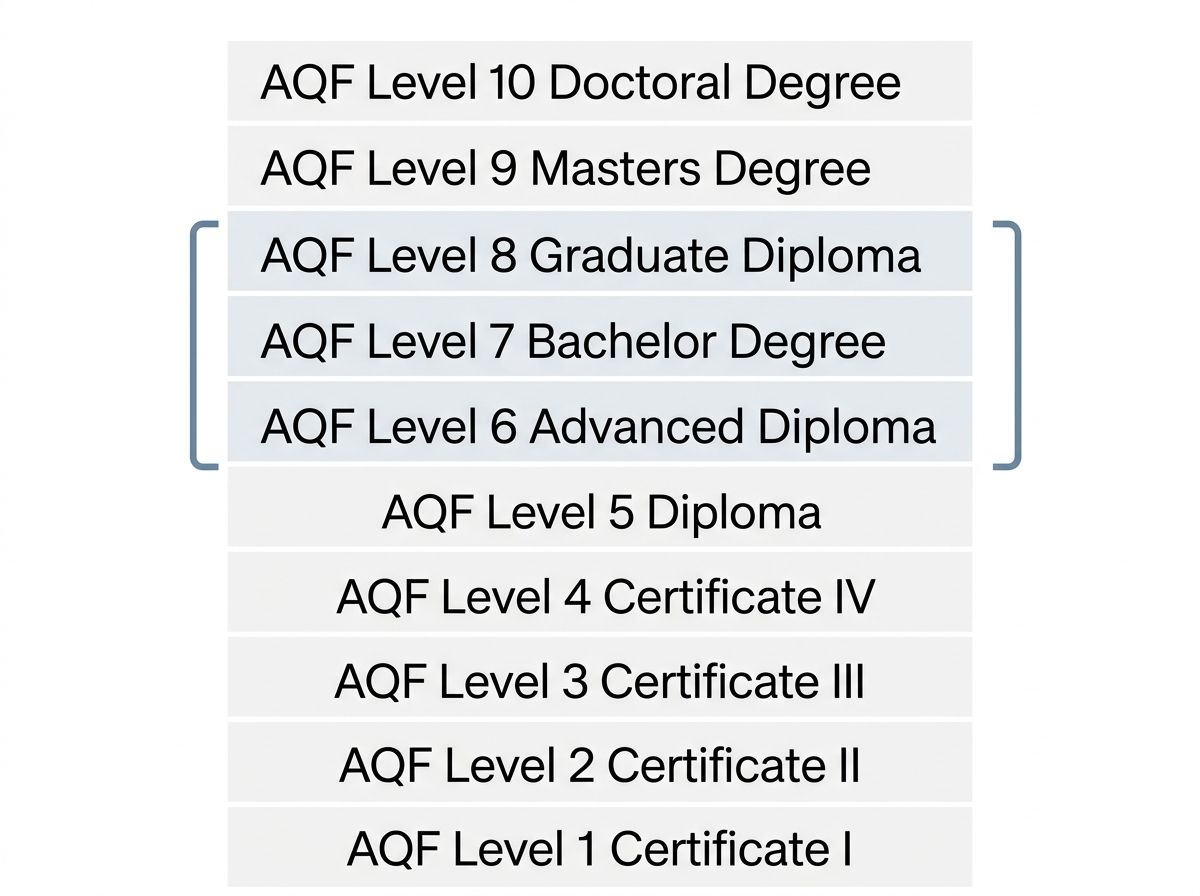
If your overseas qualification is a certificate, diploma, trade credential, or sub-degree qualification, a different RPL pathway is likely more appropriate. That pathway, RPL directly into a VET qualification at certificate or diploma level, is a separate process. It may still be highly relevant to your career, but it is not what this self-check covers.
Ask yourself: if your overseas qualification were assessed against the Australian Qualifications Framework, would it sit at level 7 (bachelor's degree) or above? If you are uncertain, your qualification level is something a skills review can help clarify. As a general guide, a three-year or four-year undergraduate degree from a recognised overseas institution typically maps to AQF level 7, while a master's degree or MBA typically maps to AQF level 9.
If your qualification sits below degree level, this self-check is not the correct starting point. Other RPL pathways will serve you better.
Self-check criterion 2: How many years of relevant professional experience do you have?
RPL is an evidence-based assessment. The assessor evaluates whether you can prove competency against specific units of a qualification. That process requires real, documented professional experience.
There is no universal minimum, and different qualifications have different requirements. As a practical reality, assessors typically look for several years of relevant, recent experience in a role that maps to the qualification being assessed. Experience from many years ago, or experience in an unrelated field, is difficult to present as credible evidence.
Ask yourself honestly: do you have documented professional experience, in a relevant field and within a reasonably recent timeframe, that you can present as evidence of competency? If the answer is yes, this criterion is likely met. If your experience is sparse, outdated, or difficult to document, the RPL process will be significantly harder. It is not impossible, but it requires much more effort.
Overseas experience counts. The assessment evaluates your demonstrated skills, not where those skills were gained. However, that experience must still be documentable.
Self-check criterion 3: Does the qualification you need fit the university RPL pathway?
Not every qualification a skilled migrant needs can be obtained through university RPL. Some professions require specific licensing bodies, skills assessments, or registration pathways that operate entirely separately from the VET and university RPL system.
The university RPL pathway through RPL it is particularly relevant for qualifications in business, management, leadership, project management, and related fields. In these areas, an Advanced Diploma or Graduate Diploma obtained through RPL can satisfy entry requirements for postgraduate university study or meet employer expectations.
This is generally not the right pathway if your profession requires registration through a body such as AHPRA (for healthcare), Engineers Australia (for engineering membership), or similar registration authorities. Those bodies run their own assessment processes, and a VET qualification obtained through RPL may not satisfy their criteria. If your goal is professional registration through one of these bodies, you must check directly with them before assuming this pathway applies.
Ask yourself: is the qualification you need one that an Advanced Diploma or Graduate Diploma would satisfy for employment, university entry, or employer recognition? Or does your profession require registration through a specific body with its own assessment criteria?
For a related perspective on how the VET-to-university pathway works for management professionals, see our article on the management paradox and recognition of prior learning.
Self-check criterion 4: What documentation do you actually have?
RPL assessment requires evidence. This is not a bureaucratic formality. It is the direct method by which the assessor evaluates your competency. Without credible evidence, the assessment cannot proceed.
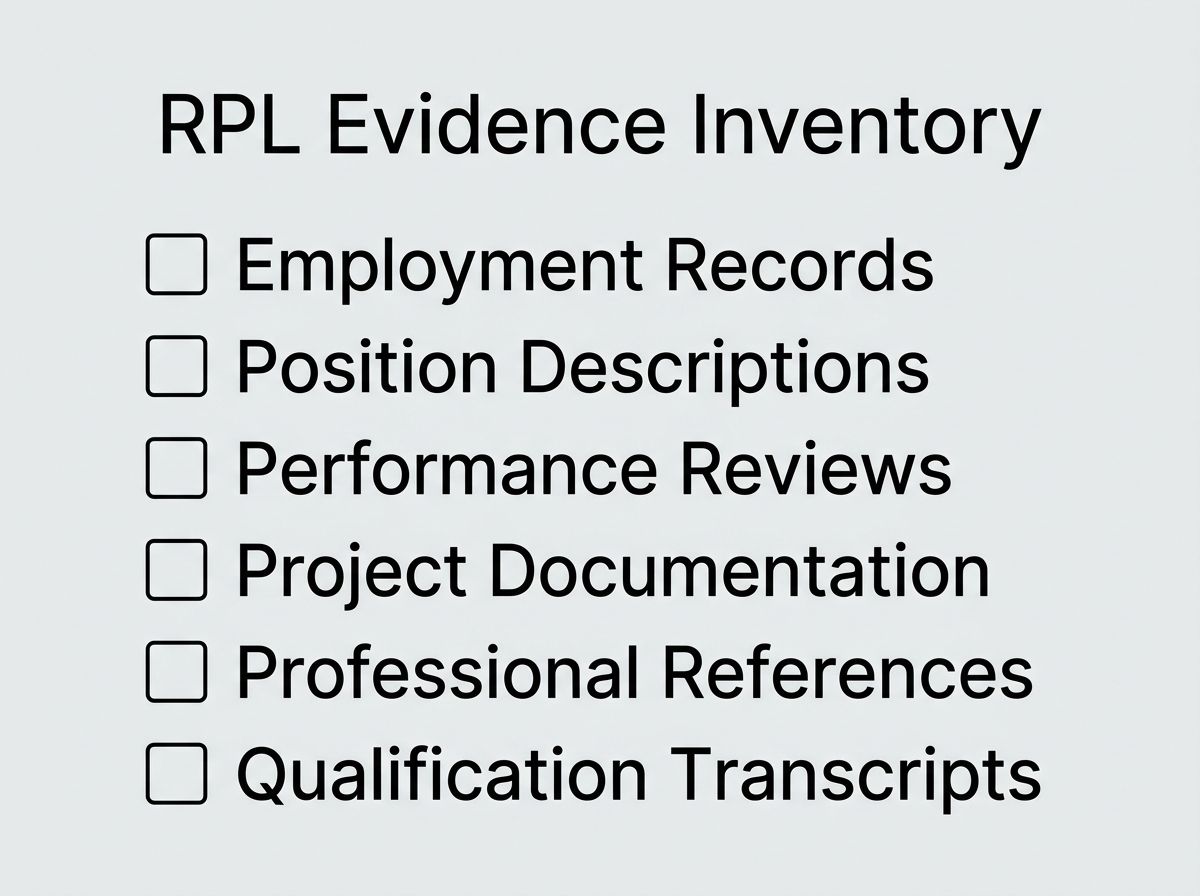
Common evidence types include employment records, contracts, position descriptions, performance reviews, project documentation, reports, professional references from supervisors or colleagues, overseas qualification transcripts, certificates, and work samples.
Take an objective inventory. Do you have access to these documents? Are they in English, or will they require translation? Are your overseas qualification documents verifiable? Do you have contact details for professional referees who can verify your competency?
If your documentation is sparse, inaccessible, or largely in another language, the RPL process is not impossible, but it will require more preparation. Gathering and organising evidence is real work. The guided documentation process helps you through it, but the underlying evidence must exist.
Overseas documents in languages other than English typically require translation by a certified translator. If you are uncertain about what is required, this is something a skills review can clarify before you commit to anything.
Self-check criterion 5: Is your goal visa points, professional registration, or employment recognition?
Why you need the qualification matters as much as which qualification you need. Different goals point to different pathways. This is the area where the most confusion and the most consequential mistakes tend to occur.
University RPL through the VET pathway is well-suited to employment recognition and university entry. If your goal is to have your expertise formally recognised for career advancement, to meet an employer's qualification requirement, or to gain entry to a postgraduate programme, this pathway is directly relevant.
If your primary goal is securing visa points or satisfying a skills assessment for a visa application, the situation is more complex. Skills assessments for visa purposes are conducted by specific assessment authorities, such as VETASSESS, Trades Recognition Australia (TRA), Engineers Australia, or others depending on your occupation. These authorities have their own assessment criteria and their own requirements regarding which qualifications they recognise. Whether a VET qualification obtained through RPL satisfies a specific skills assessment authority's requirements is a question you must resolve by checking directly with that authority or by seeking advice from a registered migration agent.
This article cannot confirm whether RPL will satisfy your visa requirements. That depends on your specific occupation, the relevant assessment authority, and the current requirements of the visa subclass you are applying for. These are separate systems, and assuming that one automatically satisfies the other is a common and costly mistake.
Ask yourself: what will you actually use this qualification for? If the answer is employment or university entry, this pathway fits. If the answer is a visa skills assessment, you must verify the requirements with the relevant authority before proceeding.
When university RPL is probably not the right answer
Clear guidance requires identifying the scenarios where this pathway does not fit. University RPL through the VET pathway is unlikely to be the right answer if:
- Your overseas qualification is below degree level, such as a certificate, diploma, or trade credential. A different RPL pathway may still be relevant, but this specific one is not designed for your situation.
- Your profession requires registration through a specific body, like AHPRA, Engineers Australia, the Australian Institute of Architects, or similar, and that body does not recognise VET qualifications for registration purposes.
- Your visa requirement specifies a skills assessment from a designated assessment authority, and you have not confirmed that a VET qualification obtained through RPL satisfies that authority's criteria.
- Your professional experience is limited, highly dated, or difficult to document. RPL is an evidence-based assessment. Without credible evidence, the process cannot produce a valid outcome.
- The qualification you need is not available through the VET pathway. Some qualifications exist only within the university system and cannot be obtained through VET RPL.
Knowing that a pathway does not fit your situation is not a failure. It is useful information that saves you time and directs you toward the pathway that actually serves your goals. The decision is yours, but it should be an informed one.
If your self-check points toward university RPL: What happens next
If you have worked through these five criteria and the pathway is pointing in the right direction, where your qualification is at degree level or above, you have relevant documented experience, the qualification you need is within the VET sector, your documentation is accessible, and your goal is employment or university entry, then the next step is a structured skills review.
This is not about immediate enrolment, payment, or commitment. It starts with a conversation.
The Free Skills Review is an honest, no-obligation assessment of whether this pathway is viable for your specific situation. It exists because the right pathway matters more than just any pathway. If university RPL is not the right fit after a proper review, we will tell you directly and point you toward options that are.
If your self-check is pointing in this direction, explore the Fast Track University pathway to understand what the process looks like before you take any further steps.
Ready to Get Recognised?
Start with a free skills review to find out if RPL is right for you.