The $20,000 Fine You Didn't Know You Were Risking on Your Last Split System Install
Installing split systems without a UEE20120 cert 2 can expose you to serious fines. Here is what the law says, how enforcement works, and how to fix it.
By RPL it Australia7 min read
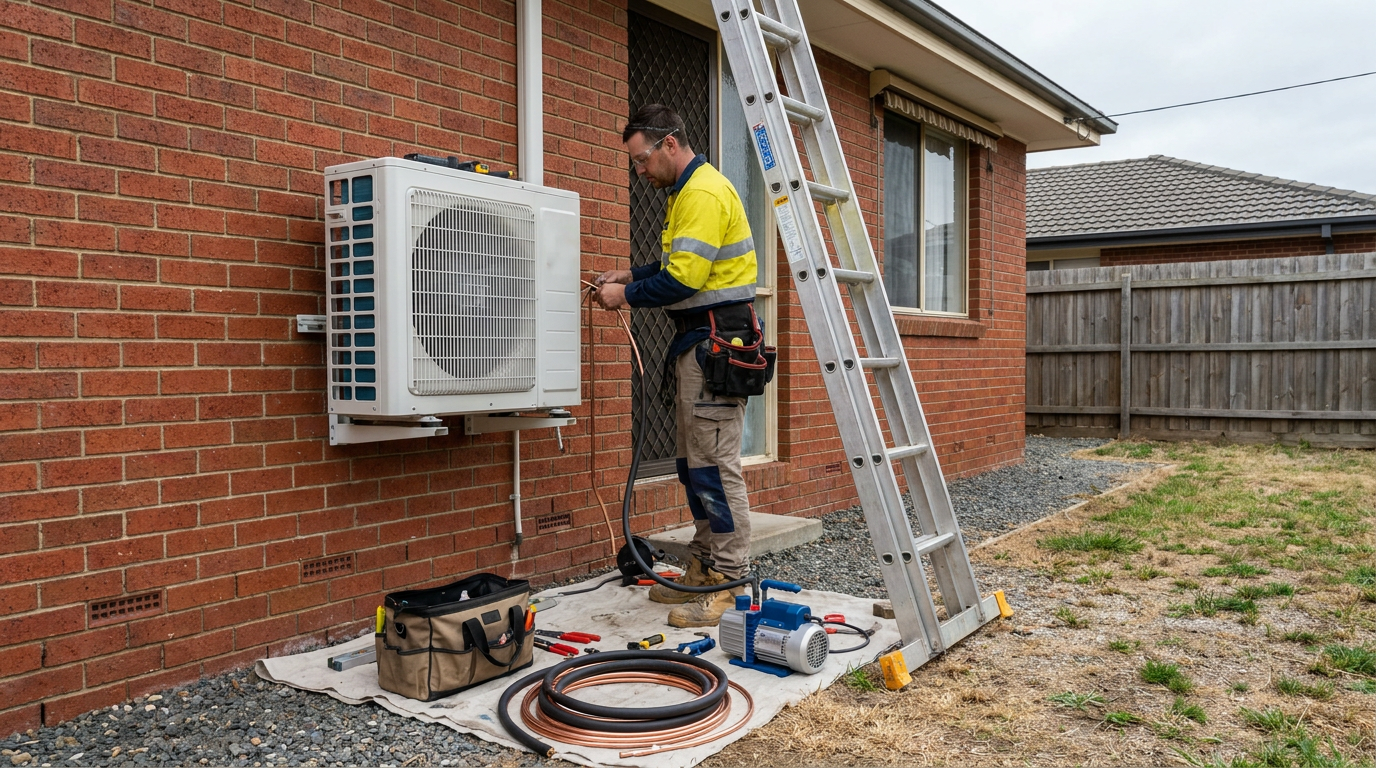
You have done this job a hundred times. Outdoor unit on the bracket, indoor unit on the wall, pipe through the cavity, final connection to the electrical supply. Forty-five minutes, maybe an hour. Routine.
Then someone makes a complaint. A neighbour. A building inspector. A competitor who knows exactly what questions to ask. And suddenly that routine job is the one that changes everything.
The risk is real. It is sitting in every unlicensed split system install you have done. And the financial, legal, and professional consequences are more serious than most installers realise until they are in the middle of them.
What the law actually says about split system installations
Split system installation involves electrical work. Specifically, the final connection to the electrical supply that makes the system live. In every Australian state and territory, this is licensed electrical work. That classification is not a technicality. It is the legal line between authorised and unlicensed work.
The UEE20120 Certificate II in Split Air Conditioning and Heat Pump Systems is the nationally recognised qualification that defines the scope of work a licensed installer can legally perform on split systems up to 18kW. It covers installation and decommissioning of split systems, and it is the qualification used to obtain the Australian Refrigeration Council's restricted refrigerant handling licence (RRSS03) for this class of work.
The UEE20120 and the ARC refrigerant handling licence are separate requirements; neither covers the other. Most states also require a Restricted Electrical Licence for the electrical connection component of the work. The specific licensing requirements vary by state and territory, and rules can change.
As the Australian Refrigeration Council has noted in its submission to the Productivity Commission, all states and territories require RAC technicians to hold a Restricted Electrical Licence, but the scope of work and qualification requirements for that licence vary from state to state.
The practical implication: if you are connecting split systems to the electrical supply without the appropriate licence for your state, you are performing unlicensed electrical work. The qualification you need and the licensing pathway it supports depend on where you work. But the legal exposure is consistent across every jurisdiction.
The fine: what the penalties actually look like
Penalties for unlicensed electrical work in Australia are prescribed under state electrical safety legislation, and they are substantial. The specific amounts vary by jurisdiction and are expressed in penalty units, a figure that is indexed and updated by state governments. The headline figure of $20,000 reflects the range that applies to individuals in several jurisdictions; in some states, penalties for individuals can be higher, and penalties for companies are typically significantly greater.
What matters more than the specific dollar figure is the structure of the penalty: it applies per offence. If you have done fifty unlicensed split system installs, that is not one offence. The exposure compounds with every job.
Penalty amounts are set by state legislation and updated periodically. If you want to know the current maximum for your state, the relevant electrical safety regulator, such as the Electrical Safety Office in Queensland, Energy Safe Victoria, SafeWork NSW, or the equivalent in your state, publishes this information. The numbers are not small.
It is not just the fine: the consequences nobody talks about
The financial penalty is the headline. But it is not the only consequence of unlicensed electrical work, and for many installers, the other outcomes are more damaging.
- Insurance voidance: Home and contents insurance policies commonly exclude damage caused by unlicensed electrical work. If something goes wrong with an installation you did without the appropriate licence, such as a fault, a fire, or an injury, the homeowner's insurer may decline the claim. That liability falls back on you.
- Civil liability: If unlicensed work causes property damage or personal injury, you can be held personally liable. A licence is not just a regulatory requirement; it defines your legal responsibility and the limits of it.
- Rectification orders: Regulators have the power to require that unlicensed work be rectified. That means the job gets done again, by a licensed person, potentially at your cost.
- Reputational and business consequences: A single enforcement action can end a sole trader's ability to work in the industry. Convictions for unlicensed electrical work are a matter of public record.
These consequences do not require a major incident to occur. They can follow from a single complaint, investigated by a regulator who then reviews your work history.
How enforcement actually happens
Most unlicensed installers assume enforcement only happens during formal inspections, believing someone has to physically catch them on the job. In practice, the most common trigger is a complaint.
A homeowner who has a problem with an installation, a building inspector who notices something during a routine check, or a competitor who knows exactly what to look for and who to call. The reporting culture in licensed trades is real and active.
Western Australia's Building and Energy regulator published a media release in May 2025 detailing a successful prosecution of a Perth business owner for unlicensed electrical work during split system air conditioner installations. The case resulted in a conviction and a fine, along with a public warning from the Director of Energy Safety about the consequences of unlicensed installation work.
That case is one documented example. It shows that regulators do investigate, prosecute, and publish the results. The investigation that follows a complaint does not stop at the job that triggered it. It can extend to every installation on record.
State electrical safety regulators have broad powers to monitor compliance, including powers of entry, investigation, and a range of enforcement tools from warning notices through to prosecution.
You have the skills. The problem is the evidence.
You have the experience. You know how to install a split system correctly. You have done it safely, repeatedly, and to a standard that your customers are satisfied with. The problem is not your competence.
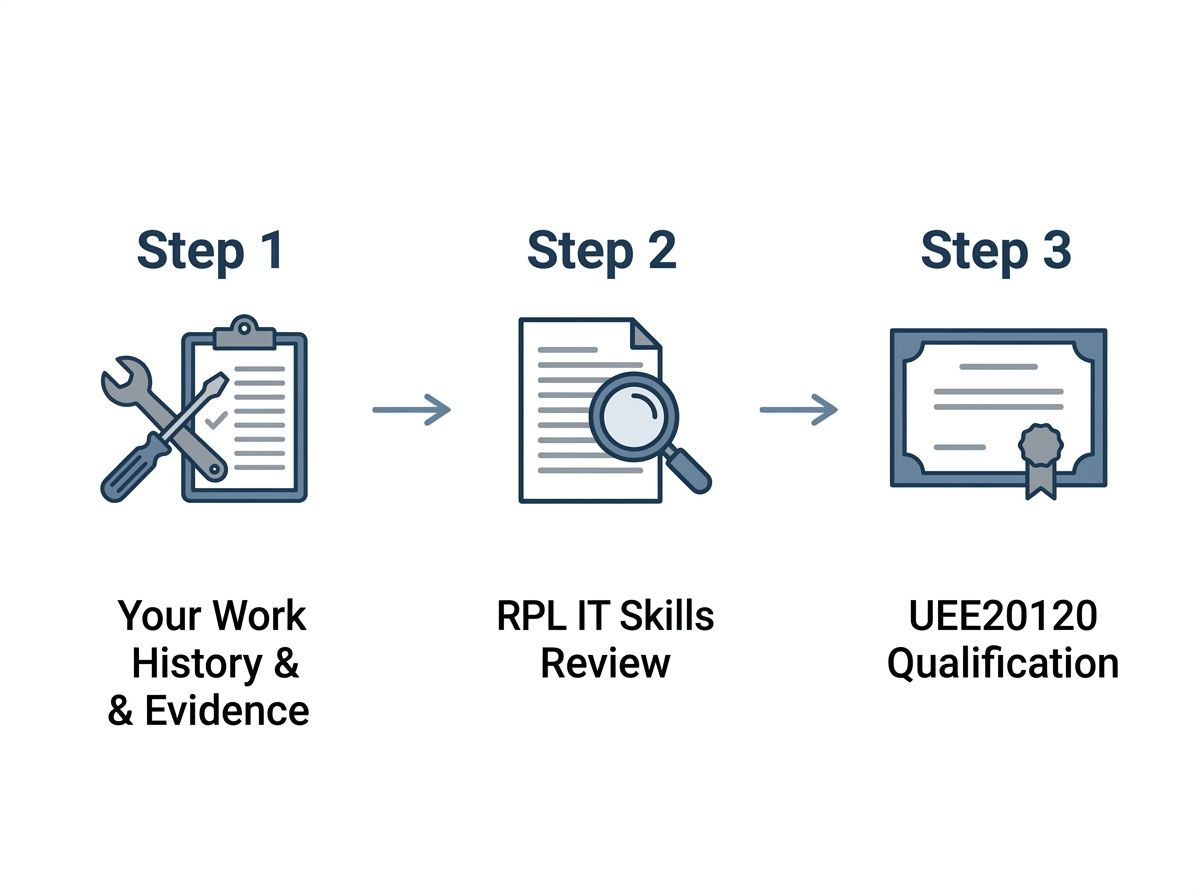
The problem is that your competence is not formally recognised. The UEE20120 is not a test of whether you can install a split system. It is a structured assessment of evidence that you already can. The qualification does not teach you the skill; it formally recognises that you have it.
Recognition of Prior Learning (RPL) is the assessment pathway designed for this situation. Rather than completing coursework on things you already know, you present evidence of your existing competency, such as documentation of your work, employer references, and records of installations, and a qualified assessor from a Registered Training Organisation evaluates whether that evidence meets the standard required for the UEE20120.
This is not a shortcut. It is the appropriate pathway for someone who already does this work. The assessment is rigorous. The qualification, when awarded, is nationally recognised because the assessment is genuine.
What formalising your skills actually eliminates
Getting the UEE20120 through RPL does not change what you do on the job. It changes your legal status while doing it.
Every job without the appropriate qualification carries the legal exposure described in this article. Every job with it does not. The risk of fines goes away. The insurance exclusion risk goes away. The civil liability exposure is managed within a licensed framework. The competitor complaint that triggers an investigation leads to a licence check, not a prosecution.
There is something else that goes away: the constant anxiety. The awareness on every job that you are operating in a grey area, that a single complaint could unravel years of work, or that the next routine install might be the expensive one.
Formalising your skills protects you legally. It removes a weight that experienced unlicensed practitioners carry into every job, whether they acknowledge it or not.
The next step: a free skills review, no commitment required
The risk is real. The pathway exists. The question is whether your existing experience is sufficient to support an RPL application for the UEE20120, and that is what a Free Skills Review is designed to answer.
It is not an enrolment. It is not a sales call. It is an honest assessment of where you stand, conducted before you commit to anything. If your experience is sufficient, you will know. If there are gaps, you will know that too, and what it would take to address them.
The decision is yours. But the first step costs nothing and commits you to nothing.
General information only, current at the date shown. Licensing rules change, so check the current requirements with the relevant regulator before you rely on them. RPL it Australia is a student support service, not a Registered Training Organisation; qualifications are assessed and issued by our partner RTOs.