You Don't Need a Bachelor's Degree to Enter an MBA: How an Advanced Diploma Can Open the Door
Many professionals assume an MBA requires a bachelor's degree. In Australia, an RPL Advanced Diploma offers an alternative entry path under the AQF.

The assumption costing experienced professionals three years of their careers
You have spent fifteen years or more managing operational teams, directing budgets, and making decisions that directly affect people. You know your work because you have done it daily. Yet recruiters, human resource systems, and university admissions pages frequently suggest this practical experience does not count unless you have earned a bachelor's degree first.
This assumption is nearly universal. Most professionals believe that entering an MBA program requires an undergraduate degree. This conventional path typically means three years of study, high tuition fees, and classrooms filled with younger students learning management concepts that you have already practiced for over a decade.
While this is the standard route, it is not the only option in Australia. For experienced professionals who lack a formal undergraduate qualification, understanding this alternative pathway provides a clear, practical entry method to postgraduate business study.
The Australian Qualifications Framework establishes a direct connection between vocational qualifications and university programs that many professionals do not know exists. An RPL certificate at the correct level can meet entry requirements that otherwise require a bachelor's degree. This pathway is not a workaround or a regulatory loophole; it is a legitimate, nationally recognised qualification that several Australian universities accept for postgraduate admission.
What the Australian Qualifications Framework actually says
The Australian Qualifications Framework (AQF) is the national policy regulating how Australian education and training qualifications relate to each other. It covers all levels from Certificate I to Doctoral Degrees, applying equally to vocational education and training (VET) qualifications and higher education university degrees.
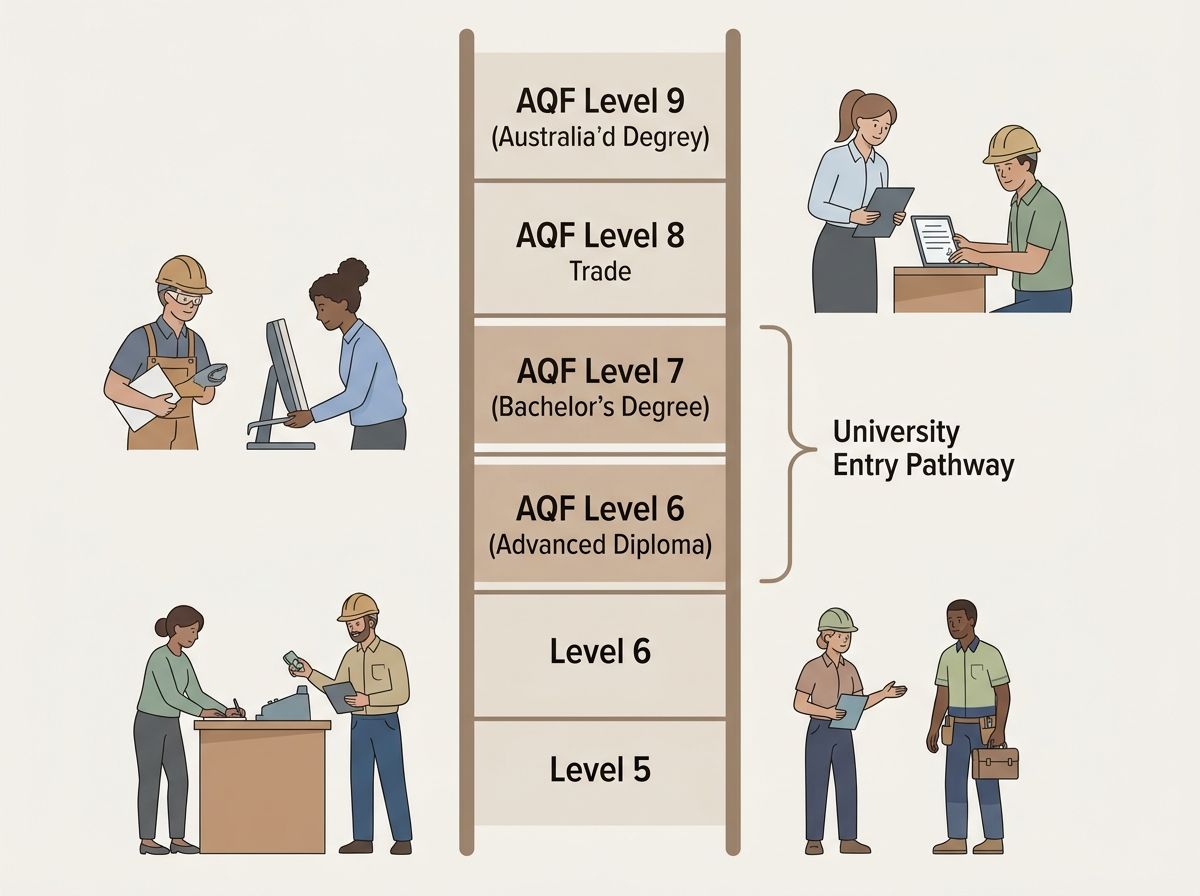
The framework assigns each qualification type to a specific level. A Bachelor's degree is at AQF Level 7, and an Advanced Diploma is at AQF Level 6. These two levels are adjacent. Although they are distinct, the framework recognises that they cover closely related skills, knowledge, and methods of practical application.
This academic alignment is important because the AQF outlines transition pathways between different qualifications. The system is designed to allow professionals to progress from vocational training into higher education without repeating previous learning from the beginning. Australian universities have the authority to accept AQF Level 6 qualifications for postgraduate entry, provided they assess that the applicant's prior qualification demonstrates sufficient academic preparation.
This structural pathway is a deliberate feature of the national education system, designed specifically to recognise that genuine professional competence is built through practical workplace experience over many years of leadership and management.
The specific pathway: an Advanced Diploma of Business via RPL
An Advanced Diploma of Business is an AQF Level 6 VET qualification. It covers strategic planning, financial management, team leadership, and operational decision-making. These represent the specific professional competencies that senior managers develop through years of practical business management rather than short-term classroom study.
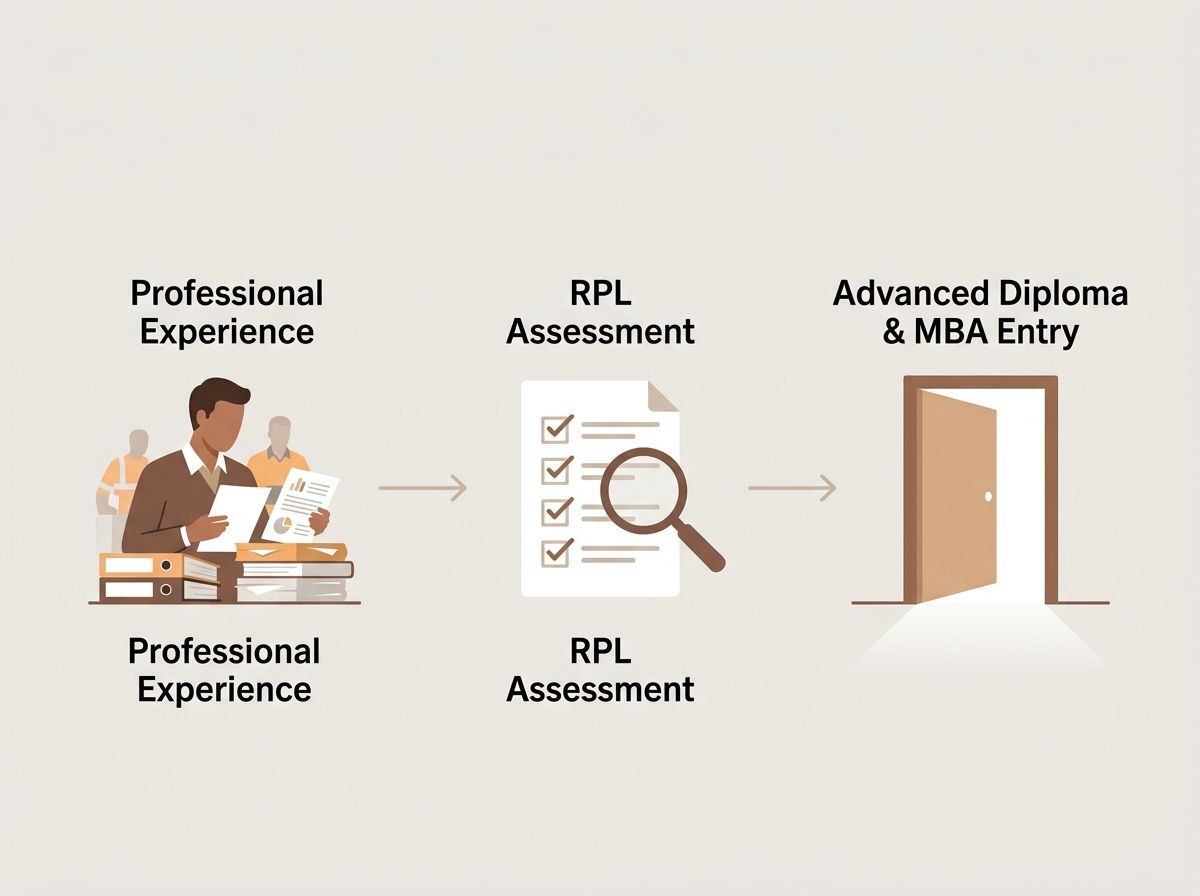
When you earn this qualification through Recognition of Prior Learning (RPL), the process differs from traditional study. Instead of attending classes and completing assessments, you compile a portfolio of evidence showing your current skills and knowledge. A qualified assessor from a Registered Training Organisation (RTO) evaluates this evidence. If your portfolio meets the required competency standards, the RTO issues the qualification. If they identify gaps, targeted training addresses those specific areas before the award is issued.
The resulting credential is an accredited, nationally recognised AQF Level 6 qualification. It is a formal, highly structured credential held to the exact same standards as any other qualification within the Australian education framework.
Several Australian universities accept an AQF Level 6 qualification, such as an Advanced Diploma, to meet the entry requirements for postgraduate programs like a Graduate Certificate of Management or an MBA, provided the applicant also demonstrates sufficient professional experience. Because specific entry requirements vary across institutions, you should confirm these details directly with your chosen university.
For a practical understanding of how this works, the RPL pathway to university entry details the steps involved.
Why Recognition of Prior Learning is an assessment pathway, not a shortcut
A shortcut implies skipping necessary work. RPL does not bypass assessment; it replaces traditional classroom tasks, such as examinations and essay writing, with a formal, rigorous evaluation of your actual professional workplace evidence.
The qualification is nationally recognised because the assessment process is rigorous. A Registered Training Organisation cannot issue an Advanced Diploma of Business unless you demonstrate every required competency. Assessors evaluate your documentation independently. You must compile workplace records, map your experience to specific standards, and submit verifiable evidence for formal review.
RPL is an assessment of prior competence, not a training program. This distinction is critical because the credential reflects the practical skills you already possess instead of topics you have recently been taught in a classroom. It carries the same formal recognition as a qualification earned through years of classroom study. If your evidence falls short in certain areas, the assessment process will identify those gaps and provide clear guidance on how to address them.
For experienced professionals whose practical competence has been overlooked by traditional academic systems, this assessment provides a transparent, objective review of their actual capability.
To understand why decades of significant management experience is often overlooked by academic institutions, this article on why experienced managers hit qualification walls explains the underlying structural barriers.
Who this pathway is designed for
This pathway is designed for professionals with substantial leadership, management, or business experience who do not hold an undergraduate degree but want to qualify for postgraduate study without spending three or more years completing a bachelor's program first.
The Advanced Diploma of Business covers competencies in areas such as strategic planning, financial oversight, team leadership, and operational analysis. If your career has involved managing budgets, leading professional staff, or directing organizational projects, there is a strong basis to explore how your professional work history matches the qualification requirements.
This pathway is not suitable for everyone. Your suitability depends on your professional background, the specific postgraduate program you want to enter, and the results of an objective assessment. The process begins with evaluating your actual work experience rather than immediate course enrolment or financial commitment.
Making an informed decision starts with verifying if you meet the entry requirements for this pathway.
For those with international experience, this guide on how overseas professionals navigate the Australian qualification system explains how to map foreign credentials and experience to local standards.
The assessment process in practice
The RPL assessment for an Advanced Diploma of Business follows a structured and fully supported process.
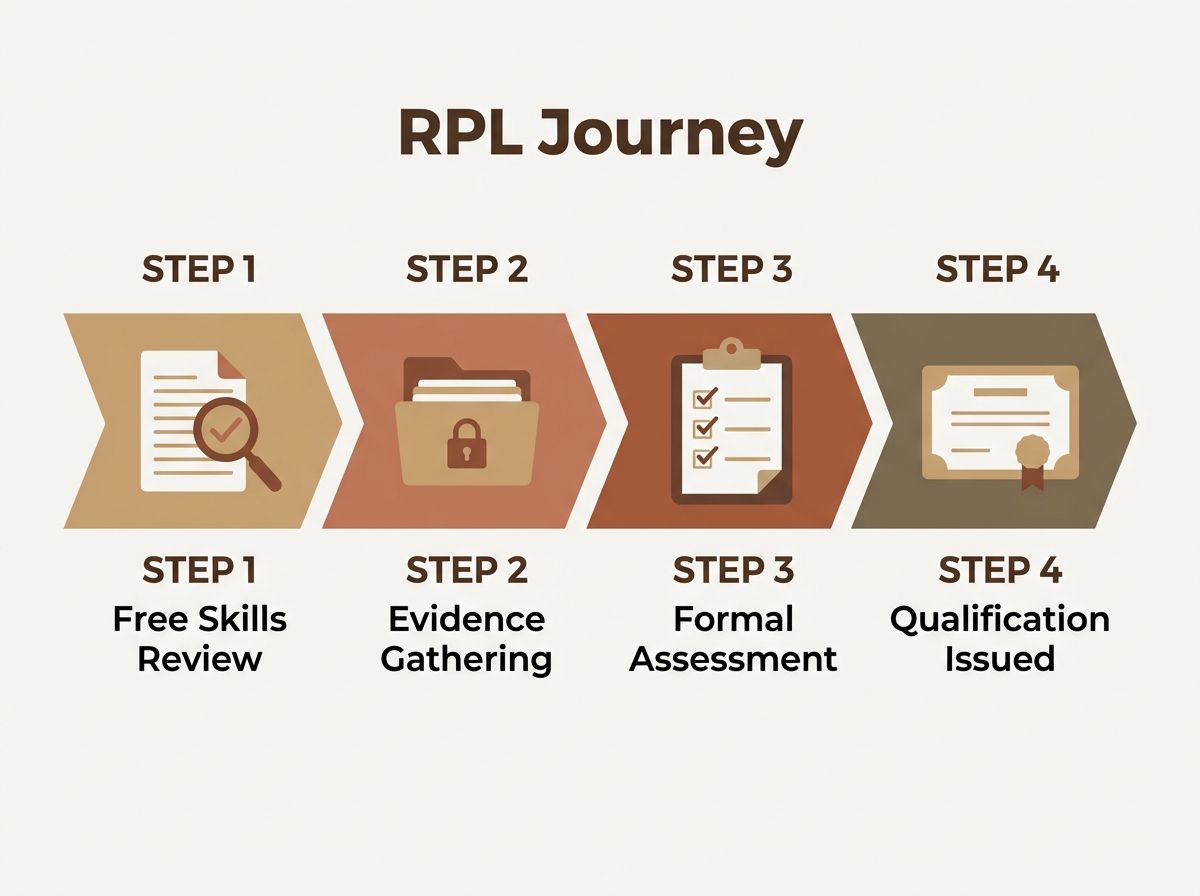
- Step 1: Free Skills Review. A preliminary assessment determines whether your professional history supports an RPL application. This diagnostic step is not an enrolment; it provides complete clarity on your eligibility before you invest any time or financial resources.
- Step 2: Evidence Gathering. If the skills review indicates eligibility, you gather documentary evidence of your workplace experience. This typically includes compiling existing professional documents like position descriptions, performance reviews, budget records, and project files to prove your practical capability.
- Step 3: Formal Assessment. A qualified assessor from the RTO evaluates your portfolio against the Advanced Diploma of Business standards. This is a genuine assessment: if your evidence meets the requirements, the qualification is awarded. If gaps are found, targeted training options are provided to address them.
- Step 4: Qualification Issued. Once your competency is confirmed, the RTO issues the nationally recognised Advanced Diploma of Business. You can then present this formal credential as part of your application for postgraduate university study.
The timeframe for this process depends on how quickly you can compile quality evidence. For professionals with well-documented histories, this process is significantly faster than completing a traditional undergraduate degree, and it requires no classroom attendance or coursework.
The evidence gathering phase translates your professional achievements into the formal documentation required for academic recognition.
Ready to Get Recognised?
Start with a free skills review to find out if RPL is right for you.