From Commercial Kitchens to Bricklaying: What I Wish I Knew Before My Career Transition
Transitioning from hospitality to construction does not mean starting over. Learn how a decade of kitchen experience translates to bricklaying via RPL.
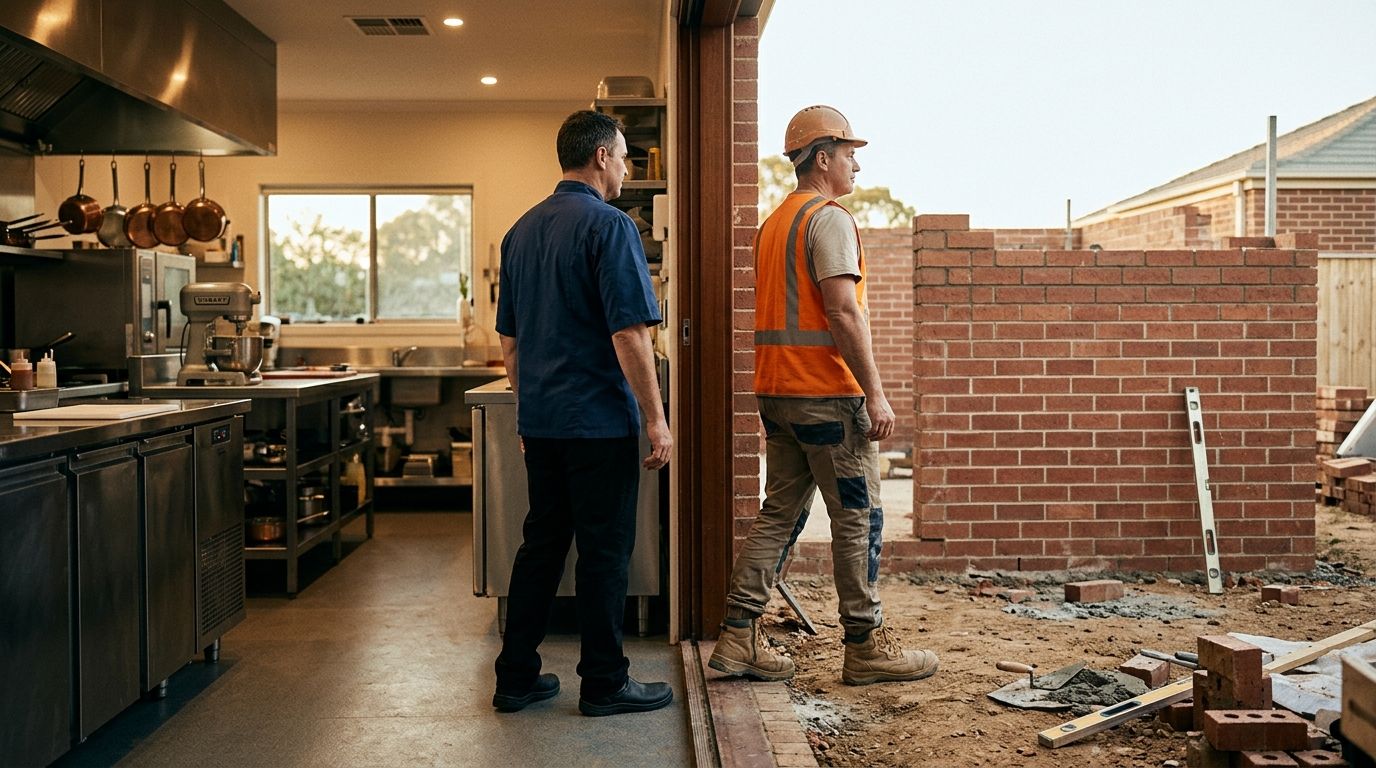
I did not leave the kitchen because of failure. I left because one afternoon, standing in the car park after a double shift, I watched a bricklayer finish a course of blocks on the building next door. He had steady hands and a quiet focus. Something in me recognised that work immediately. I wanted to do it, but I wondered if the construction industry would value my background.
The day I decided to leave the kitchen
Ten years is a long time to spend in professional kitchens. I had worked my way from commis to head chef, managed teams, run services for hundreds of covers, and built a career I respected. The decision to leave was not a crisis. It was a gradual, clear certainty that I wanted to work with my hands in a different way, working outdoors to build something permanent.
I was unprepared for the fear that followed. It was not the fear of failing at bricklaying itself, but the fear of being treated as if I knew nothing. I worried about walking onto a construction site only to be handed basic tasks because my paperwork showed no trade experience. I dreaded spending years rebuilding a professional identity I had already established once before.
That fear is worth acknowledging. People rarely discuss this barrier when they advise you to change careers or make a transition. The transition itself is straightforward; it is the starting point on the other side that causes concern.
What I feared, and why those concerns were valid
Many experienced workers know this feeling. You spend years developing competence that shows in your daily work, your problem-solving, and your leadership under pressure. When you step into a new industry, the system often treats you as if you are starting from scratch. You face entry-level pay, basic tasks, and low expectations regarding your capabilities.
This is not paranoia; it is how formal systems operate. Qualifications are assessed based on written records. If your documentation only shows hospitality, construction employers may not recognise how your skills apply. Your competence is real, but official recognition is missing.
I did not know then that a specific pathway exists for this exact situation. This process values your previous career rather than ignoring it. It evaluates your practical experience as direct evidence of your capability, rather than treating it as irrelevant background.
How a decade in hospitality applies to construction
The skills developed in professional kitchens are closely related to construction work. In many cases, they are the same core competencies, just applied in a different setting.
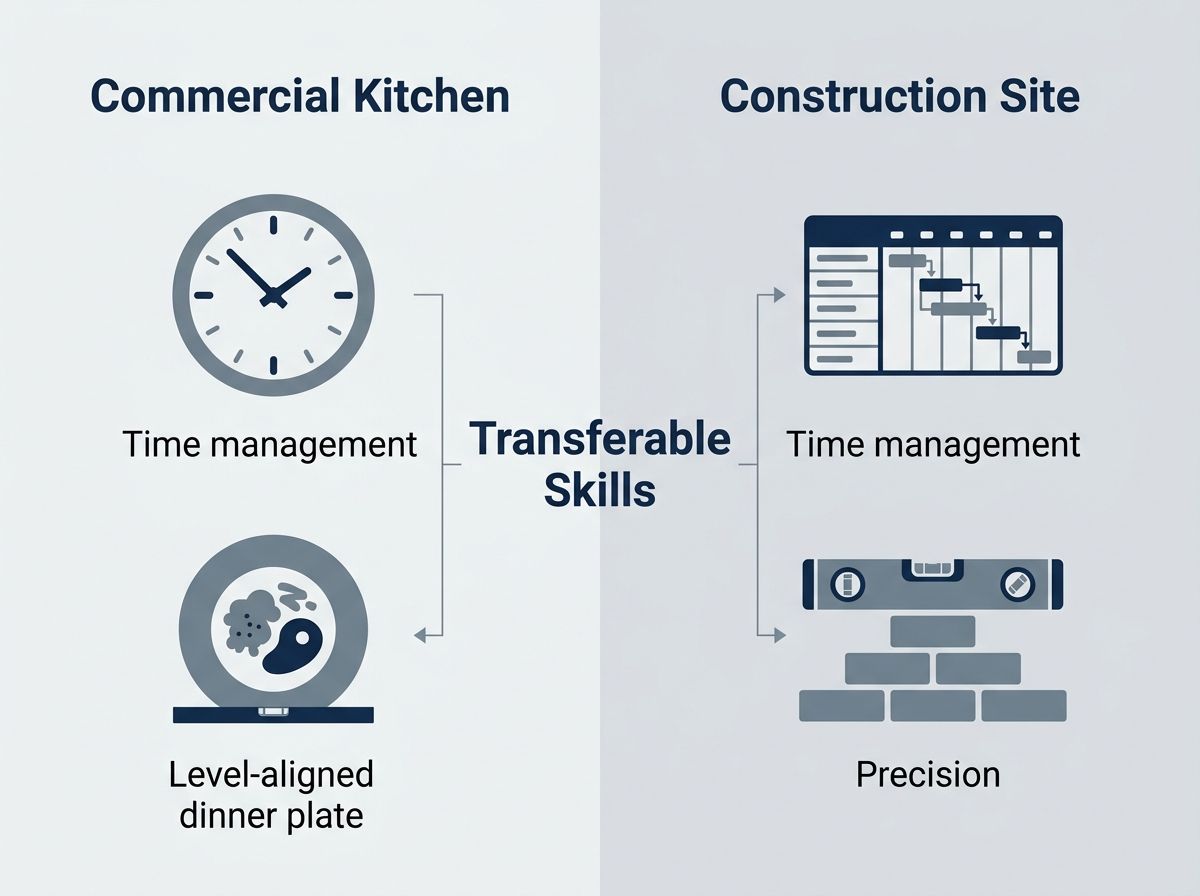
- Time management under pressure. In a kitchen, you learn to execute complex, interdependent tasks to precise timing, such as prep work, service sequencing, and managing covers. On a construction site, you plan your daily work sequence, manage your materials, and coordinate with other trades to keep a project moving. The underlying discipline of managing time remains identical.
- Physical stamina and endurance. Working twelve-hour shifts in a commercial kitchen, which involves standing continuously, dealing with high heat, carrying heavy items, and moving constantly, establishes the exact physical baseline that construction work demands. I was already conditioned for this level of sustained physical exertion.
- Attention to detail and precision. A poorly prepared dish reflects on the entire kitchen. Similarly, a mortar joint that is off by a few millimetres affects the structural integrity of the brickwork above it. Both industries require accuracy and reward those who perform the work correctly the first time.
- Working within a clear hierarchy. Kitchens rely on a head chef, while construction sites rely on a foreman. I already knew how to accept direction, execute tasks accurately, and report site issues up the chain of command constructively.
- Reading and executing technical instructions. Recipes function as technical documents, much like construction drawings and plans. The cognitive process of translating written specifications into physical outcomes is identical.
- Managing materials and minimising waste. Food cost control in a commercial kitchen is a strict discipline, and material management on a construction site requires the same approach. Both fields require you to think ahead, order supplies accurately, and account carefully for everything you use.
These are not superficial attributes rephrased to sound relevant. They are practical competencies that RPL assessors are trained to identify and evaluate. If you have spent years in a commercial kitchen, you have compiled a substantial body of evidence. The key is knowing how to document and present it.
If you are approaching this transition from another trade or industry rather than hospitality, it is useful to read about the career pivot as a translation problem. This resource explains why changing industries does not require starting from zero.
Understanding the purpose of the Certificate III
I misunderstood this process for a long time. I assumed that obtaining a Certificate III in Bricklaying and Blocklaying required returning to school, sitting in a classroom, and relearning skills I had already mastered.
That assumption was incorrect. Understanding how the system actually works changed my entire approach to my career transition.
The Certificate III in Bricklaying and Blocklaying (CPC33020) is a nationally recognised qualification. It certifies that an individual can demonstrate competency across the core skills of the trade. I did not realise that a pathway exists to earn this qualification without repeating training. It simply requires you to prove the skills you already possess.
This pathway is Recognition of Prior Learning (RPL). It is a formal assessment process conducted by a registered training organisation. A qualified assessor evaluates your existing skills and experience against the units of competency within the qualification. If you can prove you meet the standard, you skip the redundant training and receive the qualification.
Practical experience serves as evidence. For someone with a decade in commercial kitchens, the work you have already completed remains valuable when you change industries. It forms the foundation of your assessment portfolio.
RPL is a rigorous and genuine assessment. Some candidates require gap training in areas where their current experience does not fully meet the qualification standards. This is a standard part of the process rather than a setback. The assessment begins with your existing knowledge, rather than assuming you have none.
Practical advice for starting the transition
If I could offer my past self one piece of advice before moving from hospitality to construction, it would be to document all prior experience before starting the process.
Assessment through RPL is strictly evidence-based. The assessor needs to confirm that you can perform the required industry competencies, which means you must collect documentation that demonstrates your practical skills. For a candidate transitioning from hospitality, this evidence might include formal references from head chefs or restaurant managers who can verify your precision, your capacity to perform under pressure, and your physical endurance. It can also include operational records of the teams you managed, the service shifts you ran, and the quality standards you maintained, alongside photographs of your completed work, detailed logbooks, or written accounts of specific tasks you performed.
Beginning this collection early is highly beneficial. Evidence that seems simple to obtain at the time, such as a reference from a current employer or a record of a complex project, becomes much more difficult to secure after you have left the workplace.
The second key point is that the RPL process provides an objective evaluation of your skills. If there are gaps between your current experience and the qualification standards, the assessor will identify them. You may need to complete targeted gap training in specific areas. This is a normal part of a robust assessment process. Preparing for this possibility helps avoid viewing it as a setback.
The third and most practical step is to seek a skills review before committing to a program. It costs nothing, carries no enrolment obligations, and provides an objective overview of how your experience aligns with the qualification requirements. Having this information helps you make informed decisions.
The credential as a translation of your skills
A decade of kitchen experience did not lose its value when I transitioned to bricklaying. The precision, stamina, and operational discipline carried over directly. The only missing element was a formal credential that made those skills recognizable to construction employers.

The Certificate III in Bricklaying and Blocklaying is that credential. Rather than a training program designed for beginners, it acts as a formal recognition of competency for experienced workers who can prove their capabilities.
The core principle of this pathway is recognition rather than redundant training.
If you are currently preparing to transition from an established career to a new trade, your prior experience remains highly relevant. The primary task is documenting it correctly so it can be formally assessed. The pathway is available, and taking the first step is up to you.
You can learn more about the Certificate III in Bricklaying and Blocklaying and the RPL process on our dedicated qualification page.
Ready to Get Recognised?
Start with a free skills review to find out if RPL is right for you.