Why 10 Years on the Brush Won't Save You from New Site Compliance Rules
Experienced painters are being locked off sites not because they lack skill — but because compliance rules changed. Here's what the Certificate III requires.
The rule that changed without warning
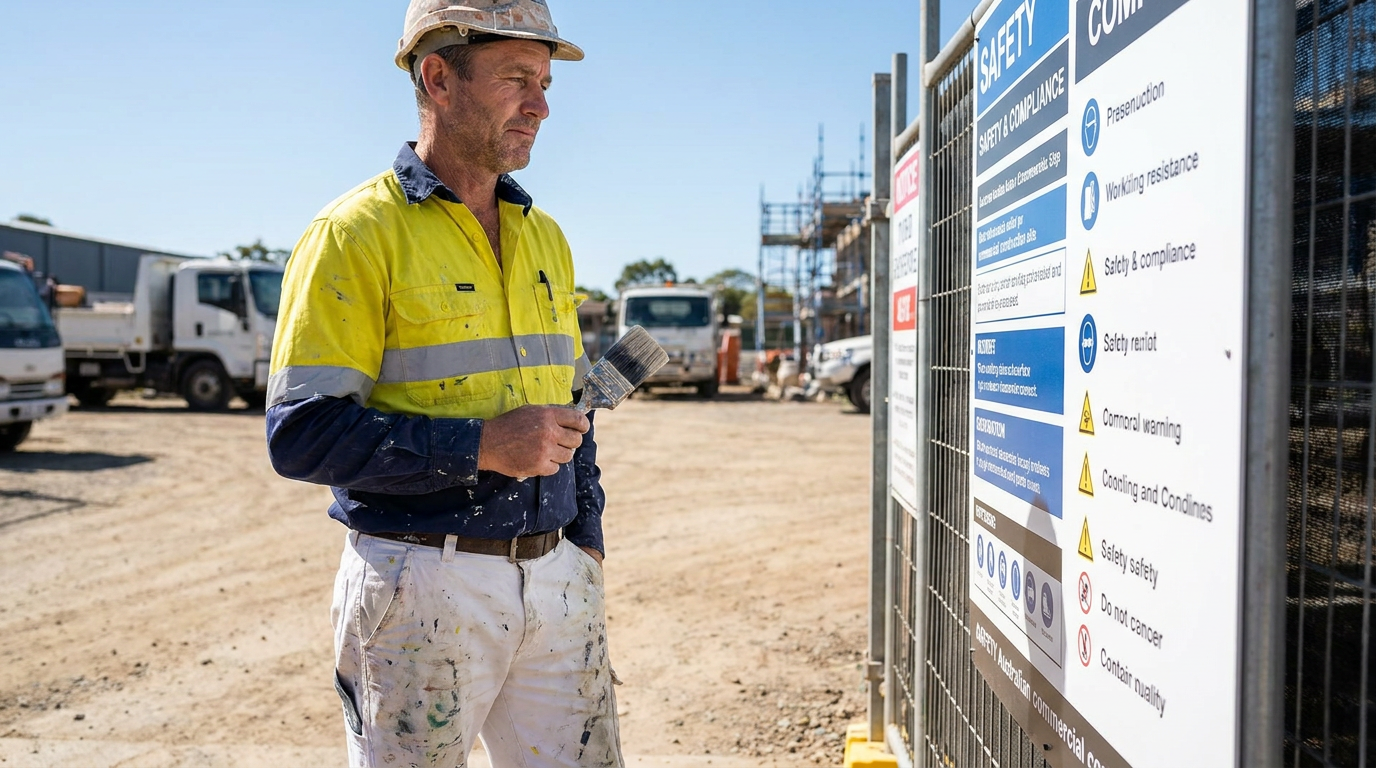
You have the experience. That part is not in question. What has changed is what the construction industry now accepts as proof of it.
Across commercial and government construction sites in Australia, the informal understanding that a painter's reputation and years on the job speak for themselves has been replaced by something more rigid: documented evidence of formal competency. Site access, subcontractor approval, and employer compliance increasingly depend not on what you can do, but on whether a registered training organisation has assessed and certified that you can do it.
Most experienced painters were not told this was coming. The shift happened gradually — through tightening principal contractor obligations, evolving work health and safety frameworks, and major project procurement requirements that now treat formal qualifications as a baseline, not a bonus.
Experience was never the currency — documentation always was
Here is the counterintuitive reality that most experienced painters discover too late: compliance systems were never designed to reward experience. They were designed to document it.
Work health and safety legislation across Australia places duties on persons conducting a business or undertaking — including principal contractors — to ensure workers are trained, instructed, and competent. Under Queensland's Work Health and Safety Act 2011, for example, these duties include verifying the provision and use of relevant resources and processes. The NSW equivalent mirrors this approach. In practice, on construction projects above certain value thresholds, principal contractors are required to prepare and maintain WHS management plans, obtain Safe Work Method Statements before high-risk work commences, and coordinate with subcontractors on safety obligations.
What this means on the ground is that a principal contractor who cannot point to a verifiable record of a subcontractor's competency is exposed. The easiest way to satisfy that requirement is a nationally recognised qualification. Not a reference from a satisfied client. Not a portfolio of completed jobs. A certificate issued by a registered training organisation following a formal assessment.
Experience is real. The system requires evidence.
What 'new site compliance rules' actually means for painters
The Certificate III in Painting and Decorating — qualification code CPC30620 — is the nationally recognised qualification that compliance frameworks reference for painting trade work in Australia. It sits within the CPC Construction, Plumbing and Services Training Package and covers residential and commercial painting and decorating work.
In New South Wales, the official position is clear. According to the NSW Government, a contractor licence is required to carry out residential building or trade work — including painting — valued at more than $5,000 in labour and materials (including GST). CPC30620 is listed as an accepted current qualification for that licence. Older versions of the Certificate III in Painting and Decorating are also listed as acceptable, but CPC30620 is the current standard.
The NSW Government's official page on painting work licensing sets out the qualification requirements, licence types, and exemptions that apply in that state.
It is worth noting that in NSW, stand-alone contracts for internal paintwork have not required a licence since 2015, unless the paintwork is part of other home building work. But for external work, commercial projects, and work above the $5,000 threshold, the licensing requirement — and the qualification that underpins it — applies.
Other states have their own requirements. According to one RPL training provider, Victoria requires a Domestic Builder (Limited) — Painting registration through the Victorian Building Authority, Queensland requires a Painting and Decorating Contractor Licence through the QBCC, and Western Australia has its own painter's registration requirements. Requirements vary by state and should be confirmed directly with the relevant licensing body — the VBA, QBCC, or equivalent — before relying on any summary.
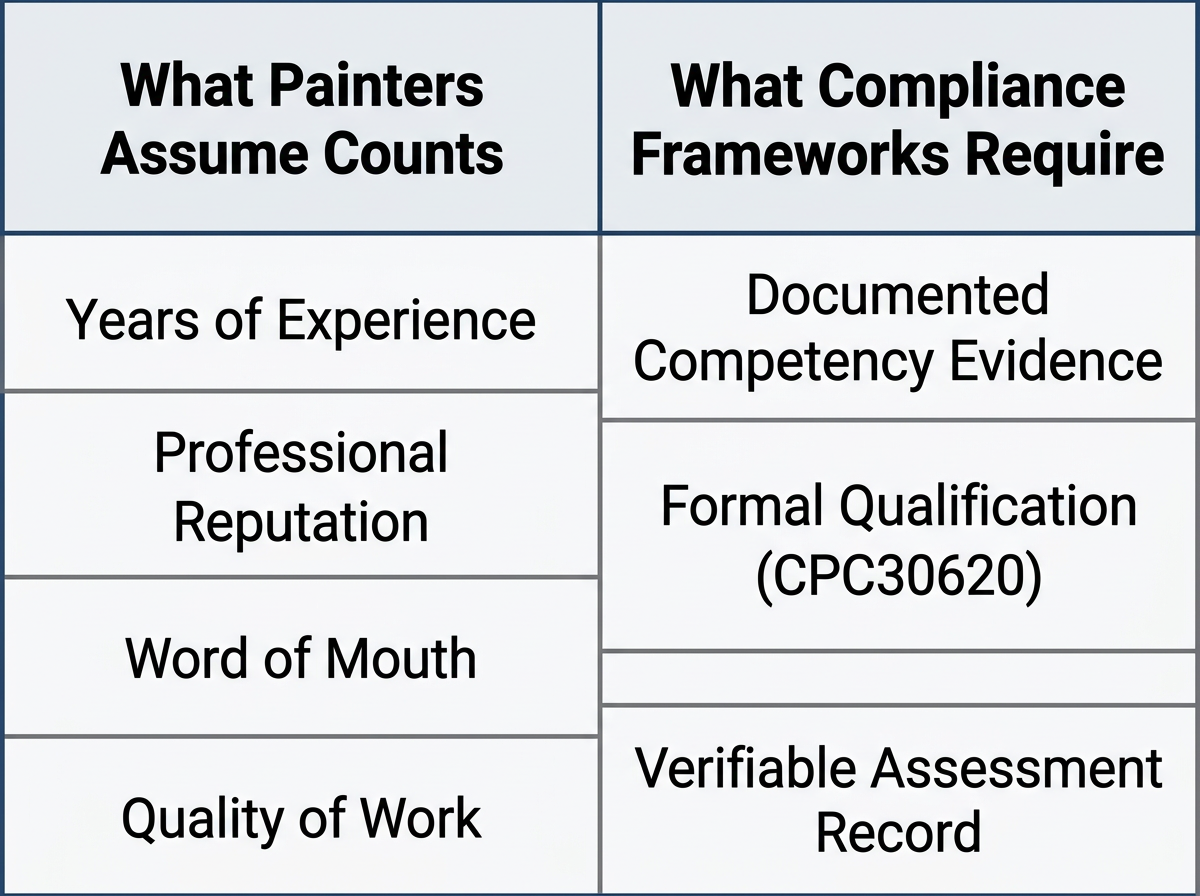
The consistent thread across jurisdictions is that CPC30620 — or an equivalent Certificate III in Painting and Decorating — is the qualification that licensing and compliance frameworks point to. Years of experience, however extensive, are not a substitute.
The myth: 'my work speaks for itself'
It does. The problem is that compliance systems do not have ears.
The belief that demonstrated skill and professional reputation are sufficient proof of competency is entirely reasonable — and it was largely true for most of the painting industry's history. Informal networks, word-of-mouth referrals, and the visible quality of completed work were the currency that mattered. That culture has not disappeared, but it now operates alongside a parallel system that requires something different: verifiable, auditable evidence of competency that a principal contractor, insurer, or licensing body can point to if questioned.
According to ABS data from 2022–23, 69% of workers in the construction industry held a qualification below bachelor degree level and reported that qualification as the most relevant to their current job. The construction industry runs on vocational credentials. The shift is not that qualifications have become more important — it is that the informal tolerance for working without them on certain types of sites and projects has narrowed.
A parliamentary committee inquiry into skills recognition has also identified that tradespeople can face difficulties moving around Australia to work without undergoing additional testing and registration — even when they hold formal qualifications. For experienced painters without any formal credential, the barriers can be more immediate.
Experience is not less than education. It is a different form of evidence. The question is whether it has been presented in the form the system can recognise.
What the Certificate III in Painting and Decorating actually assesses
CPC30620 is not a test of whether you can paint. It is a structured assessment of whether you can demonstrate competency against nationally recognised units of competency.
The qualification comprises 29 units of competency: 26 core units and 3 elective units. The core units cover the practical and technical skills required for painting and decorating work in residential and commercial construction — surface preparation, application techniques, colour and finish selection, WHS obligations, and working safely at heights, among others. The elective units allow for some specialisation.
For an experienced painter, the question is not whether you possess these skills. It almost certainly is. The question is whether you can present evidence of them in the form a registered training organisation's assessor can evaluate against the performance criteria of each unit.
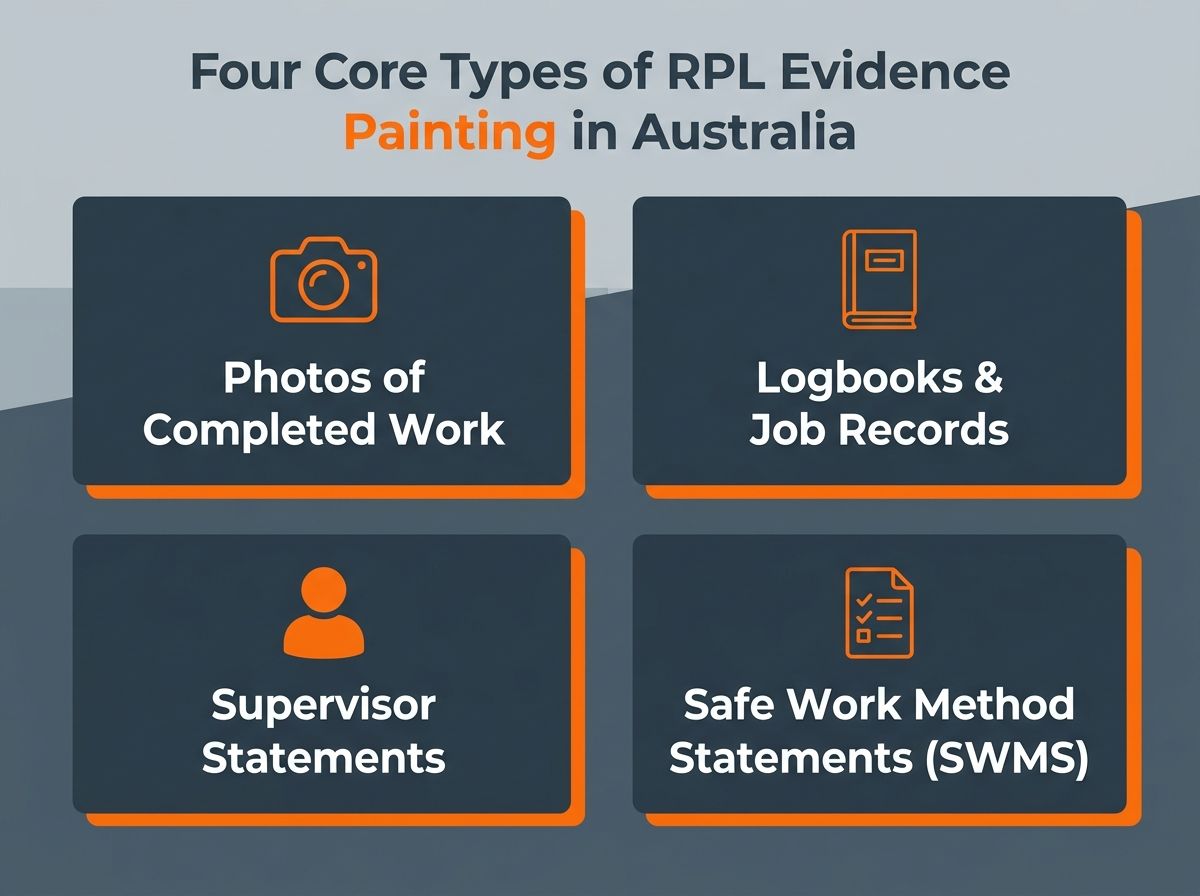
That evidence can take several forms. Workplace-based evidence — photographs of completed work, logbooks, Safe Work Method Statements, records of jobs completed — is typically central to an RPL assessment. Employer or supervisor statements, third-party verification, and simulated industry assessment may also be used, depending on the RTO's approach.
The assessment is conducted by a qualified, industry-experienced assessor from the delivering RTO. Their role is to measure your prior knowledge and experience against the performance criteria of the qualification. If all 29 units are recognised through RPL, you may be awarded the full CPC30620 qualification. If only some units are recognised, you may receive a Statement of Attainment for those units, with gap training required for the remainder.
RPL: the mechanism that translates experience into compliance
Recognition of Prior Learning — RPL — is the formal assessment pathway that converts existing competence into the documented form compliance systems require. It is not a shortcut. It is the appropriate mechanism for experienced workers who already possess the skills being assessed and need to have that competency formally verified and certified.
The process works like this. A candidate submits evidence of their existing skills and experience — typically a portfolio that includes workplace documentation, photographs, employer statements, and records of completed work. A qualified assessor from a registered training organisation reviews that evidence against the performance criteria of each unit in CPC30620. The assessor may request additional information or clarification. If gaps are identified, gap training and assessment may be scheduled.
Some RTOs indicate that RPL for CPC30620 can take around three months, depending on the quality and completeness of the evidence submitted. This is an indicative timeframe, not a guarantee. The duration depends on the evidence you provide and whether gap training is required.
Some RTOs require a minimum of two years' relevant industry experience before offering an RPL assessment for CPC30620. This is a provider-specific entry requirement, not a national rule. Requirements vary between RTOs, and it is worth confirming the entry criteria with any provider you are considering.
The qualification is nationally recognised because the assessment is genuine. The RTO's assessor determines competency — not the candidate, and not the RPL support service. The certificate, if awarded, is issued by the RTO and carries the same standing as a qualification earned through traditional study.
RPL it Australia's product page for the Certificate III in Painting and Decorating outlines how the RPL pathway works for CPC30620 and what the process involves.
Is your experience enough to start the RPL process?
Not every experienced painter will be suitable for RPL. The process requires sufficient evidence of competency across all required units. If your work history is narrow — focused on a single type of painting work, for example — there may be units where your evidence is thin, and gap training would be required to complete the qualification.
Broadly, RPL is most likely to be a viable pathway for painters who have worked across a range of residential and commercial painting tasks, have documentation of that work (or can obtain it), and have been working in the trade for a meaningful period. The more varied your experience and the more evidence you can gather, the stronger your RPL portfolio is likely to be.
The honest answer to 'is my experience enough?' is: it depends on what you have done and what you can document. That is not a deflection — it is the reality of how RPL assessment works. The only way to get a reliable answer is to have your experience reviewed against the qualification's requirements.
What happens if you wait
The compliance requirements now affecting painters on commercial and government sites are not a temporary inconvenience. The direction of travel — toward formal qualification requirements as a baseline for site access and contractor licensing — is consistent across Australian states and across multiple trades.
For painters without a formal qualification, the practical consequences are concrete. In NSW, working on painting projects above $5,000 without the appropriate licence — which requires a formal qualification — carries penalties. On commercial sites, principal contractors who cannot verify subcontractor competency are exposed under WHS legislation. Increasingly, that verification defaults to a formal qualification.
Nationally, ABS data shows that 78% of people with a non-school qualification were employed in 2022–23, compared with 57% of people without one. This is a correlation, not a direct measure of site access barriers — but it reflects a broader pattern in which formal credentials are increasingly tied to employment outcomes across the Australian workforce.
The cost of waiting is not abstract. It is the jobs you cannot bid for, the sites you cannot access, and the employer mandates that arrive without warning. Your skills are real. The question is whether you have translated them into the form the system requires.
Recognition shouldn't require starting over. If you have the experience, the pathway exists to have it formally assessed. The decision is yours.
Ready to Get Recognised?
Start with a free skills review to find out if RPL is right for you.