Most Bricklayers Didn't Start With a Certificate — Here's Why That's Changing
Most working bricklayers entered through experience. Now, the industry is shifting. Learn what is driving this change and how it affects your trade.
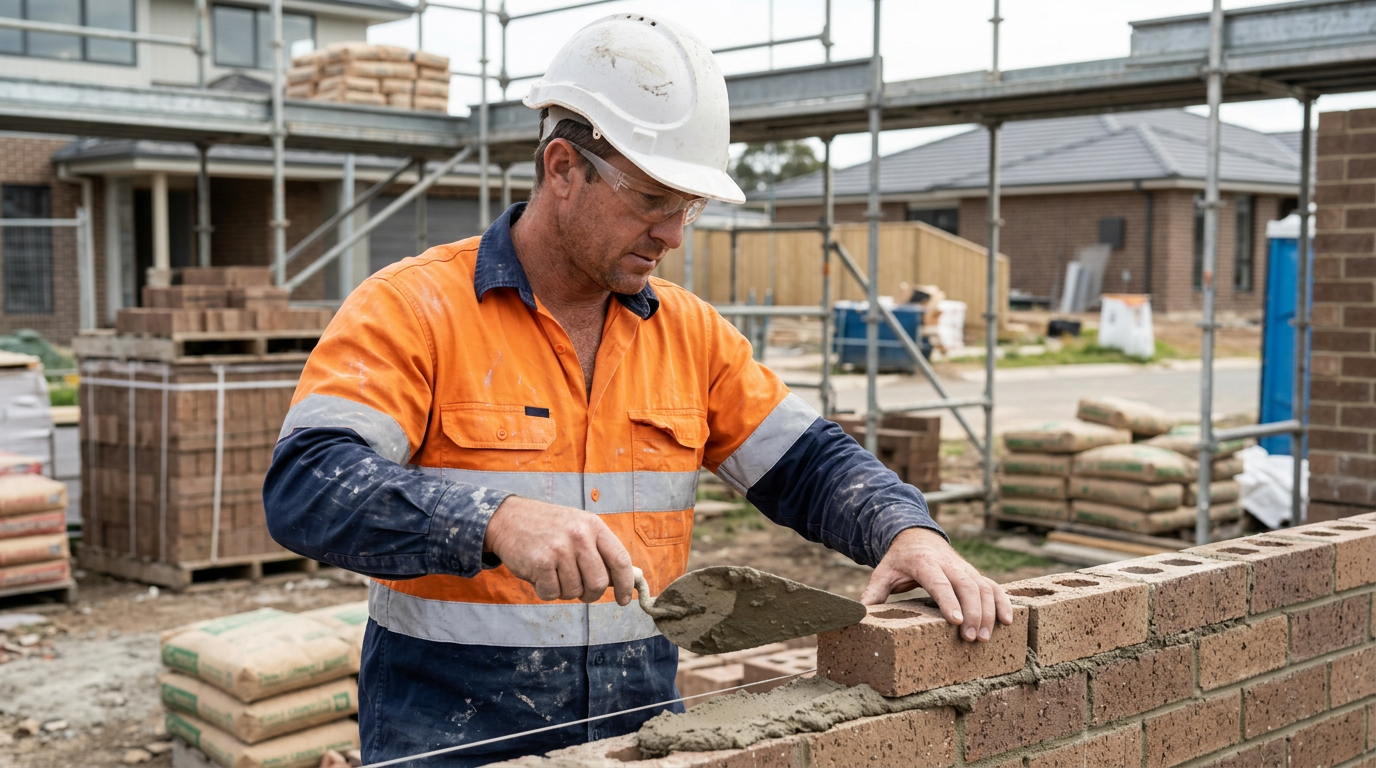
The Way Most Bricklayers Actually Got Into the Trade
Most working bricklayers in Australia entered the trade through an apprenticeship, years of on-site experience, or informal pathways — not through formal Certificate III study as adults. Many experienced bricklayers work for years without a formal qualification, gaining their skills entirely on the job. This is not unusual. It is how the industry has largely functioned for decades.
Meanwhile, across the broader Australian workforce, formal qualification rates have been rising. The Australian Bureau of Statistics reports that Certificate III or above attainment among people aged 25–34 increased from 66% in 2014 to 73% in 2024. That shift reflects a national trend toward formalising credentials, and the construction sector is part of this change.
If you have been laying bricks for a decade or more, this trend does not change your practical competence. You know your capability. The real issue is whether the industry around you is starting to require proof of those skills in a specific format, and whether that affects your daily work.
What's Actually Driving the Shift
Three specific factors are making the Certificate III in Bricklaying and Blocklaying relevant for experienced workers who have managed without it for years. These are not a judgment on your skill. They are external pressures showing up in predictable areas of the trade.
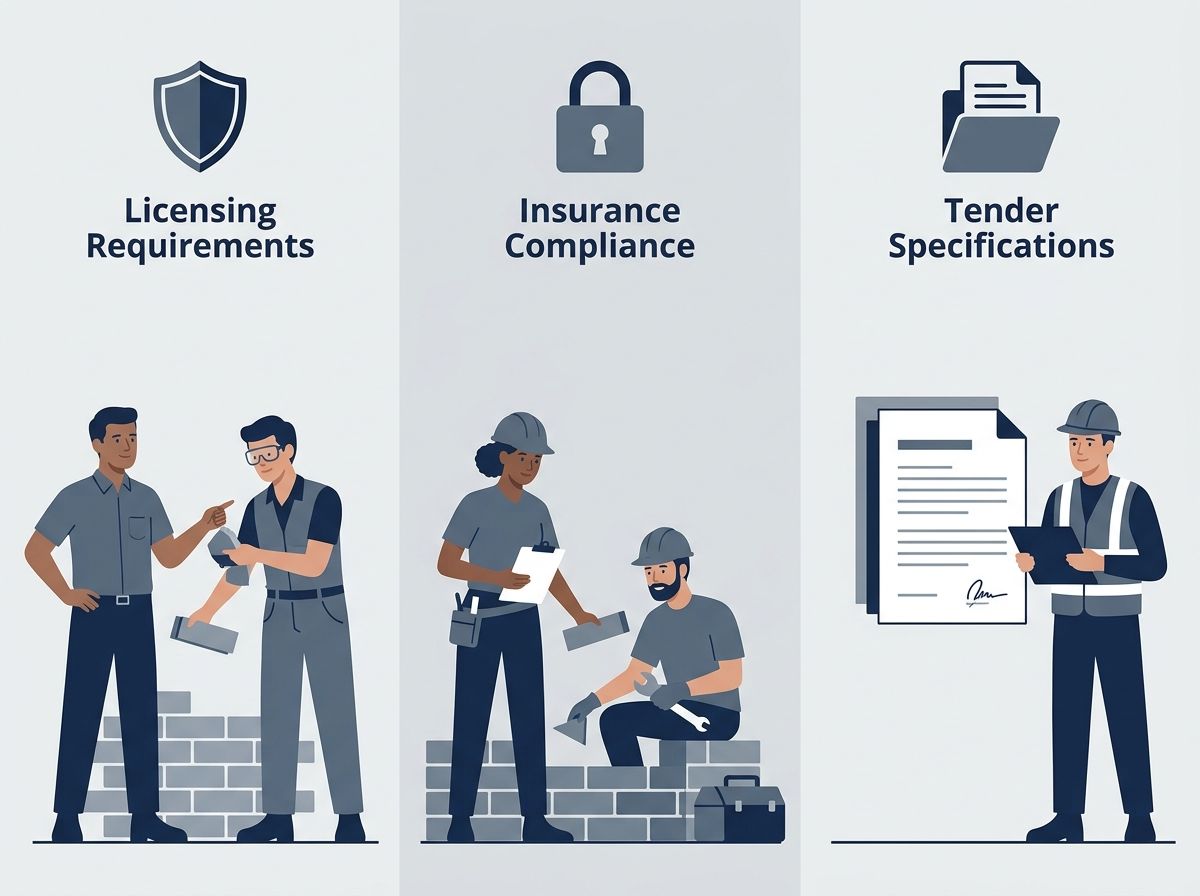
- Licensing and registration requirements: Several Australian states and territories require bricklayers to hold a contractor licence for work above a certain value threshold. In NSW, for example, a contractor licence is required for bricklaying work valued over $5,000. Queensland's QBCC issues a bricklaying and blocklaying licence with its own qualification requirements. Requirements vary by jurisdiction, but the direction of travel is toward formal qualifications.
- Principal contractor requirements: On commercial and government construction sites, head contractors increasingly require subcontractors to demonstrate formal qualifications as part of site induction and compliance processes. This is happening even where state law does not mandate it. The qualification becomes a practical requirement for accessing certain jobs.
- Insurance and tender specifications: Public liability insurers and project procurement frameworks are increasingly specifying certified tradespeople. If you are tendering for work or working under a principal contractor's insurance umbrella, formal qualifications are becoming harder to avoid.
These forces do not hit every bricklayer at the same time. Instead, they appear at specific moments: a new site induction, a tender submission, an insurance renewal, or a conversation with a principal contractor. If you have run into any of these situations recently, you are already seeing this shift firsthand.
For a closer look at how compliance requirements are changing across construction sites — and what that means for bricklayers specifically — see our article on the compliance shift happening across construction sites.
What the Certificate III in Bricklaying and Blocklaying Actually Is
The Certificate III in Bricklaying and Blocklaying (CPC33020) is a nationally recognised qualification that formally documents competency in the trade. It is an AQF Level 3 trade qualification, which is the same level as a completed apprenticeship.
According to official training.gov.au documentation, the qualification comprises 28 units of competency: 20 core units and 8 elective units. The core units cover the practical tasks that experienced bricklayers perform on site every day, including laying masonry walls, constructing arches, installing flashings, reading plans, working safely, and managing materials. Elective units allow for focus on areas like traditional and heritage bricklaying, refractory work, or paving.
It is worth noting that the qualification includes prerequisite requirements for some units, meaning certain units must be assessed in a particular order. These prerequisites are packaged within the qualification itself, so they are managed as part of the assessment process rather than requiring separate study.
For an experienced bricklayer, the key point is this: the Certificate III is not a training program. It is a recognition framework. The competencies it covers are the ones you already apply on site. The qualification exists to formally assess and document what you already know, not to teach you the trade from scratch.
The full qualification structure, including the complete unit list for CPC33020, is publicly available on the national training register.
If you want to understand more about how the qualification maps to the work experienced bricklayers already do, our article on what the RPL pathway looks like for experienced bricklayers goes into more detail.
Why RPL Is the Realistic Pathway for Working Bricklayers
Recognition of Prior Learning (RPL) is an assessment pathway that allows experienced bricklayers to have their existing skills assessed against the qualification's units, using evidence from real work experience. It is a nationally recognised pathway under the Australian Qualifications Framework. It is a rigorous assessment process designed specifically for people who have developed trade competency through work rather than formal study.
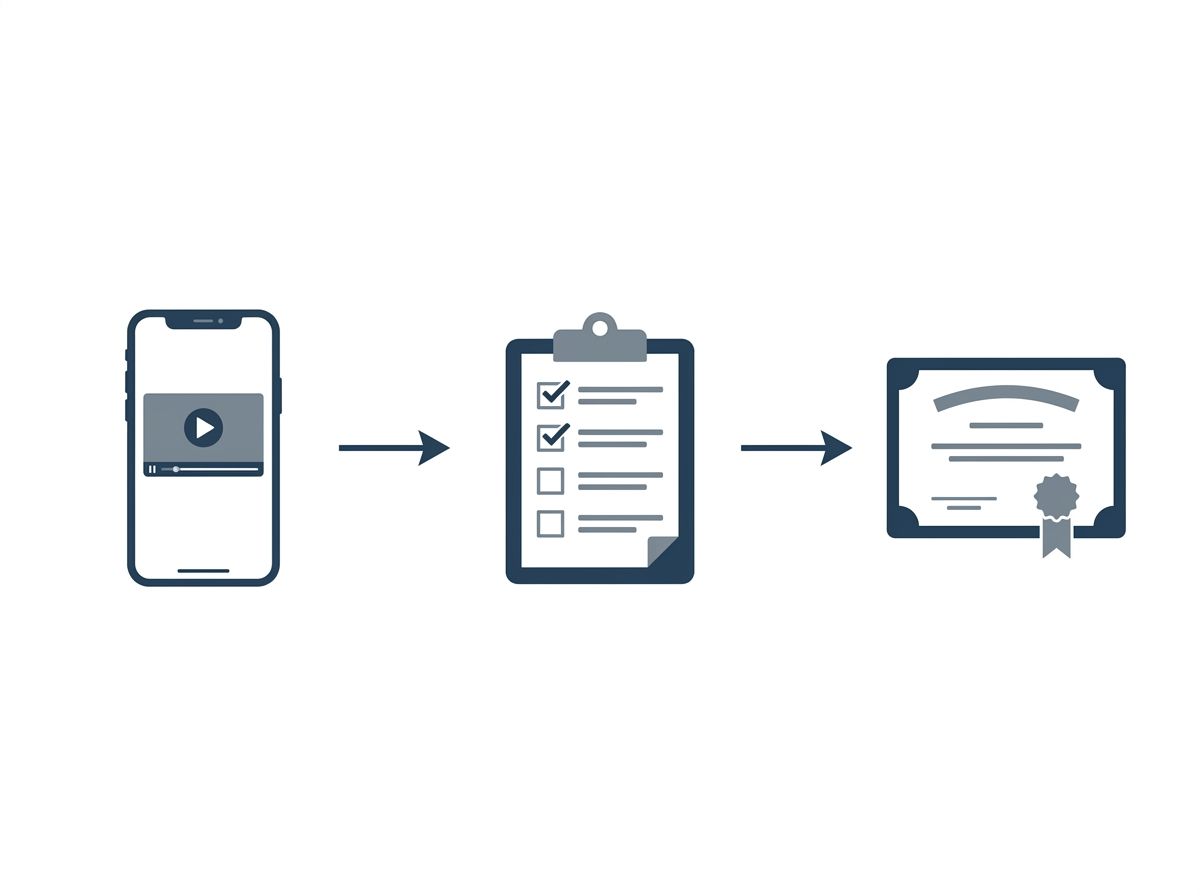
For a working bricklayer, the practical reality is straightforward: stopping work to complete a full apprenticeship or TAFE course is rarely a realistic option. RPL exists for exactly this situation. The assessment draws on evidence of what you have already done, not on classroom attendance or coursework.
The types of evidence typically accepted in an RPL assessment for CPC33020 include video footage of tasks performed on site, time-lapse photos of completed work, certificates already held, and project documentation. The assessment is conducted by industry expert assessors and may also include a workplace skills assessment requiring access to tools, equipment, and materials.
Entry requirements vary by registered training organisation (RTO). As one example, the Master Builders Association of NSW requires a minimum of three years' full-time equivalent experience in bricklaying or blocklaying within the last ten years, two references from licensed supervisors, site access, a valid White Card, and an entry quiz score of at least 80%. These are specific to that provider; other RTOs will have their own requirements.
As an indicative guide, the Master Builders Association of NSW indicates that RPL for CPC33020 can be completed within 12 months, with a suggested commitment of around 10 to 15 hours per week. This is one provider's indicative timeframe; actual timeframes depend on the RTO and the individual's circumstances.
RPL involves genuine assessment. It is not a rubber stamp. An assessor will review your evidence and determine whether it demonstrates competency against each unit. If gaps are identified, gap training may be required. The process is thorough, and that rigor ensures the resulting qualification is nationally recognised and credible.
The Master Builders Association of NSW outlines its RPL program for CPC33020, including entry requirements and the evidence types accepted.
The Shift Is Already Happening — Here's What That Means for You
The industry change described in this article is already underway. Experienced bricklayers are encountering the qualification requirement at specific moments: new site inductions that ask for proof of qualification, tender submissions that specify certified tradespeople, insurance renewals that raise the question of formal credentials, and employment applications where a certificate is the initial filter.
If you have not encountered these moments yet, you likely will. If you have already faced them, you know exactly what this article is describing.
This shift is not a judgment on your competence. The work you have done is real, and the skills you have developed are real. What is changing is how the industry verifies those skills. The Certificate III in Bricklaying and Blocklaying is the format the industry recognises, and RPL is the pathway that exists for people who have already earned that recognition through work.
You have the experience. The choice of whether to make it visible in the format the industry now requires is yours.
Find Out Whether Your Experience Qualifies
The first step is understanding where your experience sits relative to the assessment standard. That is what a Free Skills Review is for. It is a direct, no-obligation conversation that costs nothing and carries no commitment. It provides honest guidance on whether your experience is likely to meet the RPL assessment criteria for the Certificate III in Bricklaying and Blocklaying.
If the assessment shows your experience is a strong fit, you will know the next steps. If there are gaps, you will know that too, before making any enrolment decisions. The goal is to give you a clear, honest picture.
You can also learn more about the Certificate III in Bricklaying and Blocklaying (CPC33020) and the RPL pathway on the qualification page.
Frequently Asked Questions
Do bricklayers need a Certificate III in Australia?
Requirements vary by state and territory. In some jurisdictions, a contractor licence — which may require a formal qualification — is needed for bricklaying work above a certain value threshold. In others, employed bricklayers may not need a personal licence. However, principal contractors and insurers are increasingly asking for proof of formal qualification regardless of state licensing rules. It is worth checking the requirements in your jurisdiction and with the contractors you work with.
What is CPC33020?
CPC33020 is the national qualification code for the Certificate III in Bricklaying and Blocklaying. It is an AQF Level 3 trade qualification comprising 20 core units and 8 elective units, covering the practical competencies of bricklaying and blocklaying work. It is nationally recognised across Australia.
Can I get a Certificate III in Bricklaying through RPL?
RPL (Recognition of Prior Learning) is an assessment pathway available for CPC33020. It allows experienced bricklayers to have their existing skills assessed against the qualification's units using evidence from real work experience. Whether you are eligible for RPL, and what evidence you will need, depends on the registered training organisation conducting the assessment. A Free Skills Review is a no-obligation way to get an initial read on your situation.
What evidence do I need for RPL in bricklaying?
Evidence requirements vary by RTO, but typically include things like video footage of tasks performed on site, photos of completed work, employer or supervisor references, certificates already held, and project documentation. Some RTOs also conduct a practical workplace assessment. Your chosen RTO will specify exactly what they require.
Ready to Get Recognised?
Start with a free skills review to find out if RPL is right for you.