What the ACT Plumbing Licence Process Actually Assesses — And Why Years on the Tools Is the Whole Point
The ACT plumbing licence process assesses competency, not training history. Here is what that means for experienced plumbers using RPL.
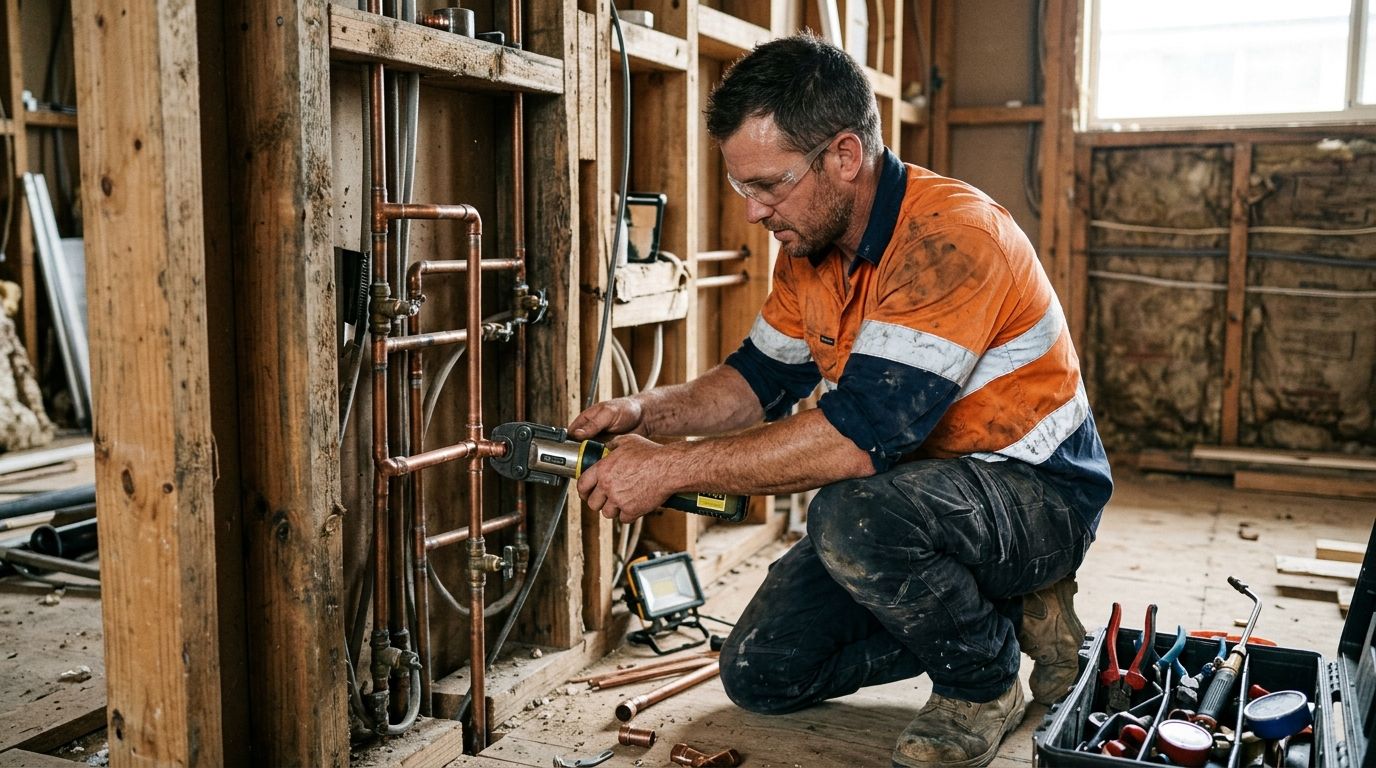
The Question Nobody Asks About the ACT Plumbing Licence
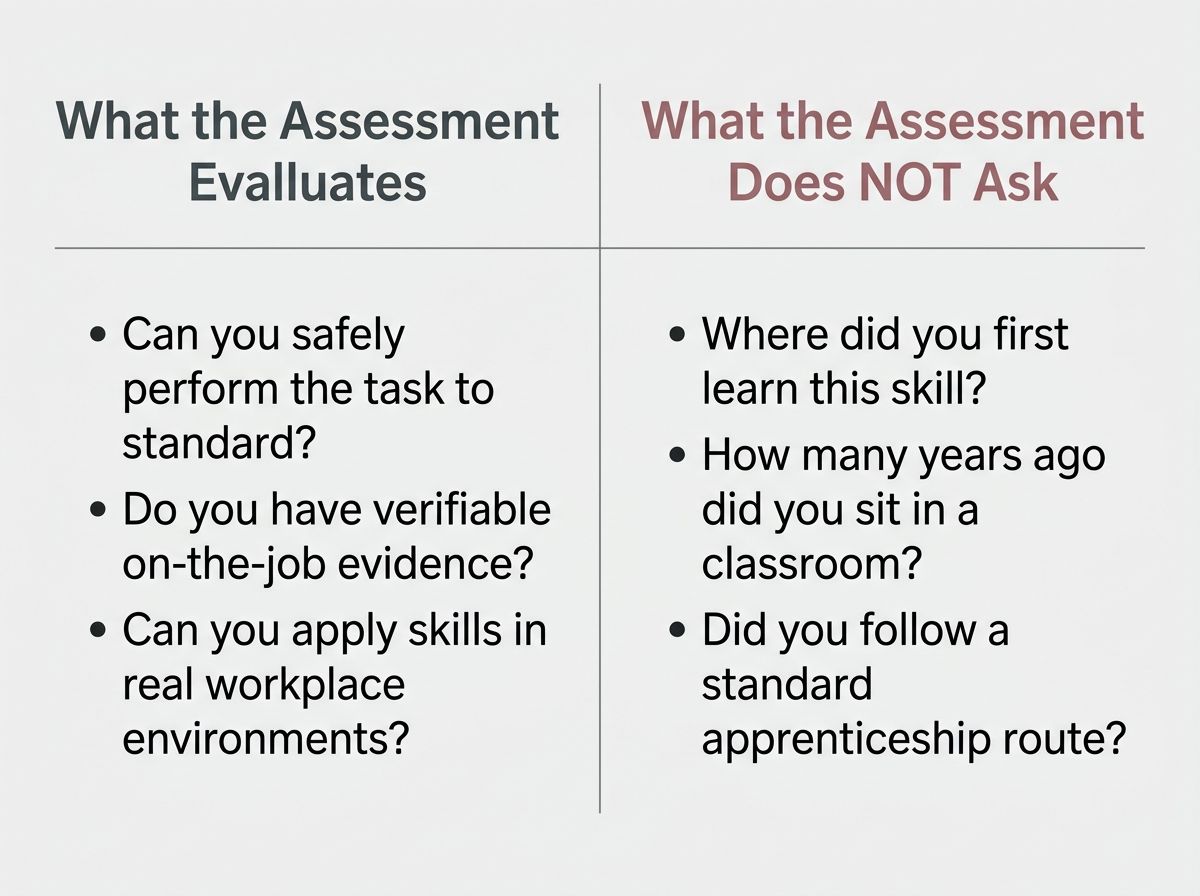
Most experienced plumbers approach the ACT licensing process with a single assumption: that the system is designed to verify formal training. They assume you need to have sat in a classroom, and that the qualification is proof of a course completed rather than a skill demonstrated. It is an understandable assumption, but it is wrong.
The ACT plumbing licence process is built on a competency assessment framework. It asks whether you can demonstrate specific, defined skills, not where or how you acquired them. This distinction is central to the licensing process, and it changes how experienced plumbers should plan their pathway.
If you have spent years on the tools installing drainage systems, commissioning water supply, and supervising others on site, you have been accumulating the exact skills the framework is designed to assess. The question is not whether you have the competency. The question is whether it is documented in a form the assessor can evaluate.
What the Framework Is Actually Designed to Measure
The ACT plumbing trade licence is governed by the Construction Occupations (Licensing) Act 2004. The licensing application requires applicants to provide evidence of completion, or partial completion, of relevant Certificate IV in Plumbing and Services qualifications, along with specific units of competency.
The ACT Construction Occupations (Licensing) (Qualifications) Declaration specifies that applicants must have obtained the required units of competency no longer than five years before their application. For certain licence classes, they must also demonstrate at least one year of full-time relevant practical plumbing work experience.
What the framework does not specify is how those competencies must have been acquired. The regulatory focus is on demonstrated competency, which means the ability to perform defined tasks to a defined standard, rather than the training pathway that produced it. This structural feature makes recognition of prior learning a legitimate pathway, not a shortcut.
Qualifications issued through RPL are nationally recognised under the VET Quality Framework and the Australian Qualifications Framework. An RPL-issued Certificate III in Plumbing carries the same standing as one issued through an apprenticeship because both are assessed against the same national competency standard.
If you're ready to explore the ACT plumbing trade licence pathway, the product page outlines what's involved.
Why Most Experienced Plumbers Don't Know This
The confusion is structural, not personal. When you are told you need a Certificate III in Plumbing, the natural inference is that you need to study for one. The word qualification implies a course, a classroom, a TAFE, or a training provider.
However, a qualification in the VET framework is a documented record of assessed competency. It is not proof of study. It is proof that a qualified assessor has evaluated your ability against defined units of competency and found you capable. The training pathway that typically produces a qualification, such as an apprenticeship or a TAFE course, is one way to develop that competency. It is not the only way, and it is not what the qualification itself certifies.
Most experienced plumbers have been given incomplete information. They have been told they need the qualification without anyone explaining that it can be earned through assessment of existing competency. This gap in understanding keeps capable tradespeople from pursuing a pathway that exists specifically for them.
For a closer look at the myths that keep experienced plumbers from pursuing recognition, this article covers the most common ones in detail.
What 'Competency' Actually Means in This Context
Competency in the VET framework is defined against specific units within the Certificate III in Plumbing (CPC32420), which is a nationally registered qualification on training.gov.au. Each unit describes what a plumber must be able to do, under what conditions, and to what standard.
Core units within CPC32420 include competencies such as working safely at heights (CPCCCM2012), carrying out WHS requirements (CPCPCM2043), carrying out interactive workplace communication (CPCPCM2039), planning and installing below-ground sanitary drainage systems (CPCPDR3021), and fabricating and installing external flashings (CPCPRF3023). Each unit has defined performance criteria, which are specific, observable actions that demonstrate the competency.
The assessment asks whether you can demonstrate these skills. The evidence used to answer that question can come from formal training, an apprenticeship, years of on-the-job work, or a combination of these. The source of the competency is irrelevant to the assessment. What matters is whether the evidence demonstrates the required standard.
How RPL Works as the Documentation Mechanism
Recognition of prior learning is the formal process for converting undocumented competency into structured evidence that meets the assessment standard. It is not a shortcut and it is not a guarantee. It is a guided process for gathering, organising, and presenting evidence of competency against the specific units required.
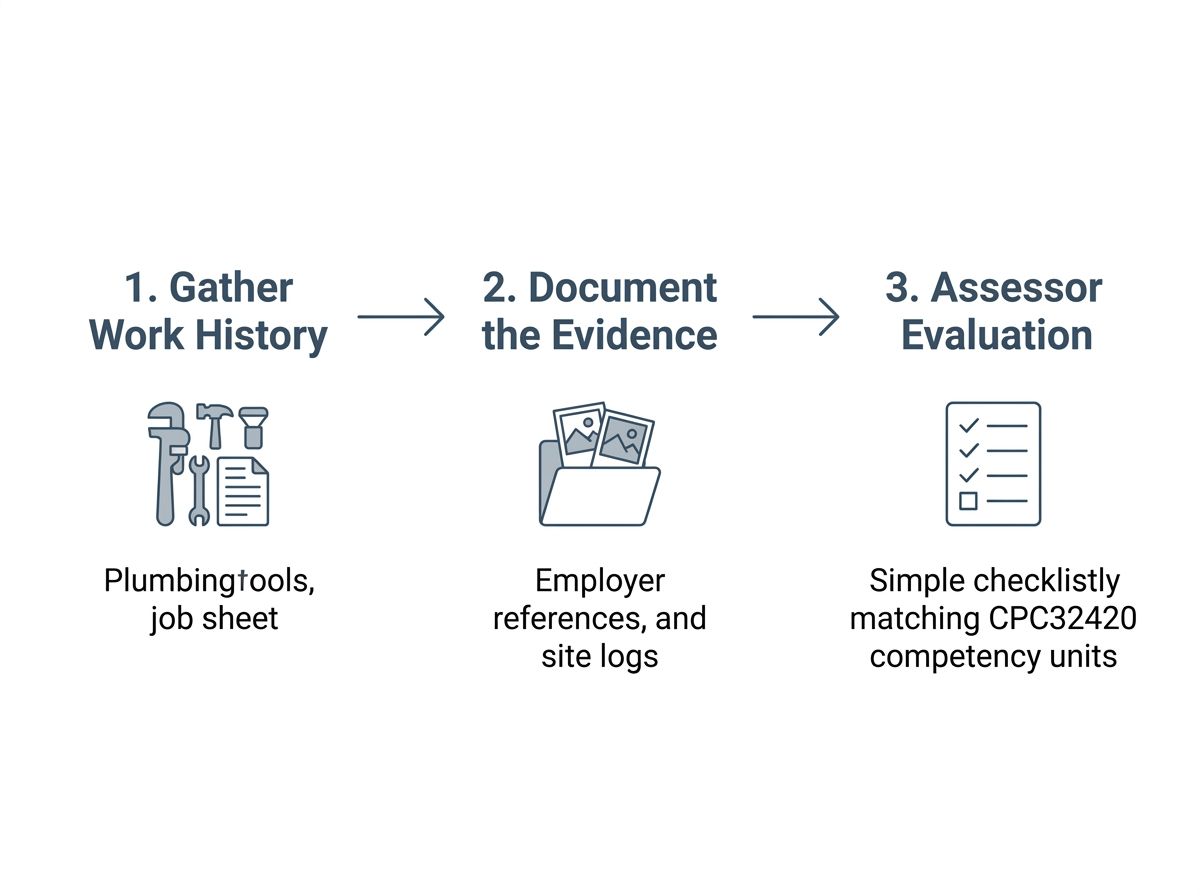
The evidence typically includes site records, employer references, photographs of completed work, logbooks, and third-party verification from supervisors or colleagues who can attest to the work performed. The assessor, who is a qualified professional from a registered training organisation, evaluates whether this evidence demonstrates the required competency against each unit.
The CPC Construction, Plumbing and Services Training Package, available through the national training register, defines the competency units and performance criteria that RPL evidence must address.
RPL requires genuine effort. Gathering and organising evidence takes time and attention. The candidate's job is to make their competency clear to the assessor by presenting work history in a structured form that maps to the defined units. If the assessment identifies gaps in competency, gap training is available to address them. The process is rigorous because the outcome is a genuine, nationally recognised qualification.
What This Means for an Experienced Plumber in the ACT
If you have been working as a plumber in the ACT, completing drainage installations, commissioning water supply systems, carrying out gas fitting work, or supervising others on site, you have been accumulating competency evidence with every job completed.
The ACT licensing framework, as set out in the Construction Occupations (Licensing) (Qualifications) Declaration, requires applicants to demonstrate specific competency units and, for certain licence classes, documented practical experience. For experienced plumbers with a genuine work history, both elements are likely present. They simply have not been formally documented.
RPL is the process of answering the assessor's question: can you demonstrate these competencies? It is not a guarantee of outcome, as the assessor determines competency, not the candidate. But for an experienced plumber with a genuine work history, the pathway exists and is built for exactly this situation.
The Canberra Institute of Technology notes that graduates of the Certificate III in Plumbing may apply for a Journeyperson Plumber licence in the ACT via Access Canberra, which is the same licensing outcome that RPL-issued qualifications, recognised under the national VET framework, are designed to support.
Nationally recognised training products, including qualifications issued through RPL, are issued under the VET Quality Framework, which supports consistent recognition of qualifications across Australia.
For a closer look at why experience alone isn't enough without the formal record, and the specific moments the licence gap shows up in practice, these articles cover both in detail.
The Next Step Is a Conversation, Not a Commitment
Before investing time in gathering evidence, the practical first step is understanding whether your work history is likely to support an RPL pathway. That is what a free skills review is for: an honest, no-obligation assessment of your situation, not an enrolment.
The decision remains yours. The review simply gives you the information to make it well.
Ready to Get Recognised?
Start with a free skills review to find out if RPL is right for you.