When 15 years on the tools gets trumped by a piece of paper: The site supervisor trap
Need a Certificate IV to supervise? Understand why principal contractors require it, and how RPL translates your site experience into compliance.
The conversation nobody warns you about
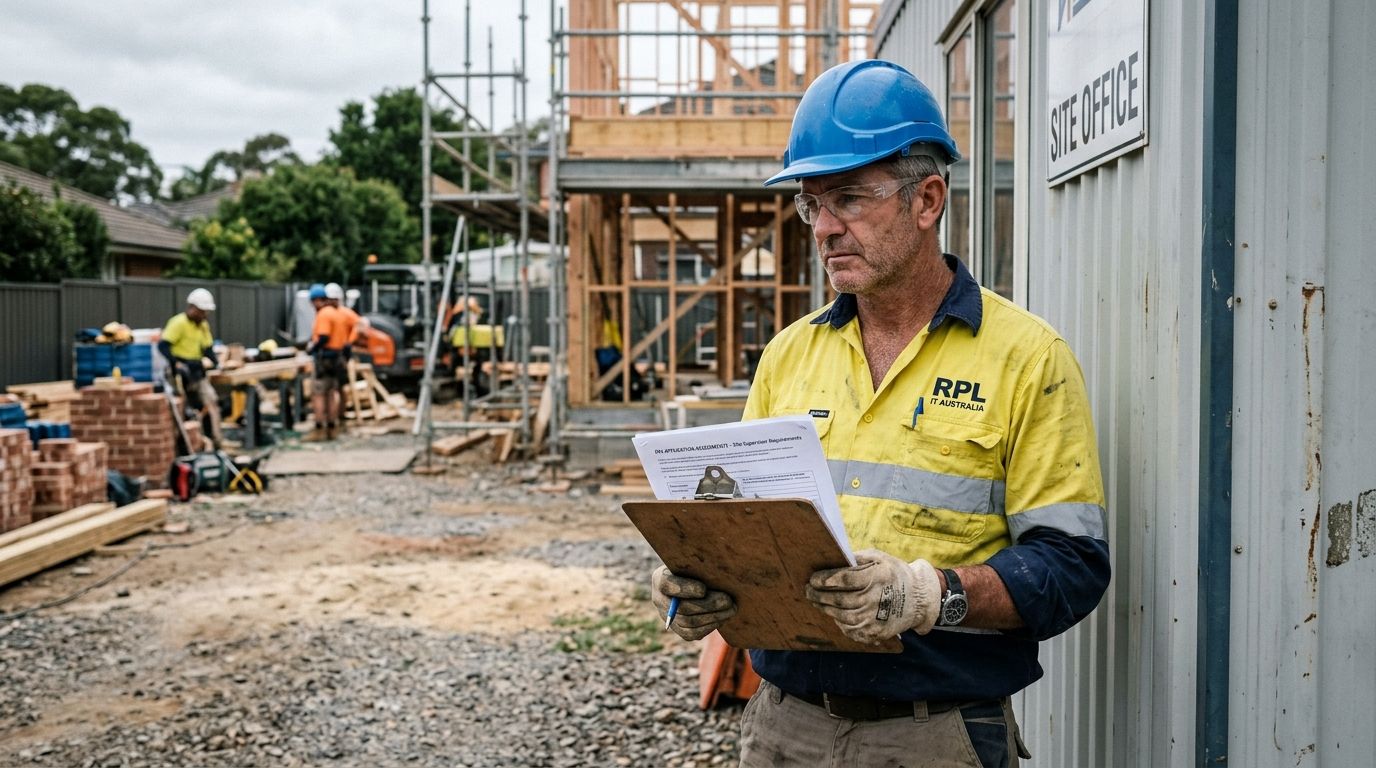
You have been on sites for fifteen years. You have run crews, managed subcontractors, written safe work method statements, and kept projects moving when things fall apart. You know the work. The work knows you.
Then the conversation happens. The principal contractor, or your own employer, pulls you aside and tells you that you cannot be listed as site supervisor on the new contract. It is not because of your performance or your safety record. It is because you do not hold a Certificate IV in Building and Construction.
This is not a performance review. It is a compliance issue. It is happening to experienced construction workers across Australia right now. This is a structural shift in how principal contractors manage their liability exposure on site.
Your experience is real. Your competence is not in question. But the formal system needs a document. Without it, the role goes to someone else.
Why principal contractors cannot look the other way
This is not bureaucracy for its own sake. Under Australian WHS legislation, principal contractors carry a primary duty of care for the safety of everyone on a construction project. That responsibility does not transfer to subcontractors or site workers. It sits with the principal contractor, regardless of who is doing the physical work.
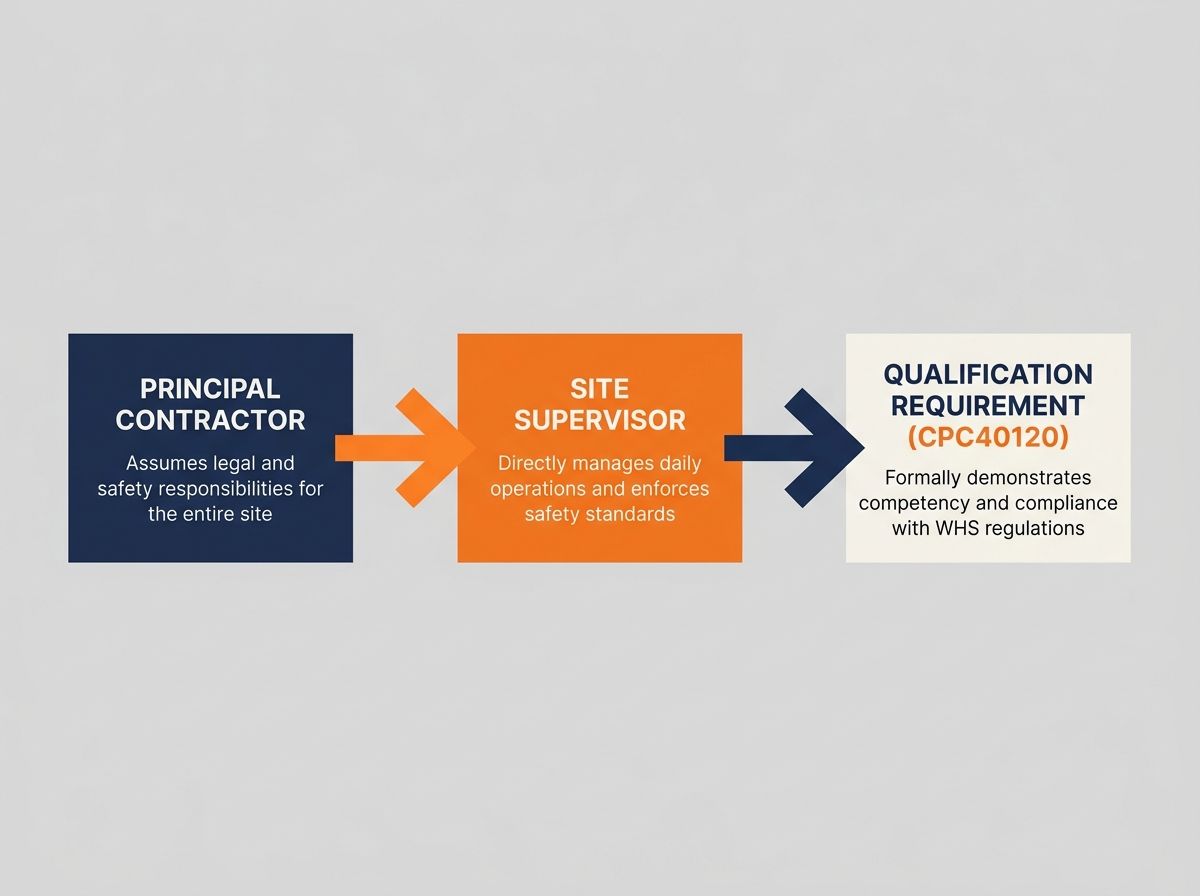
When a principal contractor lists someone as site supervisor, they are making a formal declaration about that person's competence to manage WHS on site. If that person is not formally qualified and something goes wrong, the principal contractor's liability exposure is direct and significant.
The contractor is not questioning your competence. They are managing their exposure. The qualification requirement is the formal mechanism through which the system transfers accountability. Without it, the contractor cannot make that declaration with confidence.
WorkSafe Queensland describes the principal contractor's obligations in detail, including the requirement to prepare a WHS management plan and ensure site safety is coordinated across all duty holders on the project.
State licensing frameworks add a further layer. In Queensland, for example, the QBCC's technical qualification requirements for licensing list specific units of competency from CPC40120 as the accepted pathway for site supervisor and contractor licence categories. The qualification is not just an employer preference; in many cases it is embedded in the licensing framework itself.
Queensland's technical qualifications for licensing document sets out the accepted qualifications and units of competency for site supervisor and builder licence categories, including references to CPC40120 and specific unit codes such as CPCCBC4001.
Requirements vary across states and territories. If you are working in NSW, Victoria, Western Australia, or another jurisdiction, the specific licensing authority, such as NSW Fair Trading, the Victorian Building Authority, or DMIRS in WA, will have their own frameworks. The principle is consistent: formal qualification is the mechanism through which site supervisor competence is recognised by the system. The specific requirements should always be verified with the relevant state licensing body.
What the Certificate IV actually covers and why you already know most of it
The Certificate IV in Building and Construction (CPC40120) is not a course in how to build. It is a formal framework for assessing and documenting competencies that experienced site workers already use every day.
According to the national qualification documentation on training.gov.au, CPC40120 Release 2 comprises 19 units of competency, including 11 core units and 8 elective units. The qualification is designed to reflect the roles of builders, site managers, and managers of small to medium-sized building businesses. It covers structural principles, building codes and standards, legal requirements, contract administration, WHS management, and quality principles.
Core units include applying building codes and standards to Class 1 and 10 buildings (CPCCBC4001), managing work health and safety in the building and construction workplace (CPCCBC4002), and planning building or construction work (CPCCBC4007). These are not abstract concepts. They are the documented version of what an experienced site supervisor does on every project.
The qualification has two occupational outcomes. The Builder pathway requires all Group A elective units plus up to two from Group B or general electives. The Site Manager pathway requires all Group B electives plus up to four from Group A or general electives. The elective structure means the qualification can be tailored to your specific work context.
Experience is not less than education. It is a different form of evidence. The qualification is the formal record of what you already know, and RPL is the process that creates that record.
The RPL pathway: How site experience becomes formal evidence
Recognition of Prior Learning (RPL) is a formal assessment process that evaluates existing competence against qualification standards without requiring classroom study. The qualification awarded through RPL is nationally recognised and identical to one earned through traditional study. It is not a shortcut. It is a different route to the same qualification.
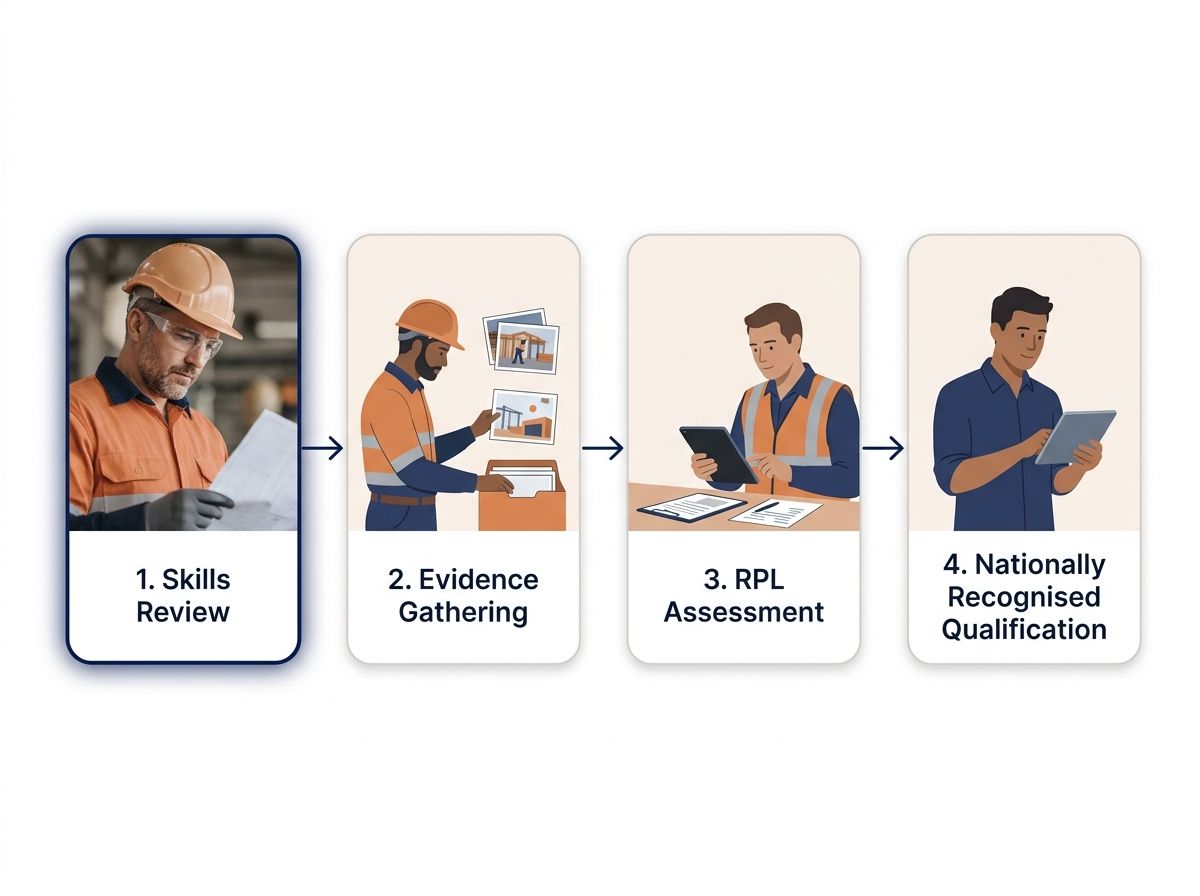
For a construction worker pursuing CPC40120 via RPL, the process typically involves four stages: a skills review to assess suitability, evidence gathering, formal assessment by a qualified assessor from a registered training organisation (RTO), and, where competency is demonstrated, the qualification being issued by that RTO.
The evidence gathering stage is where your site experience becomes the substance of the assessment. Evidence may include project records and documentation, safe work method statements you have prepared or managed, employer or supervisor statements, photographs of completed work, references, and records of WHS management activities on site.
SafeWork NSW explains that a SWMS must identify high-risk construction work, the associated hazards and risks, and the control measures to be implemented, monitored and reviewed, and that it must be prepared before high-risk work begins and followed throughout.
A SWMS you have prepared and implemented on a real project is more than a safety document. It provides evidence that you understand high-risk construction work, can identify hazards, and can manage and enforce control measures on site. That is exactly the practical competence an RPL assessor evaluates.
WorkSafe Victoria notes that persons most familiar with high-risk construction work, including affected employees, should be involved in developing the SWMS, and that the SWMS must be reviewed when work changes, when risk controls are not working, or after an incident.
Be honest with yourself about the documentation burden. RPL requires effort. You will need to locate, organise, and present evidence across multiple units of competency. The process is rigorous and is not a rubber stamp. But if you have been doing the work, the evidence already exists. The task is finding it, organising it, and presenting it in a way that maps to the qualification's standards. A guided RPL process is structured to help you do exactly that.
What happens if you wait
The consequences of inaction are concrete. If the principal contractor's compliance deadline passes and you do not hold the qualification, the outcomes are clear: you cannot be listed as site supervisor, you may be moved to a non-supervisory role, the contract may require a qualified replacement, and your career trajectory stalls while someone with a certificate, and potentially less site experience, steps into the role.
This is not hypothetical. It is the situation described at the start of this article, extended forward in time. The window to act is finite. The qualification requirement is not going away. If anything, WHS compliance expectations in the construction industry have tightened, not loosened, in recent years.
The same pattern is playing out across other trades. If you have seen how compliance requirements are reshaping who gets the work in painting and decorating, or how the plumbing industry has responded to supervisor qualification mandates, you will recognise the structural shift. Construction is not an exception.
The decision is yours. But the window is not unlimited.
Is your experience enough to qualify for RPL?
RPL is not suitable for everyone, and honest suitability guidance matters more than enrolment numbers. For CPC40120, a strong RPL candidate is typically someone who has been working in a supervisory or coordination role on construction projects, rather than only as a tradesperson on the tools.
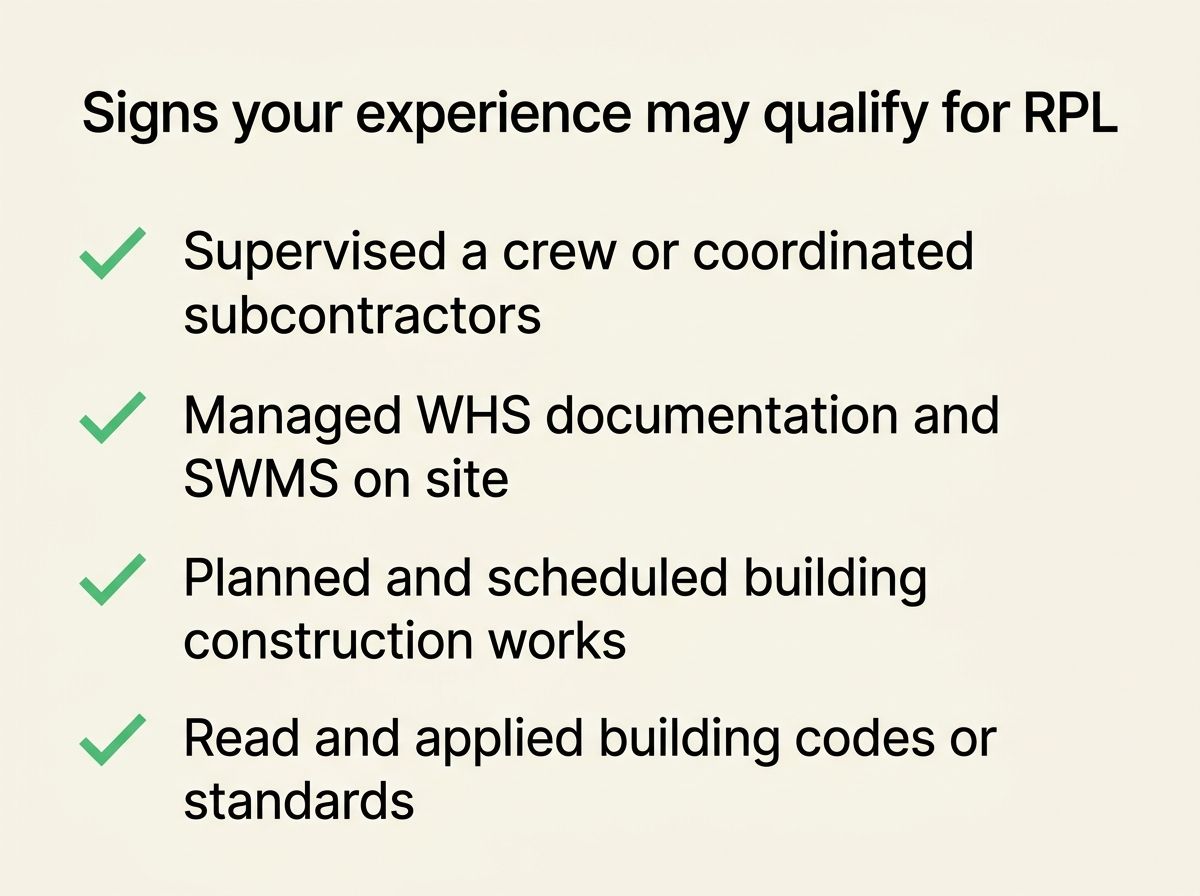
Experience that indicates strong RPL suitability includes supervising a crew or coordinating subcontractors on residential or commercial projects; managing WHS documentation on site, including preparing or reviewing SWMS for high-risk construction work; planning and scheduling construction work; administering contracts or managing relationships with clients, suppliers, or subcontractors; and managing quality outcomes on completed projects.
The qualification is designed to reflect the roles of builders, site managers, and managers of small to medium-sized building businesses. If your experience maps to those roles, even informally, you may have a strong foundation for an RPL application.
Some candidates find that their experience is strong across most units but that specific areas, such as contract administration or formal quality management documentation, require supplementary evidence or gap training. Gap training, where required, is provided as part of the RPL process and does not mean starting the qualification from scratch. It means filling specific, identified gaps.
The honest first step is a skills review. It is not a sales conversation or an enrolment form. It is a structured review of your experience against the qualification's requirements. It is free, has no obligation, and ensures you know where you stand before you commit to anything.
Your skills speak. We help them be heard.
Fifteen years on the tools is a substantial background. It is a body of evidence. The problem is not your competence. The issue is that your competence exists in a form that the formal system cannot recognise without a structured process.
RPL is that process. It is rigorous and requires documentation. It is assessed by a qualified assessor from a registered training organisation. When competency is demonstrated, the qualification issued is nationally recognised because the assessment is genuine.
Recognition should not require starting over. If your experience maps to the Certificate IV in Building and Construction, the pathway exists to have that experience formally assessed and acknowledged.
Ready to Get Recognised?
Start with a free skills review to find out if RPL is right for you.